Ballataka (Marking Nut)
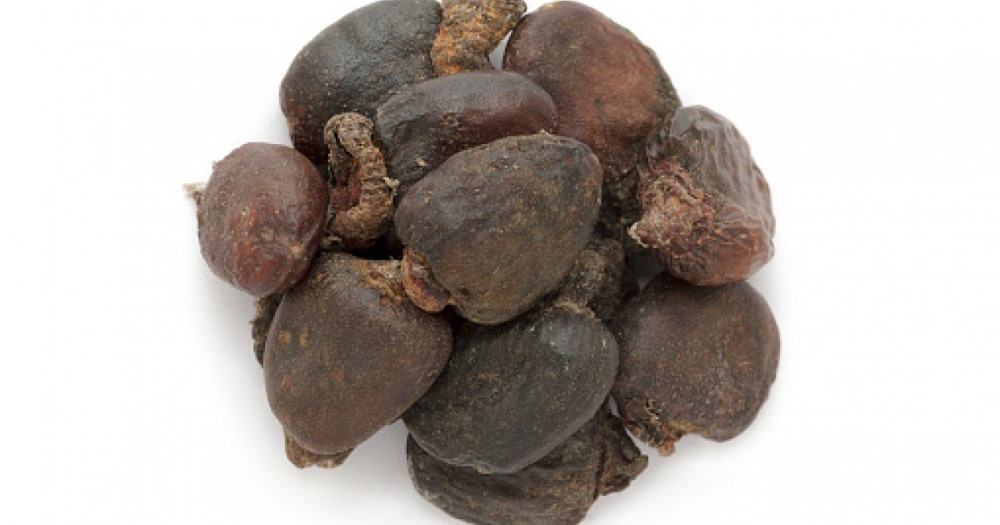
Ballataka (Marking Nut)
Semecarpus anacardium L.f.
Purified (shodhit) Bhallataka nut, Semecarpus anacardium, supplied for classical Ayurvedic manufacturing with documented shodhana processing.
- Botanical nameSemecarpus anacardium L.f.
- Part usedFruit/nut (traded almost exclusively as shodhit, i.e. purified nut); nut-shell liquid as a separate stream
- FamilyAnacardiaceae
- Also known asBhallataka, Bhilawa, Bibba, Geru, Agnimukhi, Agya
- Certificate of Analysis
- Samples available
- Export documents handled
Ballataka, also called Bhallataka or the marking nut, is the dried fruit of Semecarpus anacardium, a tree of the Anacardiaceae family that also includes cashew and mango. The nut carries a corrosive oil in its shell and pulp, and Ayurveda classifies it under Upavisha, meaning a semi-toxic substance that requires mandatory purification before it enters any formulation.
Botanical identity and part used
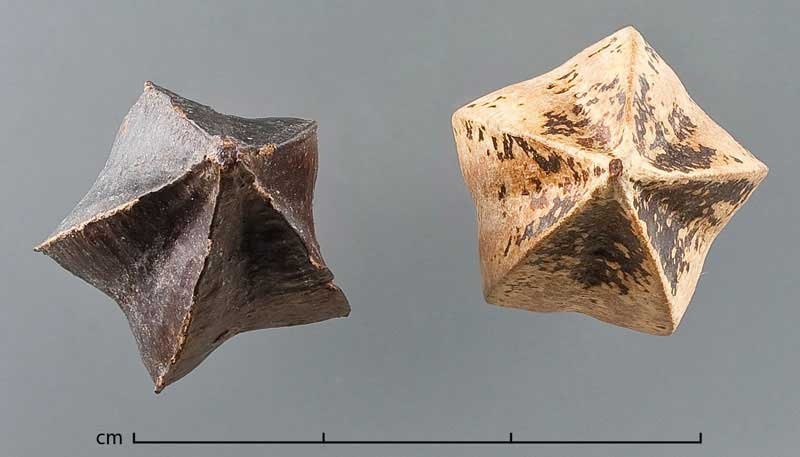
The tree grows to 12 to 15 metres, with the fruit forming as a black, shining, kidney-shaped nut seated on a fleshy orange receptacle. Trade uses the whole nut, not the receptacle or leaf, and identity is confirmed by nut shape, size and the tell-tale black shell before any batch enters processing.
Why the raw nut cannot be handled like a normal botanical
The mesocarp of the raw nut contains bhilawanol, a mixture of phenolic compounds closely related to the vesicant oils in poison ivy. Direct skin contact causes blistering dermatitis, and raw nuts are never supplied as a food-grade or cosmetic raw material.
Every batch AV Biotech supplies for pharmaceutical use is shodhit, meaning it has undergone Ayurvedic shodhana. Standard methods documented in the Ayurvedic Pharmacopoeia of India and the Ayurvedic Formulary of India include soaking in cow's urine or cow's milk, rubbing with brick powder, or steam processing (Dola Yantra Sweda) in coconut water. Purification breaks down and removes the surface bhilawanol layer, which published shodhana studies confirm through a measurable drop in anacardol/bhilawanol content compared to raw nuts.
Handling implications buyers should plan for
Raw, unprocessed nuts move under strict handling protocols: sealed packaging, gloves and eye protection at every touch point, and no direct buyer-facing sale without an explicit purification agreement. Shodhit nuts are markedly safer to handle but are still typically packed and labelled as a processed pharmacopoeial material rather than a general commodity herb.
Buyers sourcing for classical formulations should always specify shodhit material and request the purification method used, since different methods (Godugdha, Gomutra, or steam) are referenced against different formulations in classical texts.
Growing regions and harvest
Semecarpus anacardium grows wild across the sub-Himalayan tracts, central India and the deciduous forests of peninsular India, including Madhya Pradesh, Chhattisgarh, Odisha and the Western Ghats. Fruit is collected between February and April when nuts mature and drop, then sun-dried before grading and purification.
Forms that trade
AV Biotech sources and supplies shodhit Bhallataka nut for classical pharmaceutical units, and can arrange documented purification runs against a buyer's specified method on contract. Nut-shell liquid, a separate industrial by-product used outside the pharmaceutical trade, is quoted independently and is not part of the shodhit-nut specification.
Industry applications of Ballataka
Ballataka is a low-volume, specialist raw material. It moves almost entirely through classical Ayurvedic pharmaceutical manufacturing rather than the broader nutraceutical or cosmetic trade.
Classical Ayurvedic pharmaceutical manufacturing
Licensed Ayurvedic manufacturers buy shodhit Bhallataka nut for named classical formulations such as Bhallataka Ksheerapaka, Bhallataka Avaleha, Amritabhallataka Avaleha and Bhallatakadi Churna. These units work strictly to Ayurvedic Pharmacopoeia of India monographs and require a certificate confirming the shodhana method used on the lot.
Because the raw material is classified Upavisha, manufacturers usually hold a separate standard operating procedure for receipt, storage and processing of Bhallataka distinct from general herb intake, and they expect the supplier's documentation to support that SOP.
Research and pharmacological study material
Research institutions and contract laboratories source both raw and purified nut in small quantities for shodhana-impact studies, phytochemical assay work and toxicology screening, typically in kilogram lots rather than bulk.
Veterinary and traditional folk-remedy manufacturing
Smaller regional manufacturers use purified nut in topical and internal veterinary Ayurvedic preparations, again working from purified stock only.
What this material is not used for
Ballataka is not supplied into food, cosmetic, or general nutraceutical supply chains. Its vesicant raw-material profile and Upavisha classification place it outside the mainstream bulk-herb and extract trade that covers most of AV Biotech's catalogue, and buyers evaluating it for anything other than licensed pharmaceutical manufacture should confirm the intended end use before ordering.
Common product formats
- Bhallataka Ksheerapaka and other classical Ayurvedic decoctions
- Bhallataka Avaleha and Amritabhallataka Avaleha
- Bhallatakadi Churna and related compound powders
- Research-grade raw and shodhit nut for laboratory study
- Topical veterinary Ayurvedic preparations (purified material only)
Traditional use and current research
Classical Ayurvedic texts, including Charaka Samhita and Sushruta Samhita, describe Bhallataka within the Upavisha (semi-toxic) category and detail its use only after shodhana. Traditional indications recorded in these texts include support for digestive strength, joint comfort and general Rasayana (rejuvenative) use, always in purified and dose-controlled form.
Why purification status governs any claim
Raw Bhallataka nut is corrosive to skin and mucosa, and no traditional or modern reference supports its use in that state. Every traditional indication in classical texts assumes shodhit material processed by one of the recognised methods, so any claim referencing Bhallataka must state the purification status of the material behind it.
Areas of published research interest
Modern phytochemical and pharmacological reviews have examined Semecarpus anacardium extracts for antioxidant, anti-inflammatory and antimicrobial activity, along with early-stage work on metabolic and cellular markers. This research is conducted on defined extracts under laboratory conditions and does not establish outcomes for the whole purified nut used in classical formulations.
Formulator responsibility on this material
Given the Upavisha classification, formulators working with Bhallataka should hold internal toxicology and dosage review specific to this ingredient, separate from the general herb-intake process used for other botanicals in the catalogue.
This information is provided for educational and B2B product-sourcing purposes only. It is not medical advice and these statements have not been evaluated by any regulatory authority. Finished-product claims are the responsibility of the manufacturer.
| Botanical name | Semecarpus anacardium L.f., Fam. Anacardiaceae |
|---|---|
| Part used | Fruit/nut, supplied as shodhit (purified) nut for pharmaceutical use; raw nut handled only under contract with documented purification plan |
| Appearance | Black, shining, ovoid to kidney-shaped nut, 2 to 2.5 cm; purified nut shows a duller, processed shell surface |
| Active constituents | Bhilawanol (phenolic vesicant complex of the raw mesocarp, comprising largely 1,2-dihydroxy-3-pentadecenylbenzene and its diene analogue), anacardic acid, semecarpol; shodhana reduces surface bhilawanol content, verified by comparative anacardol/bhilawanol assay of raw vs. purified lots |
| Moisture | Not more than 10 per cent (typical trade limit for purified nut) |
| Total ash | Not more than 6 per cent (indicative) |
| Acid-insoluble ash | Not more than 1.5 per cent (indicative) |
| Foreign matter | Not more than 2 per cent |
| Shodhana method | Documented per lot: Gomutra (cow's urine), Godugdha (cow's milk), brick-powder trituration, or Dola Yantra Sweda in narikela jala (coconut water), per API/AFI-referenced procedures |
| Particle size | Whole purified nut standard; crushed/coarse grade on request for formulation-specific processing |
| Pesticide/heavy-metal/microbial testing | Available on request per lot; heavy metals against AYUSH limits, pesticide residues against EU MRL panel, microbiology per API general monograph limits |
| Packing | Sealed HDPE containers or double-lined bags with hazard labelling appropriate to purification status; raw-nut consignments packed under separate protective handling protocol |
| Shelf life | 24 months from date of purification, in sealed original packing, stored in a dry, dark warehouse |
| Note | All values are typical or indicative. Actual lot values vary with origin, season and purification method, and are confirmed on the batch Certificate of Analysis |
Values are typical and indicative. A lot-specific Certificate of Analysis is shared before dispatch.
Do you supply raw Bhallataka nut, or only purified (shodhit) material?
Our standard offering is shodhit nut, processed by a documented Ayurvedic Pharmacopoeia of India method. Raw nut is supplied only under a signed handling and end-use agreement, since it is a skin vesicant and requires protective handling at every stage.
What is your minimum order quantity for Bhallataka?
5 kg for a trial lot of shodhit nut and 25 kg for standard commercial orders. Raw-nut orders are quoted case by case once the intended purification process and end use are confirmed.
Which purification method do you use, and can I request a specific one?
We can supply nut purified by Gomutra (cow's urine), Godugdha (cow's milk), brick-powder trituration, or Dola Yantra Sweda in coconut water. The method used is stated on the Certificate of Analysis, and buyers formulating to a specific classical reference can request the matching method.
What documentation and testing come with a shipment?
Every lot ships with a Certificate of Analysis stating the purification method, moisture, ash values and available assay data. A phytosanitary certificate and Certificate of Origin accompany export shipments, and heavy-metal, pesticide-residue and microbiology testing are available on request.
What is the shelf life and how should this material be stored?
24 months from the date of purification when kept in sealed original packing, below 25 degrees C, away from light and moisture. Purified nut should still be handled with gloves during repackaging as a routine precaution.
Enquire about Ballataka (Marking Nut)
No payment is taken here — this reaches our sourcing team directly.