Chamomile
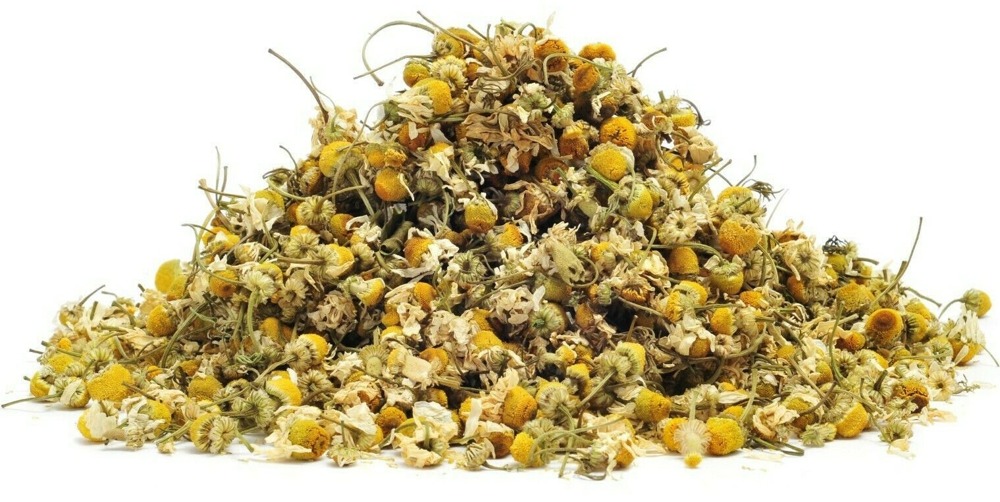
Chamomile
Matricaria chamomilla L.
Bulk dried Chamomile flowers (Matricaria chamomilla) from Jammu & Kashmir and North India for tea, extract, essential oil and cosmetic manufacturers.
- Botanical nameMatricaria chamomilla L.
- Part usedDried flower head (capitulum)
- FamilyAsteraceae
- Also known asBabuna, Babuna Phool, Hungarian Chamomile, Scented Mayweed
- Certificate of Analysis
- Samples available
- Export documents handled
Chamomile traded in the herbal industry is the dried flower head of Matricaria chamomilla, commonly called German chamomile to distinguish it from Roman chamomile (Chamaemelum nobile), a different genus with a separate specification. Buyers source Indian-grown chamomile flower for tea, extract and essential-oil applications.
Botanical identity and part used
Chamomile is an annual herb in the Asteraceae family, bearing small daisy-like flower heads with a hollow, cone-shaped yellow disc and white ray florets. Only the dried capitulum is traded; stem and leaf are removed during processing and have no separate commercial value.
Where it grows in India
Chamomile is cultivated in India mainly in Jammu and Kashmir, parts of Uttar Pradesh and, more recently, Assam and the North East. It is grown as a four to six month crop, propagated by seed through either transplanting or direct sowing.
Cultivation is smaller in scale than India's major medicinal-herb crops, so buyers needing large committed volumes should plan contracts ahead of the flowering season.
Harvest and processing
Flower heads are hand-picked in successive flushes as they open, since chamomile flowers over an extended period rather than in a single harvest. Picked flowers are shade-dried to preserve colour and volatile oil content, then sieved to remove stem fragments and foreign matter.
Careful drying matters more for chamomile than for many herbs, since post-harvest handling directly affects the ratio of free apigenin to its glycoside form, and overheating degrades the essential oil.
Why buyers source it
Chamomile's commercial value rests on two constituent groups: the flavonoid apigenin, and the essential oil, whose principal marker compounds include chamazulene and alpha-bisabolol. Indian-grown material has been characterised as carrying a distinct essential-oil profile with these and related sesquiterpene compounds.
Demand comes from herbal tea packers, extract manufacturers standardising to apigenin content, essential-oil distillers, and cosmetic formulators using the flower or its oil in skin and hair-care products.
Forms that trade
AV Biotech supplies whole dried chamomile flower heads for tea and extraction use, and cut/sifted flower for tea-bag cut and bulk blending. Essential oil sourcing is arranged through partner distillation on a contract basis.
Industry applications of Chamomile
Chamomile flower moves into tea, extract, essential-oil and cosmetic manufacturing, with different buyers wanting different cut and grade specifications.
Herbal tea and beverage manufacturing
Tea packers are the largest buyers of whole and cut chamomile flower, using it as a single-herb infusion and as a component in bedtime and calming tea blends. Whole flower with intact colour and minimal stem is preferred for visible-quality loose-leaf and pyramid-bag formats; finer cut suits standard tea bags.
Nutraceutical and extract manufacturing
Extract houses process dried flower into standardised chamomile extract, commonly referencing apigenin content, for capsules, tinctures and liquid formulations. Buyers in this segment want documented apigenin assay and low microbial load, since the material is often processed at elevated temperature.
Essential oil and aromatherapy
Steam distillation of chamomile flower yields the deep blue essential oil prized for its chamazulene content, used in aromatherapy blends and as a fragrance and functional ingredient in premium cosmetic formulations.
Cosmetic and personal care
Formulators use chamomile flower extract, hydrosol and essential oil in soothing creams, baby-care products, shampoos and after-sun preparations. Colour, clarity and absence of pesticide residue matter more here than raw assay value.
Food and functional beverage
Beyond straight tea, chamomile appears in functional beverage blends, kombucha flavouring and bakery inclusions where a mild floral, apple-like note is wanted.
Common product formats
- Whole dried flower for loose-leaf and pyramid tea bags
- Cut and sifted flower for standard tea-bag cut
- Chamomile extract standardised to apigenin content
- Steam-distilled essential oil and hydrosol
- Soothing creams, baby-care lotions and after-sun formulations
- Functional beverage and bakery flavouring blends
Traditional use and current research
Chamomile has a long history of traditional use across Ayurvedic, Unani and European herbal systems as a calming, digestive-support herb. The following notes describe traditional positioning and published research directions, not established medical outcomes.
Sleep and relaxation support
Chamomile is one of the most widely used traditional herbs for supporting restful sleep and easing everyday tension. Studies have examined apigenin's interaction with receptors associated with relaxation, and brands commonly formulate chamomile into night-time teas and calming supplement blends.
Digestive comfort
Traditional use includes chamomile infusion for mild digestive discomfort, bloating and general stomach settling. This traditional application is reflected in chamomile's continued presence in digestive-support tea blends.
Skin-soothing use
Chamomile extract and essential oil are traditionally used topically for skin irritation and to support a calm-looking complexion. Chamazulene and alpha-bisabolol, the principal essential-oil markers, are the constituents most often referenced in this context.
General calming and everyday wellness positioning
Chamomile is broadly positioned in the wellness category around calm and relaxation rather than any specific disease outcome, reflecting both its traditional use and its very well-established safety profile as a beverage herb.
What buyers should note on claims
Apigenin content in raw flower and finished extract varies with post-harvest handling, since drying conditions affect the free-apigenin-to-glycoside ratio. Claim substantiation should reference the specific extract standardisation used in the supporting study, not raw flower material generally.
This information is provided for educational and B2B product-sourcing purposes only. It is not medical advice and these statements have not been evaluated by any regulatory authority. Finished-product claims are the responsibility of the manufacturer.
| Botanical name | Matricaria chamomilla L., Fam. Asteraceae |
|---|---|
| Part used | Dried flower head (capitulum) |
| Appearance | Small daisy-like heads, white ray florets around a hollow yellow conical disc; pale straw to golden colour when properly dried |
| Odour and taste | Characteristic sweet, apple-like aroma; mildly bitter and aromatic taste |
| Active constituents | Apigenin and apigenin-7-glucoside (flavonoids); essential oil typically 0.3 to 1 per cent, with chamazulene and alpha-bisabolol as principal markers, assay confirmed on the batch Certificate of Analysis |
| Moisture | Not more than 10 per cent, typical trade limit |
| Total ash | Not more than 10 per cent, typical trade limit |
| Acid-insoluble ash | Not more than 2 per cent, typical trade limit |
| Foreign matter | Not more than 2 per cent, typical trade limit; stem content specified separately |
| Particle size | Whole flower head for tea and extraction; cut and sifted grade for standard tea-bag cut |
| Pesticide/heavy-metal/microbial testing | Screened against EU MRL; heavy metals against AYUSH limits; microbial testing (TPC, yeast and mould, E. coli, Salmonella) available per lot |
| Packing | 15 to 25 kg multi-wall paper or PP bags with food-grade LDPE inner liner |
| Shelf life | 18 to 24 months in sealed original packing, stored away from light and moisture |
| Note | All values are typical or indicative. Actual lot values vary with origin, season and harvest flush, and are confirmed on the batch Certificate of Analysis |
Values are typical and indicative. A lot-specific Certificate of Analysis is shared before dispatch.
What is your minimum order quantity for chamomile flower?
50 kg for whole or cut dried flower. Extraction-grade lots start at 10 kg against contract. For trial and formulation work we supply 250 g to 1 kg paid samples, adjusted against your first commercial order.
Do you supply German chamomile or Roman chamomile?
Our standard offering is German chamomile, Matricaria chamomilla, which is the species grown in Jammu and Kashmir. Roman chamomile, Chamaemelum nobile, is a different genus with a different specification and is sourced only against a specific buyer request.
What documentation comes with an export shipment?
Every lot ships with a batch Certificate of Analysis covering moisture, ash, foreign matter and, where tested, apigenin and essential-oil content. Export consignments also carry a phytosanitary certificate, Certificate of Origin, packing list and commercial invoice.
Can you supply chamomile essential oil or extract, not just dried flower?
Yes, through contract distillation and extraction arrangements with partner facilities. Lead time for oil and standardised extract is longer than for dried flower, so these orders should be placed at least 3 to 4 weeks ahead of need.
What is the typical lead time?
7 to 10 working days for stock whole and cut flower grades from Jaipur. Organic-certified lots and extract or oil orders take 3 to 4 weeks. Chamomile flowers over several weeks, so large committed volumes are best contracted ahead of the flowering season.
Enquire about Chamomile
No payment is taken here — this reaches our sourcing team directly.
Related products