Akarkara
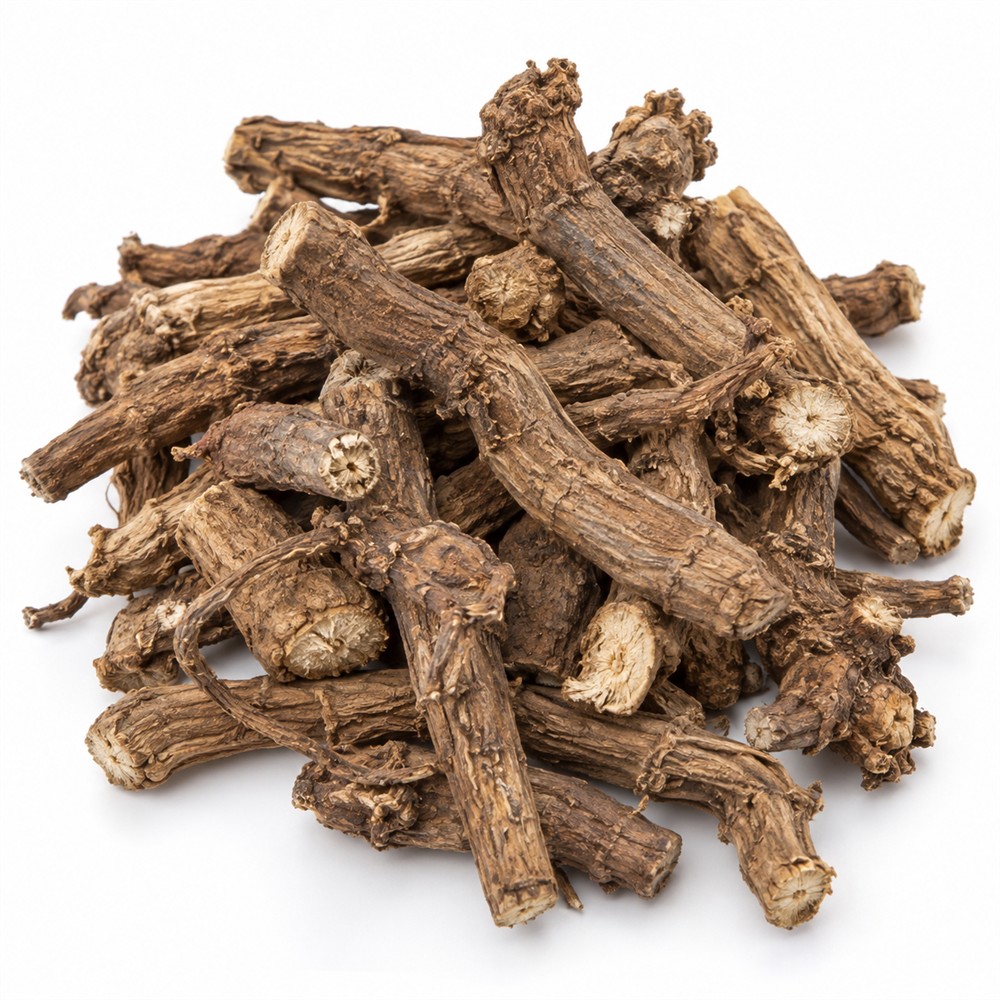
Akarkara
Anacyclus pyrethrum (L.) Lag.
Bulk Akarkara root (Anacyclus pyrethrum) in whole and powder grades for Ayurvedic, Unani and nutraceutical manufacturers sourcing from India.
- Botanical nameAnacyclus pyrethrum (L.) Lag.
- Part usedDried root (primary trade grade); whole plant (panchang) also traded in Ayurvedic commerce
- FamilyAsteraceae (Compositae)
- Also known asAkkalkara, Akkalkaro, Agnimukhi, Akarakarabha, Pallitory Root
- Certificate of Analysis
- Samples available
- Export documents handled
Akarkara is the dried root of Anacyclus pyrethrum, valued in the Indian herbal trade for its intensely pungent, tingling taste and its long-standing place in Ayurvedic and Unani formulation.
Botanical identity and part used
Akarkara belongs to the Asteraceae family, the same family as chamomile, to which it bears a close resemblance in growth habit. It is a low, spreading perennial herb with daisy-like flower heads.
The commercially recognised drug is the dried root, listed in the Ayurvedic Pharmacopoeia of India. Whole-plant material, referred to in trade as panchang, is also used in some formulations but is not interchangeable with root in a root-only specification.
Where it grows and where it is sourced
Anacyclus pyrethrum is native to North Africa and the Mediterranean and also occurs naturally in parts of the Himalaya and North India. Indian trade draws on a mix of cultivated root from northern growing tracts and material of Mediterranean and North African origin moving through the international herbal supply chain.
Because organised large-scale domestic cultivation remains limited compared to crops like Ashwagandha, buyers should confirm origin and country-of-growth documentation at the time of enquiry.
Harvest and processing
Roots are lifted once the plant has completed a full growing season and the root has thickened and matured. After lifting, roots are washed, trimmed of rootlets and sun-dried to a stable moisture level before grading.
Graded root is sorted by thickness and colour, then a portion is milled to powder on request. Whole root is preferred by buyers who want visual identity confirmation on receipt.
Why buyers source it
The root's pungency comes from pellitorine and related alkylamides, a group of compounds that produce a characteristic tingling, salivation-inducing sensation on the tongue. This sensory effect is used by manufacturers as a practical field check alongside laboratory identity testing.
Akarkara is classed in Ayurveda as a Vajikaran Rasayana, placing it in the same functional category referenced by several established reproductive-tonic and nervine formulations, which sustains steady demand from classical medicine manufacturers.
Forms that trade
AV Biotech supplies Akarkara as whole dried root, cut root, and milled root powder. Organic-certified lots are available against advance contract, and panchang material can be sourced separately on request.
Industry applications of Akarkara
Akarkara moves mainly into classical medicine and dental-care manufacturing, with smaller volumes going into cosmetic and veterinary use.
Ayurvedic and Unani manufacturing
Classical units buy whole and cut root for churna, taila and Rasayana formulations positioned around reproductive health, nervous-system support and general vitality. Unani manufacturers use Akarkara root in a comparable range of tonic and analgesic preparations.
These buyers usually want root-only material with visible pungency on chewing, since this sensory check is the traditional first screen for genuine root.
Oral care and dental formulation
Akarkara's traditional use for toothache and salivation has carried into modern oral-care products, where root extract and powder are used in herbal toothpaste, tooth powder and mouth-freshening formulations. Manufacturers here specify particle size and colour consistency.
Nutraceutical and supplement brands
Supplement makers use fine root powder in capsules positioned around male vitality and general wellness, usually blended with other classical Rasayana herbs rather than sold as a single-ingredient product.
Cosmetic and personal care
Small volumes of root powder and extract go into scalp and hair-care formulations, where the warming, stimulating character of the root is the primary functional claim made by the finished-product brand.
Veterinary and animal nutrition
Coarse root powder is used in some veterinary Ayurvedic tonic preparations, generally in blended rather than single-herb form.
Quality pitfalls buyers should check for
Because organised Akarkara cultivation is limited, the trade sees inconsistent quality between lots, and low-pungency or partially exhausted root is sometimes passed off as full-strength material. The chew test for tingling and salivation remains the fastest field screen, and buyers running larger volumes should back it with TLC identity confirmation.
Root that has been stored too long or too humidly loses pungency and market value, so buyers should ask about storage duration and conditions before confirming an order, particularly for material sourced through intermediaries.
Common product formats
- Ayurvedic and Unani churna, taila and Rasayana formulations
- Herbal toothpaste, tooth powder and mouth-freshening products
- Vitality and wellness capsules and tablets, usually in polyherbal blends
- Scalp oils and hair-care formulations
- Veterinary tonic premixes
Traditional use and current research
Akarkara is described in Ayurveda as a Vajikaran Rasayana, a category of herbs traditionally associated with reproductive vitality and rejuvenation, and it also has a long record of use in Unani and folk medicine for dental and neurological complaints.
The following notes describe traditional positioning and published research directions, not established medical outcomes.
Dental and oral traditional use
Chewing the root or applying it locally has been used traditionally for toothache and to stimulate salivary flow, an effect attributed to pellitorine and related alkylamides. This remains the most widely recognised traditional application of the root.
Reproductive vitality and general tonic use
Classical Ayurvedic texts place Akarkara among Vajikarana herbs, used traditionally to support male reproductive health and general vigour as part of polyherbal formulations. Modern clinical data specific to Akarkara alone in this area remains limited.
Nervous system and cognitive research interest
Laboratory studies have examined Akarkara root extracts for activity against enzymes linked to neurodegenerative processes, alongside traditional use in paralysis-related and neurological folk preparations. This is an early-stage research direction, not a clinical finding.
Anti-inflammatory and immunomodulatory research
Some extract studies report anti-inflammatory and immune-related activity in laboratory models. These findings support further research rather than any approved therapeutic use.
Traditional use in paralysis-related formulations
Classical Ayurvedic sources list Akarkara among herbs traditionally used for facial paralysis and certain neuromuscular complaints, generally applied as an oil or paste alongside internal formulations. This traditional application predates and is distinct from the newer laboratory research on neurodegeneration-linked enzymes.
What buyers should note on claims
Akarkara is almost always used in Ayurvedic and Unani practice as part of a polyherbal formulation, not as a standalone therapeutic agent. Any wellness claim on a finished single-ingredient product should be built on the manufacturer's own regulatory review of the specific extract and dose used.
This information is provided for educational and B2B product-sourcing purposes only. It is not medical advice and these statements have not been evaluated by any regulatory authority. Finished-product claims are the responsibility of the manufacturer.
| Botanical name | Anacyclus pyrethrum (L.) Lag., Fam. Asteraceae |
|---|---|
| Part used | Dried root (root-only grade); panchang (whole plant) quoted separately |
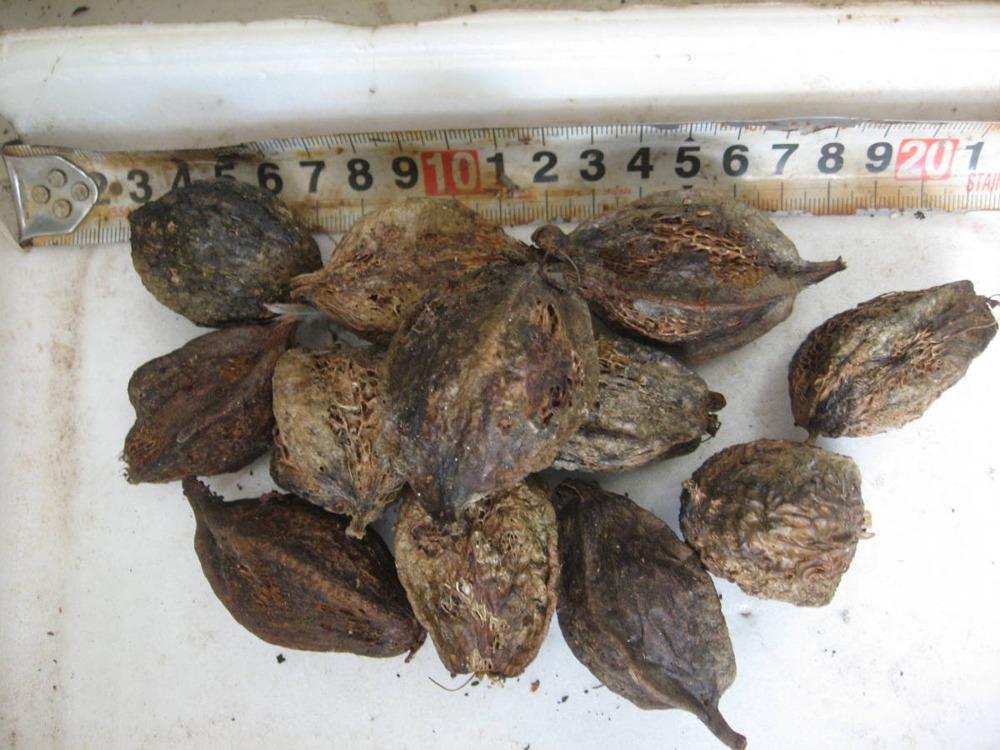
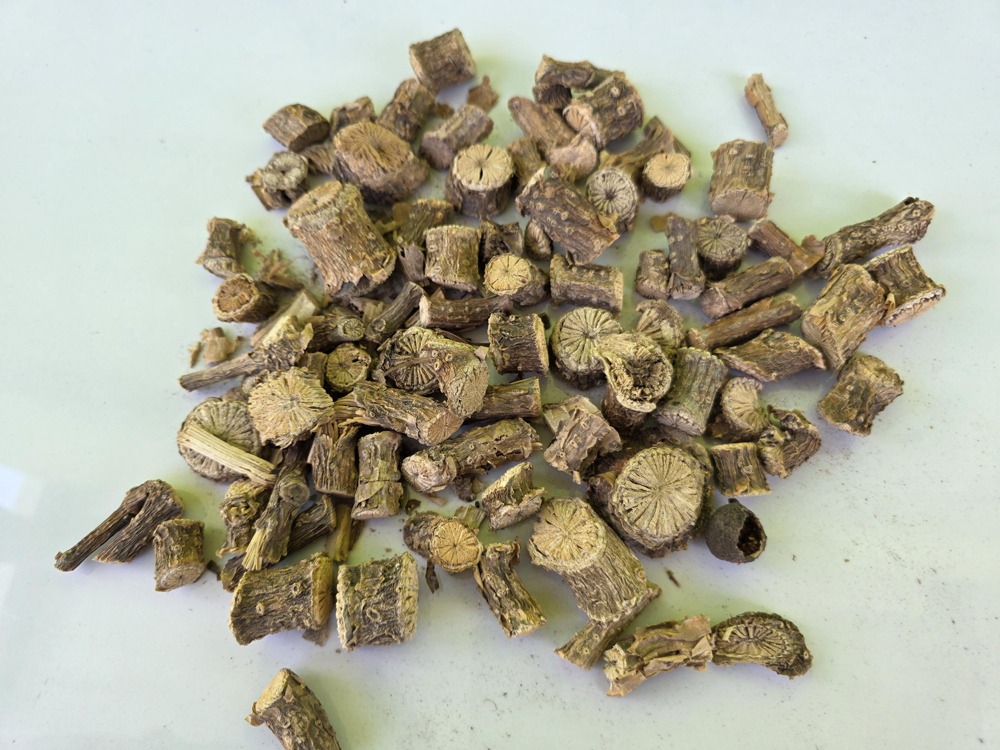
| Appearance | Root pieces greyish-brown externally, whitish internally; powder light brown |
| Odour and taste | Faint aromatic odour; taste intensely pungent and tingling, with marked salivation on chewing |
| Active constituents | Pellitorine and related alkylamides (N-isobutylamides), anacycline, inulin, sesamin and essential oil; identity and pungency typically confirmed by TLC/HPTLC alongside organoleptic pungency check rather than a single fixed assay figure |
| Moisture | Not more than 10 per cent (typical trade limit) |
| Total ash | Not more than 8 per cent (typical trade limit) |
| Acid-insoluble ash | Not more than 2 per cent (typical trade limit) |
| Foreign matter | Not more than 2 per cent |
| Particle size | Whole and cut root standard; powder milled to 60 to 80 mesh on request |
| Pesticide/heavy-metal/microbial testing | Tested against EU MRL and AYUSH heavy-metal limits on request; microbial testing including E. coli and Salmonella available for pharma and nutraceutical buyers |
| Packing | 25 kg and 50 kg HDPE or PP laminated bags with food-grade LDPE inner liner |
| Shelf life | 24 months for powder, 36 months for whole dried root, in sealed original packing |
| Note | All values are typical or indicative. Actual lot values vary with origin, season and grade, and are confirmed on the batch Certificate of Analysis |
Values are typical and indicative. A lot-specific Certificate of Analysis is shared before dispatch.
What is your minimum order quantity for Akarkara?
100 kg for milled root powder and 250 kg for whole or cut root. For trial and formulation work we supply 1 to 2 kg paid samples, and the sample cost is adjusted against your first commercial order.
Can you confirm the botanical identity and origin of the root you supply?
Yes. Every lot is macroscopically and organoleptically verified for pungency before dispatch, and we can provide TLC or HPTLC identity screening on request. Country-of-growth documentation is shared with the enquiry so buyers can confirm origin before ordering.
What documentation comes with an export shipment?
Every lot ships with a batch Certificate of Analysis covering moisture, ash values, foreign matter and identity screening. Export consignments also carry a phytosanitary certificate, Certificate of Origin, packing list and commercial invoice.
Can you supply panchang (whole plant) instead of root, or customise mesh size?
Yes, panchang material is available separately from root and should be specified at enquiry, since the two are not interchangeable. We mill root powder to 60 or 80 mesh as standard, with finer grinds available on request.
What is the typical lead time?
10 to 15 working days for stock grades from Jaipur. Organic-certified lots and custom milling take 3 to 4 weeks, and larger contracted volumes are best booked in advance given limited organised domestic cultivation.
Enquire about Akarkara
No payment is taken here — this reaches our sourcing team directly.
Related products