Aralu
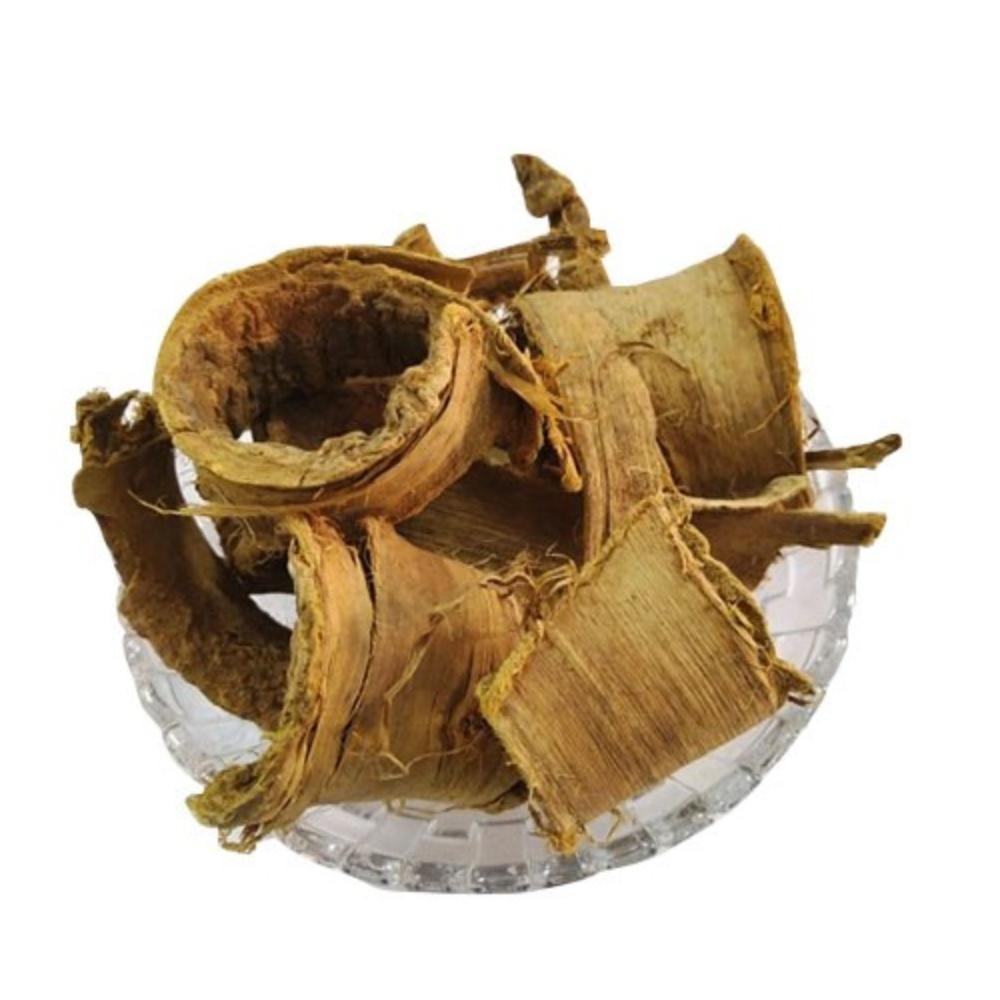
Aralu
Ailanthus excelsa Roxb.
Bulk Aralu stem bark (Ailanthus excelsa) for Ayurvedic churna and kwath manufacturers, sourced and graded to Ayurvedic Pharmacopoeia of India standards.
- Botanical nameAilanthus excelsa Roxb.
- Part usedStem bark (dried)
- FamilySimaroubaceae
- Also known asArlu, Maruk, Ghoda Karanj, Aralavo, Peruvagai, Peddmanu
- Certificate of Analysis
- Samples available
- Export documents handled
Aralu is the dried stem bark of Ailanthus excelsa, a large deciduous tree of central and peninsular India. The Ayurvedic Pharmacopoeia of India recognises this bark as Aralu, one of the named ingredients in several classical churna formulations.
Botanical identity and part used
Ailanthus excelsa belongs to the Simaroubaceae family, a small family better known for its bitter-principle-rich bark drugs. The tree grows large and fast, and is widely planted in agroforestry systems across arid and semi-arid India.
Only the dried stem bark is the recognised pharmacopoeial drug. The bark is thick, with a rough, ridged, light grey outer surface and a fibrous yellowish-white inner surface, with a bitter taste and a disagreeable odour when fresh.
Where it grows in India
The Ayurvedic Pharmacopoeia of India records Ailanthus excelsa from Bihar, the Chhota Nagpur plateau, Madhya Pradesh, and the forests of Ganjam and Vishakhapatnam through the Deccan. The species is now also widely grown in agroforestry plantings across Gujarat, Rajasthan, Maharashtra and Karnataka.
Because the tree is fast-growing and drought-tolerant, it is a common component of dryland farm-forestry programmes, which has broadened the bark supply base beyond natural forest tracts.
Harvest and processing
Bark is stripped from selected mature trees or branches, typically during the drier winter months when sap flow is lowest and the bark separates more cleanly. Harvested bark is sun dried and cleaned of adhering wood and moss before grading.
Dried bark is sold whole, cut into pieces, or milled to powder depending on the buyer's formulation requirement.
Why buyers source it
Aralu bark is a named ingredient in classical formulations including Pushyanuga Churna and Brihat Gangadhara Churna, which keeps demand tied closely to organised Ayurvedic pharmaceutical production rather than the open retail herb trade. Its constituents include quassinoids, a bitter-principle group also of research interest for antiparasitic and antidysenteric activity.
Because the tree is primarily grown for timber, fuelwood and fodder, bark collected specifically for the herbal trade needs to be sourced through suppliers who separate pharma-grade bark from general forestry byproduct.
Forms that trade
AV Biotech supplies Aralu as whole dried bark, cut bark, and milled powder, sourced and verified against the Ayurvedic Pharmacopoeia of India macroscopic description for Aralu.
Industry applications of Aralu
Aralu bark is bought almost entirely by classical and licensed Ayurvedic pharmaceutical manufacturers, with a smaller research and extract-development segment.
Ayurvedic pharmaceutical manufacturing
Aralu is a named ingredient in Pushyanuga Churna, Brihat Gangadhara Churna and Aralu Pushpaka, formulations used in classical Ayurvedic practice for digestive and gastrointestinal indications. Manufacturers working to Ayurvedic Pharmacopoeia of India standards specify stem-bark-only material with documented identity.
Because Aralu appears in multi-ingredient churna rather than as a standalone single-herb product, most orders are recurring and tied to a manufacturer's production schedule rather than one-off purchases. Consistent bark thickness and bitterness across shipments matters more to these buyers than cosmetic appearance.
Extract and research use
Ailanthus excelsa bark contains quassinoids such as ailanthinone and glaucarubinone, a bitter-principle group studied for antidysenteric, antiparasitic and antimalarial activity in the wider quassinoid literature. Extract manufacturers and research institutions buy bark for isolation and standardisation work targeting this constituent group.
Veterinary and traditional formulation use
Bark decoctions appear in regional veterinary and folk formulations for digestive complaints, alongside the tree's separate and much larger role as a green fodder source, though fodder-grade leaf is a distinct product from pharma-grade bark.
Export and traditional medicine trade
Smaller volumes move to traditional medicine manufacturers in neighbouring South Asian markets that use Ailanthus bark in comparable formulations. These buyers generally request the same macroscopic identity check used by Indian classical manufacturers.
Sourcing note for pharma-grade buyers
Because the tree is grown mainly for timber, fuelwood and fodder, most bark generated in general forestry operations is not collected or cleaned to pharma-grade standard. Buyers should confirm that their supplier separates bark intended for Ayurvedic use at the point of stripping, rather than sourcing mixed forestry byproduct after the fact.
Common product formats
- Whole dried bark pieces for classical churna manufacturing
- Cut and sifted bark for kwath and decoction preparation
- Milled bark powder for churna blending
- Bark feedstock for quassinoid extraction and research
Traditional use and current research
The Ayurvedic Pharmacopoeia of India describes Aralu bark as Tikta and Kashaya in taste, Ruksha in quality, Sita in potency and Katu in post-digestive effect. Its classical actions are listed as Dipana, Grahi, Pachana, Kaphapittahara and Vranashodhana.
These are classical Ayurvedic descriptions, not clinical claims. The notes below present traditional positioning and general research directions, not established medical outcomes.
Traditional digestive and anti-diarrhoeal use
The pharmacopoeia lists Atisara, Pravahika and Grahani, diarrhoea, dysentery and malabsorption-type conditions, among Aralu's classical therapeutic indications. Its Grahi, or binding, action is the traditional basis for this use.
Traditional use in worm infestation and skin conditions
Classical texts record Krimi, worm infestation, and Tvakaroga and Kushtha, skin conditions, among Aralu's indications. Vranashodhana, wound-cleansing action, is also listed as a classical property.
Quassinoid research interest
Modern phytochemical work has identified quassinoids, including ailanthinone and glaucarubinone, as the principal bitter constituents of this bark. This class of compounds has drawn research interest for antiparasitic and antidysenteric activity, an area of active study rather than an established clinical use.
Traditional respiratory and fever-related use
The classical dose recorded is 1 to 3 grams, and therapeutic uses listed include Shwasa and Sannipata Jvara, breathing difficulty and fever. These are text-based traditional indications, not treatment recommendations.
Traditional use in urinary and metabolic conditions
Classical texts also list Prameha, a group of urinary and metabolic conditions broadly associated with the modern understanding of diabetes, among Aralu's traditional indications. This is a historical text reference and not a basis for any diabetes-related claim on a modern product.
What buyers should note on claims
Because Aralu is a name applied specifically to Ailanthus excelsa stem bark, buyers should confirm plant part and species before referencing any classical indication in a finished-product claim. Bark-only material, verified against the pharmacopoeial description, should underpin any such reference.
This information is provided for educational and B2B product-sourcing purposes only. It is not medical advice and these statements have not been evaluated by any regulatory authority. Finished-product claims are the responsibility of the manufacturer.
| Botanical name | Ailanthus excelsa Roxb., Fam. Simaroubaceae |
|---|---|
| Part used | Dried stem bark |
| Appearance | Thick bark pieces; external surface light grey, granular and ridged; internal surface yellowish-white and fibrous; fracture fibrous |
| Odour and taste | Disagreeable when fresh, milder on drying; taste bitter |
| Active constituents | Quassinoids (ailanthinone, glaucarubinone, glaucarubolone, excelsin), beta-sitosterol, ailantic acid, 2,6-dimethoxy-benzoquinone, melanthin |
| Foreign matter | Not more than 2 per cent (API limit) |
| Total ash | Not more than 8.5 per cent (API limit) |
| Acid-insoluble ash | Not more than 0.5 per cent (API limit) |
| Alcohol-soluble extractive | Not less than 1.5 per cent (API limit) |
| Water-soluble extractive | Not less than 5.5 per cent (API limit) |
| Moisture | Not more than 10 per cent (typical trade limit; not a separately listed API parameter) |
| Particle size | Whole and cut bark pieces, 1 to 5 cm; powder 40 to 80 mesh on request |
| Heavy metals | Tested against AYUSH limits on request |
| Pesticide residues | Tested against EU MRL on request for cultivated-source lots |
| Microbiology | Total plate count, yeast and mould, E. coli and Salmonella tested per lot; certificate supplied |
| Packing | 25 kg and 50 kg HDPE/PP laminated bags with food-grade LDPE inner liner |
| Shelf life | 24 months for whole and cut bark, 18 months for powder, in sealed original packing |
| Note | All values are typical or indicative. Actual lot values vary with origin and season, and are confirmed on the batch Certificate of Analysis |
Values are typical and indicative. A lot-specific Certificate of Analysis is shared before dispatch.
What is your minimum order quantity for Aralu bark?
100 kg for milled bark powder and 250 kg for whole or cut bark. For trial and formulation work we supply 1 to 2 kg paid samples, adjusted against your first commercial order.
How do you confirm this is genuine Ailanthus excelsa bark?
We source and grade against the macroscopic description in the Ayurvedic Pharmacopoeia of India for Aralu, and we can provide a species declaration with the shipment. Buyers requiring further confirmation can request TLC testing against the API reference profile.
What documentation comes with an export shipment?
Every lot ships with a batch Certificate of Analysis covering ash values, extractives, moisture, heavy metals, pesticide residues and microbiology. Export consignments also carry a phytosanitary certificate, Certificate of Origin, packing list and commercial invoice.
Can you customise cut size, mesh or packing?
Yes. We supply whole bark, cut pieces of 1 to 5 cm, and powder milled to 40, 60 or 80 mesh. Packing can be changed to 20 kg or 25 kg bags or your own private-label sacks.
What is the typical lead time?
10 to 15 working days for stock grades from Jaipur. Larger contracted volumes and specific-origin bark take 3 to 4 weeks depending on the harvest and collection season.
Enquire about Aralu
No payment is taken here — this reaches our sourcing team directly.
Related products