Amla (Indian Gooseberry)
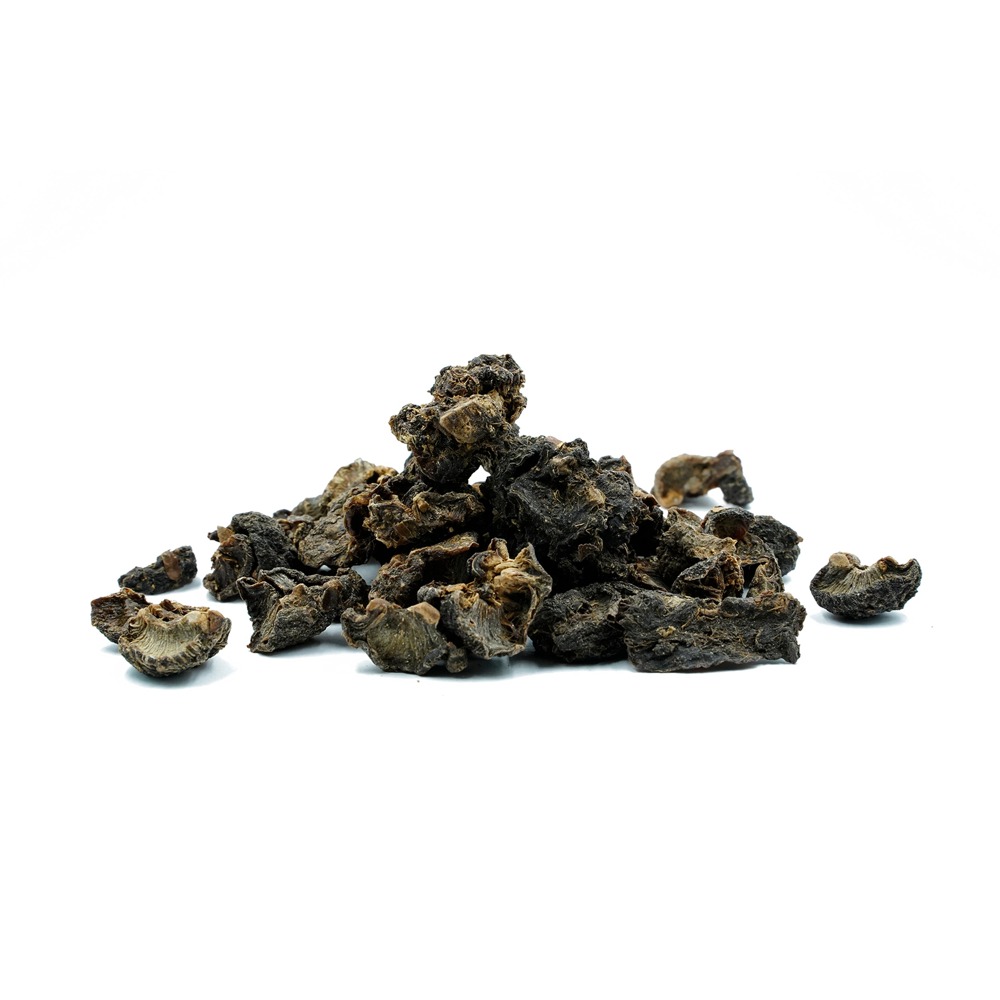
Amla (Indian Gooseberry)
Phyllanthus emblica L. (syn. Emblica officinalis Gaertn.)
Bulk dried Amla fruit, flakes and powder (Phyllanthus emblica) for Ayurvedic, nutraceutical, hair-care and food manufacturers sourcing vitamin C rich raw material.
- Botanical namePhyllanthus emblica L. (syn. Emblica officinalis Gaertn.)
- Part usedFruit (pericarp, deseeded); seed and leaf traded separately
- FamilyPhyllanthaceae (listed as Euphorbiaceae in the Ayurvedic Pharmacopoeia of India)
- Also known asAmalaki, Aonla, Nellikai, Nellikka, Usirika, Anvala, Ainla, Amlaj, Dhatriphala
- Certificate of Analysis
- Samples available
- Export documents handled
Amla is the dried fruit of Phyllanthus emblica, still widely catalogued under its older synonym Emblica officinalis. It is one of the highest-volume fruit drugs in the Indian herbal trade, driven by Triphala, Chyawanprash and the hair-oil industry.
Botanical identity and part used
Amla is a small to medium deciduous tree carrying pale green, six-lobed, translucent fruit. Modern classification places it in the Phyllanthaceae family, though the Ayurvedic Pharmacopoeia of India still lists it under Euphorbiaceae.
The traded drug is the pericarp of the dried mature fruit, with stony seed removed. Seed and leaf are separate commodities and should not be counted as fruit in a specification.
Where it grows in India
Amla grows in mixed deciduous forest up to about 1,300 metres and is cultivated across the plains. Pratapgarh district in Uttar Pradesh is the largest single producing zone, with commercial orchards also in Gujarat, Rajasthan, Madhya Pradesh and Tamil Nadu.
Cultivar matters commercially. Banarasi and Krishna mature from mid-October, NA-7 and Kanchan from mid-November, and Chakaiya from mid-December to mid-January. Chakaiya is fibrous and holds up well in drying, while Banarasi has softer pulp better suited to preserves.
Harvest and processing
Fruit is harvested in winter after ripening. For dried material the fruit is washed, blanched or steamed briefly, deseeded, and cut into segments or flakes.
Drying is the step that decides quality. Sun drying is cheapest but darkens the flake and costs ascorbic acid. Cabinet tray drying and low-temperature dehydration hold colour and vitamin C better, and buyers paying for vitamin C should specify the drying method rather than assume it.
Why buyers source it
Amla's value sits in its polyphenol matrix, not vitamin C alone. The fruit carries hydrolysable tannins including emblicanin A and B, punigluconin and pedunculagin, alongside gallic acid, ellagic acid and ascorbic acid.
Because that ascorbic acid sits in a tannin-rich matrix, it behaves differently in processing from free synthetic ascorbic acid. That is the technical reason formulators pay for whole-fruit Amla rather than adding vitamin C separately.
Forms that trade
AV Biotech supplies dried deseeded flakes, cut fruit, and milled powder at 60 to 80 mesh. Extract-grade feedstock is offered for houses standardising to total tannins, gallic acid or natural vitamin C. Organic-certified lots are available against advance contract.
Industry applications of Amla
Amla is unusual in that four separate industries buy it in serious volume, and each one judges quality on a different attribute.
Ayurvedic and pharmaceutical manufacturing
This is the largest consumer. Amla is one of the three fruits in Triphala Churna and the base of Chyawanprash. Classical units also make Dhatri Lauha, Dhatryadi Ghrita and Amalaki Rasayana.
These buyers want deseeded flakes or coarse powder meeting Ayurvedic Pharmacopoeia of India extractive values, which for dried Amla are unusually high at not less than 40 per cent alcohol-soluble and 50 per cent water-soluble.
Nutraceutical and supplement brands
Supplement manufacturers buy fine powder and standardised extract for vitamin C and antioxidant positioning. Extracts are quoted on total tannins, commonly 30, 40 or 50 per cent, or on gallic acid, or on natural vitamin C.
These three markers are not interchangeable. A 40 per cent quote means nothing until the method behind it is stated, and this is the single most common costing error buyers make on Amla.
Cosmetic and hair care
Amla is the anchor ingredient of the Indian hair-oil category. Dried fruit is steeped in sesame or coconut oil under gentle heat, and powder goes into hair masks, henna blends, shampoos and scalp serums.
Colour is the trade criterion here. Buyers pay a premium for lighter, evenly dried flake and reject scorched or blackened material.
Food and beverage
Amla goes into juices, candies, murabba, pickles, supari blends, jams and functional shots. Food buyers care about fibre content, residual seed fragments and consistent acidity.
Common product formats
- Triphala Churna, Chyawanprash and classical Ayurvedic avalehas
- Vitamin C and antioxidant capsules, tablets and effervescents
- Amla hair oils, hair masks, shampoos and henna blends
- Amla juice, shots, candy, murabba and pickles
- Standardised extracts at 30 to 50 per cent total tannins
- Face packs, ubtan blends and anti-ageing serums
- Herbal tooth powders and mouth-care formulations
Traditional use and current research
Amla is classified in Ayurveda as a Rasayana and as Tridoshajit, meaning it is traditionally described as balancing all three doshas. The Ayurvedic Pharmacopoeia of India lists its traditional applications as Raktapitta, Amlapitta, Prameha and Daha.
The notes below describe traditional positioning and published research directions. They are not statements of medical outcome.
Antioxidant and cellular support positioning
Amla is one of the richest natural sources of hydrolysable tannins. Studies suggest strong free-radical scavenging activity in laboratory models, and brands commonly formulate it into products positioned around antioxidant support.
Digestive comfort
Traditional Ayurvedic use as part of Triphala centres on digestive regularity and gut comfort. Products in this space are usually positioned around digestive wellness rather than any clinical indication.
Hair and scalp products
Amla has centuries of traditional use in hair oils across India. Cosmetic formulators use it in products targeting hair strength, scalp condition and appearance of hair density, where claims are made under cosmetic rather than medicinal rules.
Skin and complexion formulations
Ayurveda describes Amla as Chakshushya and Varnya, terms relating to the eyes and to complexion. Modern cosmetic formulations use it in brightening and anti-ageing positioning, supported by its polyphenol content.
Immunity and general tonic use
Its vitamin C content and long traditional use as a rejuvenative make Amla a standard ingredient in seasonal wellness and immunity blends.
What buyers should note on claims
Vitamin C in dried Amla varies considerably with cultivar, drying method and storage. If your finished-product label carries a vitamin C figure, that figure has to be built on your own tested incoming lots and re-verified over shelf life, not on a generic fresh-fruit value.
This information is provided for educational and B2B product-sourcing purposes only. It is not medical advice and these statements have not been evaluated by any regulatory authority. Finished-product claims are the responsibility of the manufacturer.
| Botanical name | Phyllanthus emblica L., syn. Emblica officinalis Gaertn., Fam. Phyllanthaceae |
|---|---|
| Part used | Pericarp of dried mature fruit, deseeded |
| Appearance | Curled grey to dark brown wrinkled segments; powder light brown to greyish brown |
| Odour and taste | Characteristic; taste sour and astringent |
| Active constituents | Ascorbic acid and gallotannins. Emblicanin A and B, punigluconin, pedunculagin, gallic acid, ellagic acid. Extracts standardised to 30, 40 or 50 per cent total tannins, or to gallic acid, or to natural vitamin C |
| Moisture | Not more than 10 per cent (typical trade limit) |
| Total ash | Not more than 7 per cent (API limit) |
| Acid-insoluble ash | Not more than 2 per cent (API limit) |
| Foreign matter | Not more than 3 per cent including seed and seed coat (API limit) |
| Alcohol-soluble extractive | Not less than 40 per cent (API limit) |
| Water-soluble extractive | Not less than 50 per cent (API limit) |
| Particle size | 60 to 80 mesh standard for powder; 100 mesh on request. Flakes graded by cut size |
| Heavy metals | Lead NMT 10 ppm, Arsenic NMT 3 ppm, Cadmium NMT 0.3 ppm, Mercury NMT 1 ppm (AYUSH limits) |
| Pesticide residues | Tested against EU MRL; organic lots screened on a multi-residue panel |
| Microbiology | Total plate count NMT 100,000 cfu/g, Yeast and mould NMT 1,000 cfu/g, E. coli and Salmonella absent |
| Aflatoxins | B1 NMT 2 ppb, total NMT 4 ppb |
| Packing | 25 kg HDPE or PP laminated bags with food-grade LDPE inner liner; 20 kg kraft paper bags for powder; fibre drums on request |
| Shelf life | 24 months for powder, 24 months for dried flakes, in sealed original packing |
| Note | All values are typical or indicative. Ascorbic acid content in particular varies with cultivar, drying method and storage age, and is confirmed on the batch Certificate of Analysis |
Values are typical and indicative. A lot-specific Certificate of Analysis is shared before dispatch.
What is your minimum order quantity for Amla?
100 kg for milled powder, 250 kg for dried deseeded flakes and cut fruit, and 25 kg for standardised extracts. Paid samples of 1 to 2 kg are available for formulation trials, adjusted against your first commercial order.
Does your Amla powder carry a guaranteed vitamin C figure?
We report the tested ascorbic acid value on each batch Certificate of Analysis rather than guarantee a fixed number. Vitamin C in dried Amla varies with cultivar, drying method and storage age. If you need a minimum level held over shelf life, tell us at enquiry stage so we can quote low-temperature dried or freeze-dried material.
Is your Amla deseeded, and how much seed residue is acceptable?
Yes, our standard flake and powder grades are made from deseeded fruit. The Ayurvedic Pharmacopoeia of India allows not more than 3 per cent foreign matter including seed and seed coat, and we work within that limit. Tighter limits can be agreed for extract feedstock.
Can you supply a specific cultivar or a lighter-coloured flake?
Yes. Cultivar-specific lots such as Chakaiya can be arranged against advance contract, since availability follows the mid-December to mid-January harvest window. Light-colour sorted flake for hair-oil and cosmetic buyers is graded and quoted separately from general commercial flake.
What is the typical lead time and when should I book?
7 to 12 working days for stock grades from Jaipur, and 3 to 4 weeks for organic-certified or cultivar-specific material. Amla is a winter-harvested crop, so buyers running annual programmes usually contract volumes between October and January.
Enquire about Amla (Indian Gooseberry)
No payment is taken here — this reaches our sourcing team directly.
Related products