Arjuna
Arjuna
Terminalia arjuna (Roxb. ex DC.) Wight & Arn.
Dried stem bark of Terminalia arjuna, rich in tannins and triterpenoid acids, supplied in bulk to Ayurvedic, nutraceutical and extraction manufacturers.
- Botanical nameTerminalia arjuna (Roxb. ex DC.) Wight & Arn.
- Part usedDried stem bark
- FamilyCombretaceae
- Also known asArjun chhal, Kakubha, Partha, Sadada, Marudam, Maddi, Matti, Nirmaruthu, Arjon
- Certificate of Analysis
- Samples available
- Export documents handled
Arjuna is the dried stem bark of Terminalia arjuna (Roxb. ex DC.) Wight and Arn., a large deciduous tree of the Combretaceae family. It is one of the most heavily used single-herb raw materials in the Indian cardiac-tonic segment. AV Biotech supplies it as bark pieces, cut and sifted, powder and standardised extract.
Botanical identity and appearance
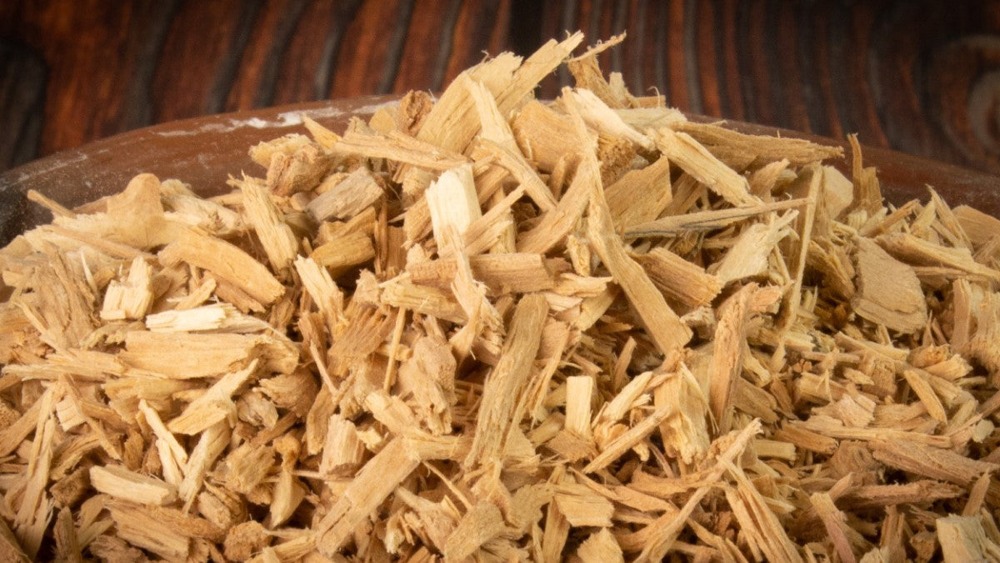
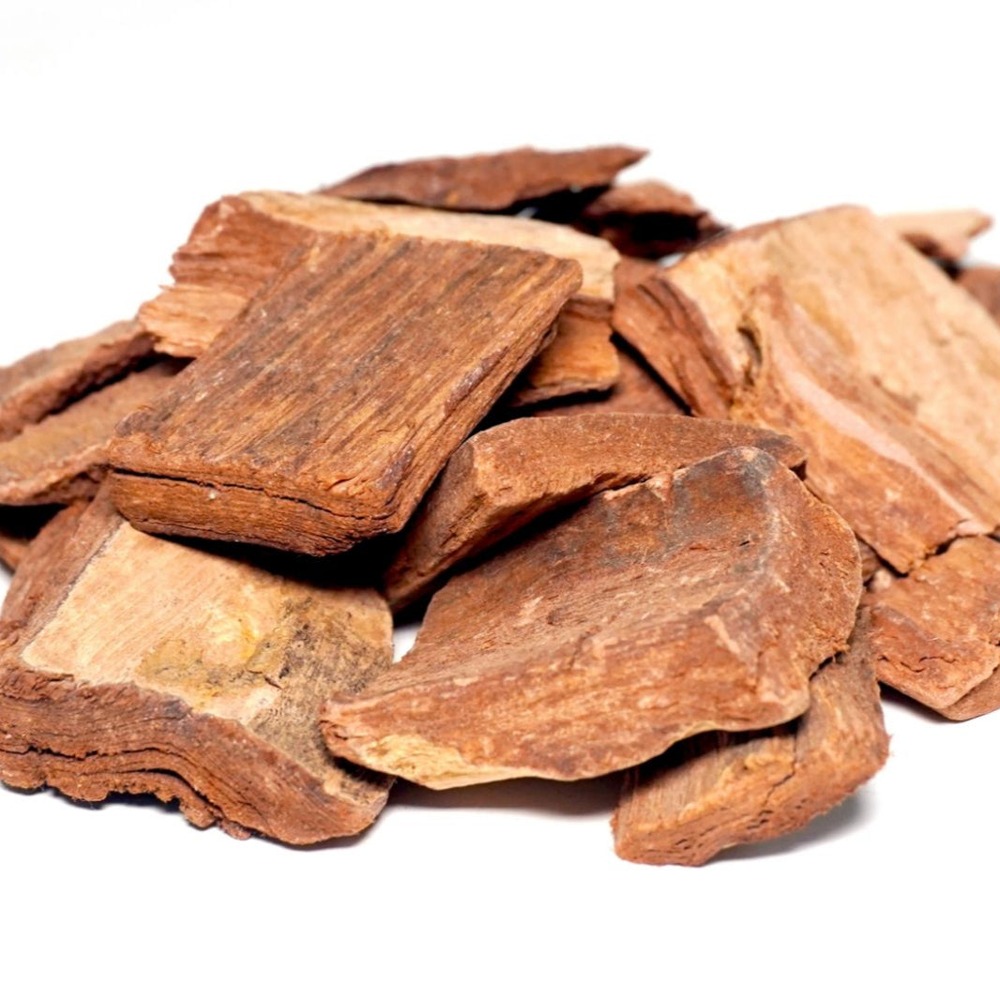
Commercial bark arrives as flat, curved, recurved or half-quilled pieces, 2 to 15 mm thick. Market pieces run up to about 10 cm long and 7 cm wide. The outer surface is smooth and grey, and the inner surface is fibrous and distinctly pinkish.
Cut across, smoothed bark shows a pink face. The fracture is short on the inner side and laminated on the outer side. Taste is bitter and astringent, unlike the purely astringent myrobalans.
Milled bark is reddish-brown. Under a microscope it shows abundant rosette calcium oxalate crystals and starch grains of 5 to 13 microns.
The adulteration buyers should test for
The common substitute is Terminalia alata, also called Terminalia tomentosa or asan, whose bark looks similar in a sack. There is a reliable laboratory distinction. Starch grains are present in Terminalia arjuna bark and absent in Terminalia alata, so a simple microscopy check on the powder separates them.
Ask for a microscopy note or a TLC identity profile on the certificate of analysis. Price differences between the two barks are large enough that substitution is a real commercial risk.
Why total ash looks high
The Ayurvedic Pharmacopoeia of India allows total ash of up to 25 per cent for Arjuna bark. That figure surprises buyers used to leaf and fruit material. Arjuna bark is naturally rich in calcium and magnesium salts, and those minerals report as ash.
The meaningful purity indicator here is acid-insoluble ash, capped at 1 per cent, which reflects sand and soil rather than plant minerals. Rejecting Arjuna on total ash alone will send back perfectly good bark.
Harvest, processing and supply
The tree grows along riverbanks and streams across central and northern India. Commercial bark comes mainly from Madhya Pradesh, Chhattisgarh, Maharashtra, Uttar Pradesh and Bihar. Bark is stripped from mature trees in the dry season and regenerates over the following years, so responsible collection uses partial strips rather than full girdling.
Peeled bark is shade-dried to hold colour, then scraped to remove the rough outer scale where the buyer wants a cleaner, higher-extractive grade. It is then cut, sifted and milled to order.
Reported constituents include hydrolysable tannins around 15 per cent, triterpenoid acids such as arjunolic acid, arjunic acid and arjungenin, the glycosides arjunetin and arjunoglucosides, flavonoids, and phytosterols.
Industrial applications of Arjuna bark
Arjuna is bought by four broad segments. The grade that suits a churna line is not the grade an extractor wants, so state the end use when enquiring.
Ayurvedic and pharmaceutical manufacturing
This is the largest outlet. Arjuna bark is the base of Arjunarishta, one of the highest-volume classical arishtas made in India. It also goes into Arjuna churna, Arjuna ksheerpaka, tablets and kwath concentrates.
Fermented arishta production needs cut and sifted bark rather than fine powder, because fine material clogs filtration. Tablet and capsule lines take 60 to 80 mesh powder.
Nutraceutical and supplement brands
Export supplement brands buy standardised extracts, usually declared on arjunic acid or arjunolic acid by HPLC, or on total tannins. Powder at 80 mesh is used for capsules and for cardiovascular-wellness blends. Full documentation and species verification are normal requirements here.
Extraction and phytochemical units
Extractors buy scraped bark because the outer scale carries mineral matter and dilutes yield. Typical standardisation targets are 0.5 to 5 per cent arjunic acid, or 20 to 40 per cent tannins by titrimetry. Trial batches are common before volume contracting.
Cosmetic and personal care
Tannin-rich bark powder is used in astringent face packs, anti-blemish preparations and hair products. Formulators buy at 100 mesh. Bark extract is also used in natural preservative-boosting and toning systems.
Food, beverage and veterinary
Bark decoction appears in herbal tea and kadha blends. Coarse powder moves into cattle feed premixes, particularly in dairy formulations. These grades are cleaned but not milled fine.
Common product formats we supply into
- Arjunarishta and other fermented liquid preparations
- Arjuna churna, tablets and capsules
- Cardiac-wellness and lipid-support supplement blends
- Herbal teas, kadha and decoction concentrates
- Standardised arjunic acid and tannin extracts
- Ksheerpaka and milk-decoction style products
- Face packs, anti-blemish creams and toners
- Hair packs and scalp preparations
- Dairy cattle feed premixes
- Natural dye and tanning inputs
Traditional uses and research context
Arjuna is one of the few Ayurvedic herbs with a single dominant traditional association. The Ayurvedic Pharmacopoeia of India lists hridya, meaning beneficial to the heart, among its classical actions. Hridroga appears in its listed therapeutic uses.
Cardiovascular wellness traditions
Arjuna bark is traditionally used in Ayurveda in preparations intended to support heart and circulatory wellness. This has been its principal role for well over a thousand years of documented use. Manufacturers commonly formulate it into products targeting cardiovascular wellness and healthy cholesterol levels already within the normal range.
Studies suggest that constituents including arjunolic acid, arjunic acid and the flavonoid fraction show antioxidant and cardioprotective activity in laboratory and animal models. Human trials exist but are generally small. Claims on finished products must be built on what the destination market permits.
Antioxidant activity
The bark carries both hydrolysable tannins and flavonoids such as luteolin and baicalein. Research suggests these contribute free-radical scavenging activity in vitro. Supplement brands often position Arjuna within general antioxidant support formulations.
Wound and skin traditions
Classical texts describe Arjuna as vranashana, associated with wound care, and vyanga hara, associated with skin blemishes. External preparations using bark powder continue in traditional practice. Cosmetic formulators draw on this tradition for astringent and blemish-focused products.
Bone and tissue traditions
The pharmacopoeial listing includes bhagnasandhanakara, an action associated with knitting of fractures. Arjuna appears in traditional bone-support formulations alongside herbs such as Hadjod. Modern products in this space are usually positioned around joint and bone wellness.
Notes for formulators
The Ayurvedic Pharmacopoeia of India gives a traditional dose of 3 to 6 g of powder. Arjuna is frequently combined with other botanicals in cardiac-wellness blends, and interaction assessment for such blends sits with the manufacturer. Because cardiovascular positioning is closely regulated in most export markets, review claim wording with your regulatory team before printing labels.
This information is provided for educational and B2B product-sourcing purposes only. It is not medical advice and these statements have not been evaluated by any regulatory authority. Finished-product claims are the responsibility of the manufacturer.
| Botanical name | Terminalia arjuna (Roxb. ex DC.) Wight and Arn. (Combretaceae) |
|---|---|
| Part used | Dried stem bark |
| Appearance | Bark pieces flat to half-quilled, 2-15 mm thick, outer surface smooth and grey, inner surface fibrous and pinkish. Powder: reddish-brown |
| Odour and taste | Faint characteristic odour; bitter and astringent taste |
| Identity check | Microscopy shows abundant rosette calcium oxalate crystals and starch grains 5-13 microns. Starch is absent in Terminalia alata, the common substitute |
| Active constituents (typical assay) | Hydrolysable tannins approximately 15%; triterpenoid acids including arjunolic acid, arjunic acid and arjungenin, generally below 1% each in raw bark; arjunetin and arjunoglucosides; flavonoids and phytosterols. Extracts commonly standardised to 0.5-5% arjunic acid or 20-40% tannins |
| Moisture / loss on drying | Not more than 10% (typical 6-9%) |
| Total ash | Not more than 25% (API limit; bark is naturally rich in calcium and magnesium salts) |
| Acid-insoluble ash | Not more than 1% (API limit; this is the meaningful sand and soil indicator) |
| Foreign matter | Not more than 2% (API limit) |
| Alcohol-soluble extractive | Not less than 20% (API limit) |
| Water-soluble extractive | Not less than 20% (API limit) |
| Particle size | Powder 40, 60, 80 or 100 mesh BSS to order; cut and sifted 3-10 mm for arishta and decoction use; bark pieces up to 10 cm |
| Heavy metals | Lead NMT 10 ppm, Arsenic NMT 3 ppm, Cadmium NMT 0.3 ppm, Mercury NMT 1 ppm (API / WHO basis, by ICP-MS) |
| Pesticide residues | Tested to API appendix; EU MRL screen (Reg. 396/2005) available on request |
| Aflatoxins | B1 not more than 5 ppb, total not more than 10 ppb (EU herbal-material basis) |
| Microbiology | Total plate count NMT 10^5 cfu/g; yeast and mould NMT 10^3 cfu/g; E. coli, Salmonella, S. aureus and P. aeruginosa absent |
| Packing | 25 kg paper-laminated or HDPE bags with food-grade LDPE liner; 20-25 kg fibre drums; 400-600 kg jumbo bags for bark pieces |
| Shelf life | 36 months for bark pieces and cut; 24 months for powder, in original sealed packing |
Values are typical and indicative. A lot-specific Certificate of Analysis is shared before dispatch.
How do I confirm the bark is Terminalia arjuna and not Terminalia alata?
Ask for a microscopy check on the powder. Terminalia arjuna bark contains starch grains of 5 to 13 microns, and Terminalia alata bark does not, so the distinction is straightforward in a lab. We can supply a microscopy note or a TLC identity profile with the certificate of analysis on request.
Your total ash is close to 20 per cent. Is that acceptable?
Yes. The Ayurvedic Pharmacopoeia of India allows total ash up to 25 per cent for Arjuna bark because the bark is naturally high in calcium and magnesium salts. The parameter that indicates contamination is acid-insoluble ash, limited to 1 per cent. Our lots are cleaned to run well inside that figure.
Which grade should I order for Arjunarishta production?
Cut and sifted bark at roughly 3 to 10 mm, not fine powder. Fine material blinds the filtration stage after fermentation and reduces clear yield. If you also run a tablet or capsule line we can supply 60 to 80 mesh powder from the same lot so both products trace to one batch.
Can you supply an extract standardised to arjunic acid?
Yes, typically in the 0.5 to 5 per cent arjunic acid range by HPLC, or on a total tannin basis by titrimetry. Confirm which marker and which method your specification uses, because a tannin percentage and a triterpenoid acid percentage describe different things. Extract MOQ is 25 kg.
Is the bark collected sustainably?
Bark is stripped in partial vertical strips from mature trees in the dry season, which allows regeneration over the following years, rather than by girdling. We work with collection groups on rotation so the same trees are not re-harvested annually. Traceability to collection region is provided on request, and organic-certified lots carry full chain documentation.
Enquire about Arjuna
No payment is taken here — this reaches our sourcing team directly.
Related products