Dandelion
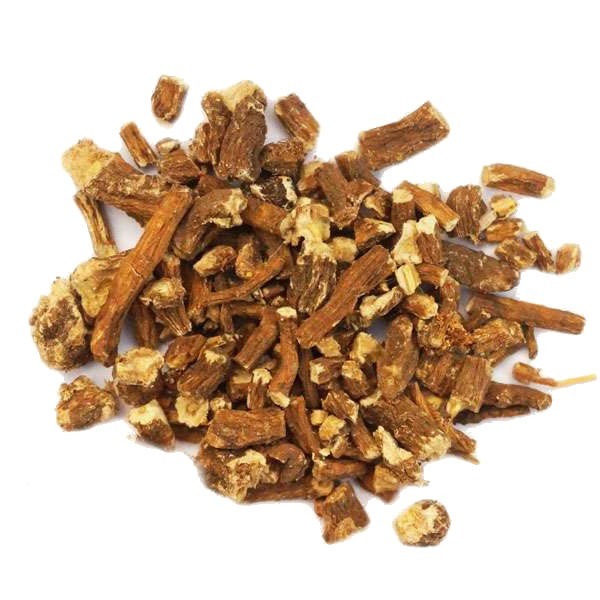
Dandelion
Taraxacum officinale F.H.Wigg.
Bulk dandelion root and leaf (Taraxacum officinale) in cut, powder and extract-feedstock grades for tea, nutraceutical and functional-beverage manufacturers.
- Botanical nameTaraxacum officinale F.H.Wigg.
- Part usedRoot; leaf traded separately
- FamilyAsteraceae
- Also known asSinghparni, Dudhal, Kanphool, Common Dandelion
- Certificate of Analysis
- Samples available
- Export documents handled
Dandelion is the dried root, and separately the dried leaf, of Taraxacum officinale, a perennial herb in the Asteraceae family found across the Himalayan belt and now widely used in Western and Ayurvedic herbal trade alike. Buyers are herbal tea packers, nutraceutical brands, functional-beverage formulators and extract houses.
Botanical identity and part used
Dandelion is a low-growing rosette herb with deeply toothed leaves, a hollow flowering stalk and a bright yellow composite flower head that matures into the familiar windborne seed head. The plant exudes a bitter white latex from any cut surface, most noticeably from the taproot.
Root and leaf are traded as two distinct commercial items. Root is the higher-volume item in supplement and tea manufacturing, while leaf is bought separately for its own bitter, mineral-rich profile.
Where it grows in India
Dandelion occurs naturally across the Himalayan region from roughly 300 to over 5000 metres, growing wild in Jammu and Kashmir, Himachal Pradesh and Uttarakhand. Commercial supply in India is a mix of managed wild-collection from these hill states and limited cultivated plots.
Global trade also draws on cultivated dandelion from temperate regions outside India, so buyers sourcing Indian-origin material should confirm origin and collection method on the purchase order.
Harvest and processing
Root is lifted in late autumn, after the plant has stored a full season's reserves, when its inulin content is typically highest. Roots are washed, cut into pieces and dried, either untreated for a bitter tea-grade root or lightly roasted for a coffee-substitute grade.
Leaf is harvested earlier in the season, before flowering, when it is least bitter and most tender, then shade-dried and milled.
Why buyers source it
Root is valued for its inulin content, a storage carbohydrate that rises through the growing season and peaks at autumn harvest, along with bitter sesquiterpene lactones (taraxacin group) that give the root its characteristic bitterness. Leaf is valued for its mineral content, notably potassium, and its own bitter-principle and flavonoid profile.
There is no single official assay figure that the trade prices dandelion against, unlike an alkaloid or glycoside-driven herb. Buyers instead specify origin, harvest season, root-to-leaf purity and roast status.
Forms that trade
AV Biotech supplies dandelion root as cut and sifted root, roasted root (coffee-substitute grade) and root powder, and dandelion leaf as cut leaf and leaf powder. Root and leaf are never mixed in a single lot unless the buyer specifically orders a blended product.
Industry applications of dandelion
Dandelion serves several distinct manufacturing streams, and root and leaf largely serve different ones.
Herbal tea and beverage manufacturing
Cut dandelion root and leaf are widely used in detox, digestive and liver-support tea blends, sold loose or in tea bags. Roasted root is used on its own as a caffeine-free coffee-alternative infusion, a well-established niche in the natural-food channel.
Nutraceutical and supplement brands
Root powder and root extract go into capsules, tablets and liquid tinctures positioned around digestive and liver-support formulas, often blended with milk thistle, artichoke or burdock. Extract houses buy cut root as feedstock for standardised dandelion root extracts.
Functional food and beverage
Root extract and leaf powder appear in bitters, functional shots and some fermented beverage bases, where the natural bitterness is used deliberately as a flavour and digestive-positioning element.
Cosmetic and personal care
Leaf and root extracts are formulated into some skin-care lines for their antioxidant and mineral content, used in toners, masks and detox-positioned skincare ranges.
Ayurvedic and Western herbal practice
Dandelion is referenced in Ayurveda under the name Singhparni and is used in Western herbal practice as a classic bitter and mild diuretic herb. Manufacturers in both traditions typically buy whole cut root or leaf for decoctions and tinctures.
Common product formats
- Dandelion root and leaf tea bags and loose-leaf blends
- Roasted-root coffee-alternative infusions
- Liver and digestive-support capsules and tinctures
- Standardised root extract for supplement formulation
- Bitters and functional-beverage bases
- Detox-positioned skincare and toner formulations
Traditional use and current research
Dandelion has one of the longest documented histories of any herb used as a bitter digestive tonic, spanning European, Chinese and Ayurvedic traditions. The notes below describe traditional positioning and published research directions, not established medical outcomes.
Digestive and liver-support use
Dandelion root is traditionally classed as a bitter tonic, used to stimulate appetite and digestive secretions before meals. Traditional European and Ayurvedic practice both position root and leaf as supportive of liver and digestive function, and this remains the most common finished-product positioning for the herb.
Mild diuretic use
Dandelion leaf has a long folk history as a mild diuretic, reflected in several European common names that reference this property. Studies suggest measurable diuretic activity in preliminary research, though results vary with preparation and dose.
Mineral and nutrient content
Dandelion leaf is a source of potassium and other minerals, which is notable given that some synthetic diuretics deplete potassium. This nutrient profile is a traditional talking point in herbal formulations pairing the two properties.
Antioxidant and metabolic research
Published research has examined dandelion root and leaf extracts for antioxidant activity and effects on blood glucose and lipid markers in preclinical models. This research is at an early stage and should not be read as a treatment claim for any condition.
What buyers should note on claims
Root and leaf have overlapping but distinct traditional positioning, root leaning toward digestive and liver support, leaf toward mild diuretic use, so claim substantiation should be matched to the specific plant part in the finished formulation.
This information is provided for educational and B2B product-sourcing purposes only. It is not medical advice and these statements have not been evaluated by any regulatory authority. Finished-product claims are the responsibility of the manufacturer.
| Botanical name | Taraxacum officinale F.H.Wigg., Fam. Asteraceae |
|---|---|
| Part used | Dried root (raw or roasted); dried leaf quoted separately |
| Appearance | Root: light brown to dark brown pieces, roasted root darker with a toasted aroma; leaf: green, deeply toothed, characteristic bitter odour |
| Active constituents | Root: inulin (storage carbohydrate, season-dependent, generally highest at autumn harvest) and bitter sesquiterpene lactones (taraxacin group). Leaf: flavonoids, potassium and other minerals |
| Moisture | Not more than 10 per cent (typical trade limit) |
| Total ash | Not more than 10 per cent for root, not more than 14 per cent for leaf (typical) |
| Acid-insoluble ash | Not more than 2 per cent (typical) |
| Foreign matter | Not more than 2 per cent (typical); root and leaf not co-mingled unless ordered as a blend |
| Particle size | Cut and sifted root/leaf 2 to 6 mm; tea-bag cut 0.4 to 2 mm; powder 60 to 80 mesh |
| Pesticide/heavy-metal/microbial testing | Tested against buyer-nominated panel; EU or Codex limits available on request; total plate count, yeast and mould, E. coli and Salmonella to agreed limits |
| Packing | 20-25 kg PP/HDPE laminated bags with food-grade liner; fibre drums for powder and extract feedstock |
| Shelf life | 24 months for whole and cut root, 18 months for leaf and powder, in sealed original packing |
Values are typical and indicative. A lot-specific Certificate of Analysis is shared before dispatch.
What is your minimum order quantity for dandelion root or leaf?
100 kg for cut root, cut leaf or powder, and 25 kg for extract feedstock. Paid samples of 250 g to 1 kg are supplied for evaluation, and the sample cost is adjusted against your first commercial order.
Do you supply root and leaf separately, and can they be blended?
Yes, root and leaf are two distinct items with separate specifications and are not co-mingled unless you specifically order a blended product. Please state on your enquiry whether you need root, leaf, or a defined root-to-leaf ratio.
What is the difference between raw and roasted dandelion root?
Raw root is dried without further treatment and carries a bitter, earthy character used in tea blends and extraction. Roasted root is lightly roasted to a darker colour and toasted aroma, used mainly as a caffeine-free coffee-alternative infusion.
What documentation do you provide with an export shipment?
Each lot ships with a batch Certificate of Analysis covering moisture, ash, pesticide residues and microbiology. Export consignments also carry a phytosanitary certificate, Certificate of Origin, packing list and commercial invoice, with organic transaction certificates supplied where applicable.
What is the typical lead time?
7 to 12 working days for stock grades from Jaipur. Roasted-root processing, custom mesh sizes and organic-certified lots take 2 to 3 weeks, and autumn-harvest root is best contracted ahead of the collection season.
Enquire about Dandelion
No payment is taken here — this reaches our sourcing team directly.
Related products