Ashoka
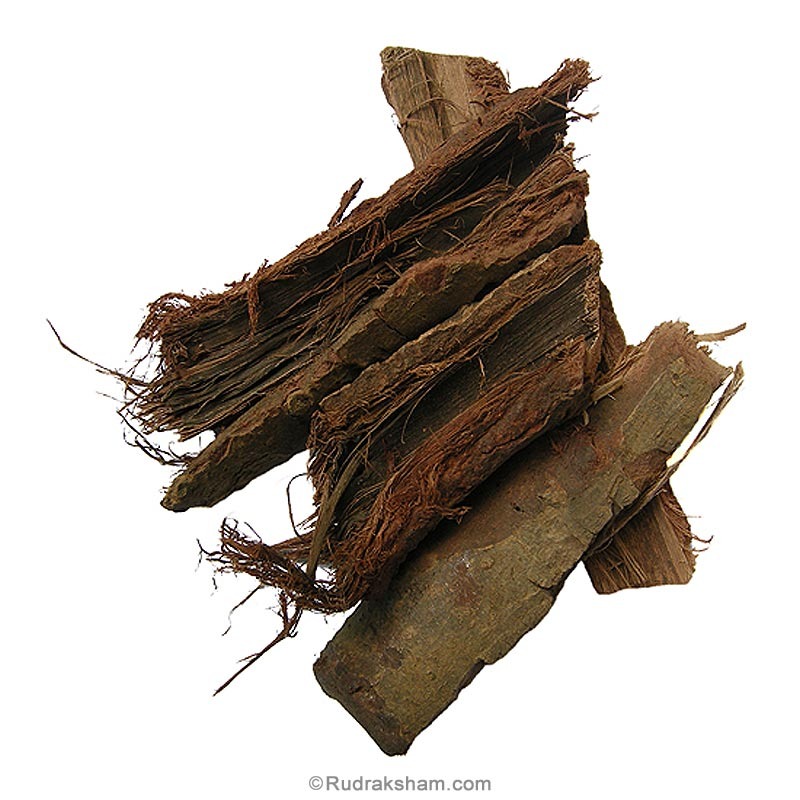
Ashoka
Saraca asoca (Roxb.) Willd.
Bulk Ashoka stem bark (Saraca asoca) for Ayurvedic women's-health formulation, sourced with documented origin due to the species' Vulnerable conservation status.
- Botanical nameSaraca asoca (Roxb.) Willd.
- Part usedStem bark (dried)
- FamilyFabaceae (Leguminosae; Caesalpinioideae)
- Also known asKankeli (Sanskrit), Asogam, Asokamara, Ashokapatta
- Certificate of Analysis
- Samples available
- Export documents handled
Ashoka is the dried stem bark of Saraca asoca, one of the principal single drugs used in classical Ayurvedic women's-health formulations. It is also a species under real conservation pressure, which changes how this bark should be sourced and verified.
Botanical identity and part used
Saraca asoca belongs to the Fabaceae family, in the Caesalpinioideae group historically classed as Leguminosae. The Ayurvedic Pharmacopoeia of India lists Saraca indica as a synonym still seen in older literature.
Only the dried stem bark, collected in spring from mature trees, is the recognised pharmacopoeial drug. Bark is channelled, dark green to greenish grey outside with circular lenticels, and reddish brown inside with fine longitudinal fibres, with an astringent taste.
Conservation status and sourcing
Saraca asoca is listed as Vulnerable by the IUCN. Bark harvesting traditionally involves stripping or girdling wild trees, which has driven a documented decline in natural populations across its native range.
Rising demand against a shrinking wild resource base has also created a serious adulteration problem. Published research confirms that Ashoka bark in the open trade is frequently substituted with Polyalthia longifolia, Bauhinia variegata, Mesua ferrea, Shorea robusta and Trema orientalis, all of which can pass a casual visual check. AV Biotech sources bark preferentially from cultivated and plantation-grown trees to reduce pressure on wild stands, and documented cultivated-origin lots are available against advance contract.
Where it grows in India
The Ayurvedic Pharmacopoeia of India records the species from the Central and Eastern Himalayas, the Western Ghats and the Deccan plateau. Cultivated plantings are increasingly the more sustainable source, and several state medicinal-plant programmes now promote Ashoka cultivation specifically to ease wild-harvest pressure.
Harvest and processing
Bark is collected in spring from mature wild or cultivated trees. Sustainable collection takes bark from selected sections rather than fully girdling a tree, since complete ring-barking kills it.
Collected bark is cleaned, sun dried and graded before being sold whole, cut, or milled to powder.
Forms that trade
AV Biotech supplies Ashoka as whole dried bark, cut and sifted bark, and milled bark powder, verified against the Ayurvedic Pharmacopoeia of India macroscopic description and screened for common adulterant species on request.
Industry applications of Ashoka
Ashoka bark moves almost entirely into classical and licensed Ayurvedic pharmaceutical manufacturing, with a smaller extract and research segment.
Ayurvedic pharmaceutical manufacturing
Ashokarishta, a widely manufactured fermented Ayurvedic preparation, and Ashokaghrita are the principal named formulations built around this bark, both positioned for classical women's-health indications. Manufacturers working to Ayurvedic Pharmacopoeia of India standards specify bark-only material with confirmed species identity, given the scale of adulteration in the open market.
Extract and nutraceutical formulation
Standardised bark extracts, generally referencing tannin and total phenolic content, go into women's-health supplement capsules and syrups positioned around traditional Ayurvedic use. Extract buyers should request adulterant-screening data alongside the standard assay, since a tannin or phenolic assay alone does not confirm species identity.
Research and conservation-linked sourcing
Universities and conservation-linked cultivation programmes buy documented cultivated-origin bark for propagation research and for building verified reference material against which adulterants can be identified. This reference material is also used to develop and validate the DNA-barcode and HPTLC methods now used to screen incoming trade lots.
Export and traditional medicine trade
Smaller volumes move to traditional medicine manufacturers in Bangladesh, Sri Lanka and other South Asian markets that use Saraca asoca bark in comparable formulations. These buyers typically ask for the same species-verification documentation expected in the Indian market.
Sourcing note on conservation status
Because wild Ashoka populations are under real pressure, larger buyers increasingly build long-term supply agreements around cultivated or plantation-grown bark rather than opportunistic wild-collected lots. This also gives more consistent bark thickness and moisture across repeat shipments than mixed wild-collected material typically offers. Brands citing sustainability in their sourcing story should ask for origin documentation rather than a general assurance.
Common product formats
- Ashokarishta and other classical fermented Ayurvedic liquid preparations
- Ashoka churna and polyherbal women's-health powder blends
- Standardised bark extract for capsules and syrups
- Cultivated-origin, documented bark for conservation-linked sourcing programmes
Traditional use and current research
The Ayurvedic Pharmacopoeia of India describes Ashoka bark as Tikta and Kashaya in taste, Laghu and Ruksha in quality, Sita in potency and Katu in post-digestive effect. Its classical actions are listed as Hridya, Vishaghna, Grahi, Varnya and Shothahara.
These are classical Ayurvedic descriptions, not clinical claims. The notes below present traditional positioning and general research directions, not established medical outcomes.
Traditional gynaecological use
The pharmacopoeia lists Asrigdara, excessive uterine bleeding, among Ashoka's classical therapeutic indications, which is the basis for its long-standing use in women's-health formulations such as Ashokarishta. This is a classical-text reference, not a claim for any specific packaged product.
Traditional anti-inflammatory and astringent use
Shotha, swelling, and Daha, burning sensation, are listed among the bark's classical indications, consistent with its Shothahara and Grahi properties. Modern phytochemical studies attribute much of this activity to the bark's tannin and glycoside content.
Research interest in bark phytochemistry
Published phytochemical work reports tannins, flavonoids, glycosides and steroidal constituents in Ashoka bark, and laboratory studies have examined antioxidant and uterotonic activity. This remains an active research area rather than a settled clinical finding.
Traditional blood-related and detoxifying use
Classical texts list Raktadosha, blood-related disorders, and Apachi, glandular swelling, among Ashoka's indications, alongside its Vishaghna, or antitoxic, classification. These are text-based traditional uses.
What buyers should note on claims
Given the extent of species substitution in the Ashoka trade, any traditional-use reference or clinical citation should be tied to verified Saraca asoca bark, not to material sold generically as Ashoka. Species confirmation should sit alongside any assay data used to support a finished-product claim.
This information is provided for educational and B2B product-sourcing purposes only. It is not medical advice and these statements have not been evaluated by any regulatory authority. Finished-product claims are the responsibility of the manufacturer.
| Botanical name | Saraca asoca (Roxb.) Willd., Fam. Fabaceae (Leguminosae) |
|---|---|
| Part used | Dried stem bark, collected in spring |
| Appearance | Channelled bark; externally dark green to greenish grey with circular lenticels, transversely ridged; internally reddish brown with fine longitudinal fibres; fracture splintery |
| Odour and taste | Faint characteristic odour; taste astringent |
| Active constituents | Tannins and a crystalline glycoside per API; modern studies also report catechin, epicatechin, leucocyanidin, flavonoids and steroidal constituents |
| Foreign matter | Not more than 2 per cent (API limit) |
| Total ash | Not more than 11 per cent (API limit) |
| Acid-insoluble ash | Not more than 1 per cent (API limit) |
| Alcohol (90 per cent)-soluble extractive | Not less than 15 per cent (API limit) |
| Water-soluble extractive | Not less than 11 per cent (API limit) |
| Moisture | Not more than 10 per cent (typical trade limit; not a separately listed API parameter) |
| Species and adulterant screening | Macroscopic confirmation against API description recommended; HPTLC or DNA-barcode screening available on request to rule out Polyalthia longifolia, Bauhinia variegata, Mesua ferrea, Shorea robusta and Trema orientalis, all documented substitutes in the open bark trade |
| Particle size | Whole and cut bark, 1 to 5 cm; powder 40 to 80 mesh on request |
| Heavy metals | Tested against AYUSH limits on request |
| Pesticide residues | Tested against EU MRL on request for cultivated-source lots |
| Microbiology | Total plate count, yeast and mould, E. coli and Salmonella tested per lot; certificate supplied |
| Packing | 25 kg and 50 kg HDPE/PP laminated bags with food-grade LDPE inner liner |
| Shelf life | 24 months for whole and cut bark, 18 months for powder, in sealed original packing |
| Note | All values are typical or indicative. Actual lot values vary with origin and season, and are confirmed on the batch Certificate of Analysis. Saraca asoca is IUCN-listed as Vulnerable; documented cultivated-origin sourcing is recommended |
Values are typical and indicative. A lot-specific Certificate of Analysis is shared before dispatch.
What is your minimum order quantity for Ashoka bark?
100 kg for milled bark powder and 250 kg for whole or cut bark. For trial and formulation work we supply 1 to 2 kg paid samples, adjusted against your first commercial order.
How do you verify this is genuine Saraca asoca bark and not a substitute species?
Ashoka bark is widely adulterated with Polyalthia longifolia, Bauhinia variegata, Mesua ferrea, Shorea robusta and Trema orientalis. We grade against the API macroscopic description and can arrange HPTLC or DNA-barcode screening on request to confirm species identity.
Given its conservation status, where does your Ashoka bark come from?
Saraca asoca is IUCN-listed as Vulnerable. We source preferentially from cultivated and plantation-grown trees, and can supply documented cultivated-origin lots against advance contract rather than undocumented wild-collected stock.
What documentation comes with an export shipment?
Every lot ships with a batch Certificate of Analysis covering ash values, extractives, moisture, heavy metals, pesticide residues and microbiology. Export consignments also carry a phytosanitary certificate, Certificate of Origin, packing list and commercial invoice.
What is the typical lead time?
10 to 15 working days for stock grades from Jaipur. Documented cultivated-origin lots and species-screened material take 3 to 4 weeks depending on the spring collection season.
Enquire about Ashoka
No payment is taken here — this reaches our sourcing team directly.
Related products