Ashwagandha
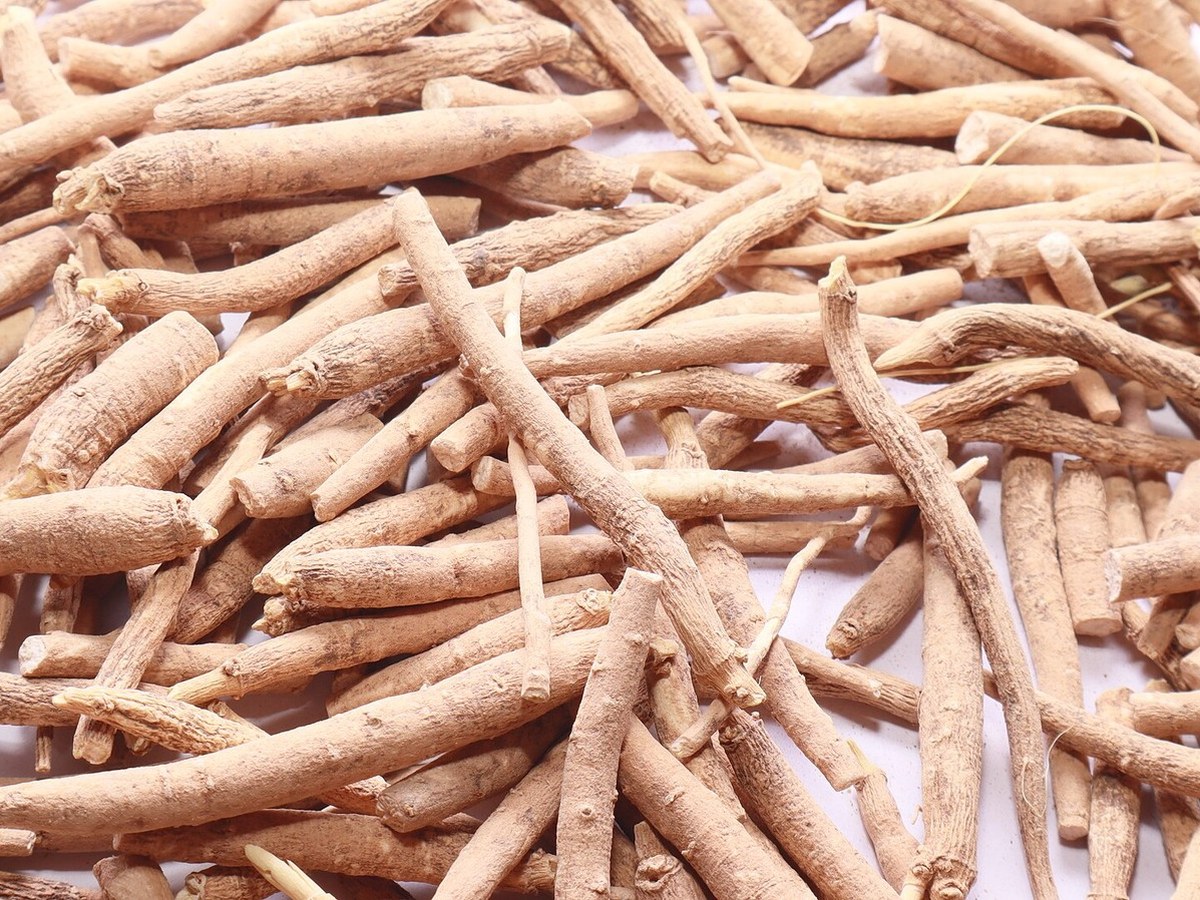
Ashwagandha
Withania somnifera (L.) Dunal
Bulk Ashwagandha root (Withania somnifera) in whole, cut and powder grades for Ayurvedic, nutraceutical, cosmetic and extract manufacturers sourcing from India.
- Botanical nameWithania somnifera (L.) Dunal
- Part usedRoot (primary trade grade), leaf, seed
- FamilySolanaceae
- Also known asAsgandh, Asgandha, Amukkara, Amukkaramkizangu, Pennerugadda, Hayagandha, Vajigandha, Asagandha
- Certificate of Analysis
- Samples available
- Export documents handled
Ashwagandha is the dried root of Withania somnifera, the single largest-volume adaptogen in the Indian herbal trade. Buyers source it for Ayurvedic classical formulations, capsules and tablets, standardised extracts and personal-care bases.
Botanical identity and part used
Ashwagandha belongs to the Solanaceae family, the same family as tomato and chilli. It is a small perennial shrub with dull green leaves and orange-red berries held in a papery calyx, which gives it the English name winter cherry.
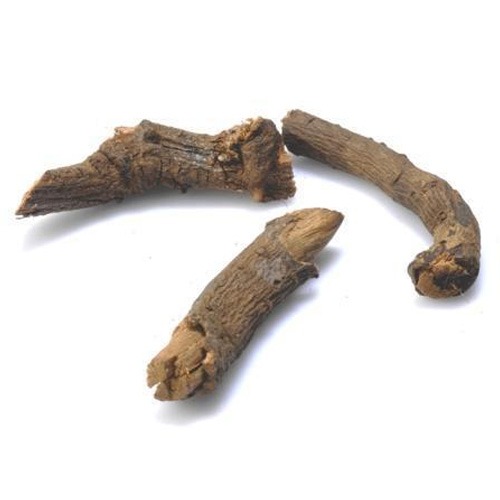
The commercially recognised drug is the dried mature root. The Ayurvedic Pharmacopoeia of India defines Ashwagandha as dried mature roots only. Leaf and seed are traded separately and are not interchangeable with root in a specification.
Where it grows in India
Ashwagandha is grown as a late rainy-season crop in dry, sandy-loam soils. The two established belts are Nagaur district in Rajasthan and the Neemuch, Mandsaur, Manasa, Javad and Bhanpura tracts of western Madhya Pradesh.
Nagauri Ashwagandha from Nagaur holds a Geographical Indication tag. Nagaur's dry climate and sandy soil produce longer, thicker, lower-fibre roots, and the trade prices this material at a premium over general-origin root.
Harvest and processing
Roots are lifted in winter, after the crop has completed roughly 150 to 180 days. Whole plants are uprooted, roots separated from the aerial parts, washed free of soil and cut into short pieces.
Pieces are then sun or shade dried to a stable moisture level and graded by thickness and colour. Milling is done on impact or hammer mills, usually to 80 mesh for capsule and tablet use.
Why buyers source it
Demand sits well ahead of organised supply. Indian cultivation covers roughly 5,000 hectares against a domestic and export requirement several times the annual crop, which makes contracted, traceable material worth locking in early.
The commercial value sits in withanolides, a group of naturally occurring steroidal lactones, alongside alkaloids and withanosides. Raw root powder typically carries withanolide content well below extract levels, so formulators choose between powder and extract on cost and dose.
Forms that trade
AV Biotech supplies Ashwagandha as whole dried root, cut and sifted root, and milled root powder. Sorted, low-fibre root of Nagauri type is offered separately from general-origin root, and organic-certified lots are available against advance contract.
Industry applications of Ashwagandha
Ashwagandha moves into five broad manufacturing streams, and each one buys a different grade. Matching the grade to the application is the main sourcing decision.
Ayurvedic and pharmaceutical manufacturing
Classical Ayurvedic units buy cut root and coarse powder for arishta, churna, avaleha and taila preparations. Ashwagandharishta, Ashwagandhadi Leha and Balashwagandha Lakshadi Taila are the named formulations that consume the most volume.
These buyers usually work to Ayurvedic Pharmacopoeia of India limits and want root-only material with documented identity.
Nutraceutical and supplement brands
Supplement manufacturers buy 80 mesh root powder for capsules, tablets and blended sachets. Extract houses buy cut root as feedstock and standardise the output to withanolide levels, commonly 1.5, 2.5 or 5 per cent by HPLC.
Buyers in this segment increasingly ask for root-only confirmation, because extract standardised on total withanolides alone cannot show which plant part was used.
Cosmetic and personal care
Formulators use fine root powder and root extract in anti-ageing serums, scalp oils, hair masks and ubtan-style cleansing powders. Colour consistency and low microbial load matter more here than assay value.
Food, beverage and functional nutrition
Ashwagandha appears in functional beverages, protein blends, plant-based lattes and gummies. These buyers need finer mesh, controlled particle size and a clean sensory profile, since the root carries a distinctly bitter and slightly horsey note.
Veterinary and animal nutrition
Coarse root powder and mill screenings are used in cattle and poultry feed premixes and in veterinary Ayurvedic preparations.
Common product formats
- Single-herb capsules and tablets, 300 to 600 mg fill
- Ashwagandha churna and classical Ayurvedic liquids
- Standardised root extracts at 1.5, 2.5 and 5 per cent withanolides
- Functional beverage premixes, gummies and effervescent tablets
- Hair oils, scalp serums, face masks and ubtan blends
- Sports nutrition and sleep-support stack formulations
- Veterinary feed premixes and livestock tonics
Traditional use and current research
Ashwagandha is classed in Ayurveda as a Rasayana, a rejuvenative category of herbs, and as Balya, meaning strength-giving. The Ayurvedic Pharmacopoeia of India lists its traditional applications as Shotha, Kshaya, Daurbalya, Vataroga and Klaibya.
Modern interest has focused on its role as an adaptogen, a term used for plants studied for how the body responds to physical and mental load. The following notes describe traditional positioning and published research directions, not established medical outcomes.
Stress and everyday resilience
Ashwagandha root extract is the most-studied Indian adaptogen in this area. Clinical studies suggest effects on self-reported stress scores and on serum cortisol, and brands commonly formulate it into products positioned around daily stress support.
Sleep quality
The species name somnifera means sleep-inducing, reflecting long traditional use. Studies suggest measurable changes in sleep-onset latency and sleep quality questionnaires, and it is widely used in night-time formulations.
Physical performance and recovery
Traditional texts describe Ashwagandha as Balya and Vajikarana. Published trials have examined endurance markers and strength outcomes in adults undertaking resistance training, and sports nutrition brands formulate it into recovery and performance products.
Cognitive and general vitality positioning
Research has looked at attention, reaction time and memory measures in adults. Products in this space are usually positioned around focus and mental clarity rather than any disease outcome.
Immune and general tonic use
Ayurvedic practice uses Ashwagandha as a general tonic during convalescence. Reviews have discussed immunomodulatory and neuroprotective properties, though the evidence base remains at an early stage.
What buyers should note on claims
Withanolide content and plant part both affect how a clinical reference can be used. A 10 per cent withanolide root-and-leaf extract is not comparable to a 5 per cent root-only extract, and claim substantiation should be built on the same material specification used in the cited study.
This information is provided for educational and B2B product-sourcing purposes only. It is not medical advice and these statements have not been evaluated by any regulatory authority. Finished-product claims are the responsibility of the manufacturer.
| Botanical name | Withania somnifera (L.) Dunal, Fam. Solanaceae |
|---|---|
| Part used | Dried mature root (root-only grade); leaf and seed quoted separately |
| Appearance | Buff to grey-yellow root pieces with longitudinal wrinkles; powder off-white to light beige |
| Odour and taste | Characteristic; taste bitter and acrid |
| Active constituents | Withanolides and alkaloids. Raw root powder typically 0.3 to 0.5 per cent total withanolides (gravimetric). Extracts standardised to 1.5, 2.5 or 5 per cent withanolides by HPLC |
| Total alkaloids | Not less than 0.2 per cent (Ayurvedic Pharmacopoeia of India assay) |
| Moisture | Not more than 10 per cent (typical trade limit; 8 per cent achievable on request) |
| Total ash | Not more than 7 per cent (API limit) |
| Acid-insoluble ash | Not more than 1 per cent (API limit) |
| Foreign matter | Not more than 2 per cent (API limit) |
| Alcohol-soluble extractive | Not less than 15 per cent (API limit) |
| Non-root plant parts | Not more than 2 per cent; HPTLC screening for aerial-part flavonol glycosides available on request |
| Particle size | 80 mesh standard for powder; 40 and 60 mesh for classical formulations; 100 to 120 mesh on request |
| Heavy metals | Lead NMT 10 ppm, Arsenic NMT 3 ppm, Cadmium NMT 0.3 ppm, Mercury NMT 1 ppm (AYUSH limits) |
| Pesticide residues | Tested against EU MRL; organic lots screened on a multi-residue panel |
| Microbiology | Total plate count NMT 100,000 cfu/g, Yeast and mould NMT 1,000 cfu/g, E. coli and Salmonella absent |
| Aflatoxins | B1 NMT 2 ppb, total NMT 4 ppb |
| Packing | 25 kg HDPE or PP laminated bags with food-grade LDPE inner liner; 50 kg for whole and cut root; fibre drums on request |
| Shelf life | 24 months for powder, 36 months for whole dried root, in sealed original packing |
| Note | All values are typical or indicative. Actual lot values vary with origin, season and grade, and are confirmed on the batch Certificate of Analysis |
Values are typical and indicative. A lot-specific Certificate of Analysis is shared before dispatch.
What is your minimum order quantity for Ashwagandha?
100 kg for milled root powder and 500 kg for whole or cut root. Standardised extracts start at 25 kg. For trial and formulation work we supply 1 to 2 kg paid samples, and the sample cost is adjusted against your first commercial order.
Can you supply root-only Ashwagandha, and how is it verified?
Yes. Our standard offering is sorted root-only material, with stem bases trimmed at grading. On request we provide HPTLC screening for aerial-part flavonol glycosides, which is the practical way to detect leaf and stem addition. Withanolide assay by itself will not show plant-part substitution.
What documentation comes with an export shipment?
Every lot ships with a batch Certificate of Analysis covering assay, ash values, moisture, heavy metals, pesticide residues and microbiology. Export consignments also carry a phytosanitary certificate, Certificate of Origin, packing list, commercial invoice and organic transaction certificate where applicable.
Can you customise mesh size, assay level or packing?
Yes. We mill to 40, 60, 80, 100 and 120 mesh, and we can supply against a buyer-specified assay range for withanolides or total alkaloids. Packing can be changed to 20 kg or 25 kg kraft bags, fibre drums or your own private-label sacks.
What is the typical lead time?
7 to 12 working days for stock grades from Jaipur. Organic-certified lots, custom milling and buyer-specific assay ranges take 3 to 4 weeks. Peak demand runs after the winter root harvest, so contracted volumes are best booked in advance.
Enquire about Ashwagandha
No payment is taken here — this reaches our sourcing team directly.
Related products