Chitrak (Leadwort)
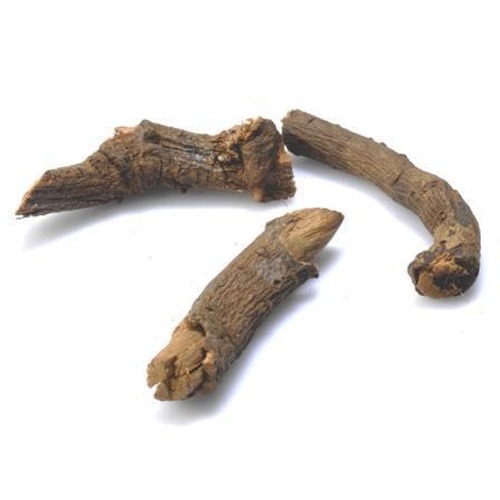
Chitrak (Leadwort)
Plumbago zeylanica L.
Bulk Chitrak (Plumbago zeylanica) root and root bark, shodhit and unshodhit, for Ayurvedic manufacturers and plumbagin extract buyers sourcing from India.
- Botanical namePlumbago zeylanica L.
- Part usedRoot, root bark
- FamilyPlumbaginaceae
- Also known asChitramool, Chitra, Agnishikha, Vahni, Chitrakmool, Vella Chitrakmoolam, Koduveli
- Certificate of Analysis
- Samples available
- Export documents handled
Chitrak is the dried root of Plumbago zeylanica L., a perennial undershrub cultivated and wild-collected across peninsular and eastern India. Buyers are classical Ayurvedic manufacturers, churna and rasayana producers, and extract houses isolating plumbagin.
Botanical identity and part used
Chitrak belongs to the Plumbaginaceae family. The plant grows 1.5 to 2 metres tall with rambling branches and small white flowers, which is why it is called white-flowered leadwort in trade.
A related species, Plumbago rosea, has red flowers and is traded separately in India as Rakta Chitrak or Lal Chitrak. The two are not interchangeable in a specification, and buyers should state which species they require.
The commercially recognised drug is the dried mature root, sometimes supplied as root bark alone. The Ayurvedic Pharmacopoeia of India monographs the root under Chitraka.
Where it grows in India
Chitrak grows wild across drier deciduous tracts of south and central India and is also collected from Bengal and Uttar Pradesh. Limited organised cultivation is reported from Gujarat and Kerala, often as an intercrop under guava, mango or citrus orchards.
Because most commercial volume still comes from wild collection rather than a single defined cultivation belt, lot-to-lot consistency depends more on the collector network and post-harvest handling than on a fixed geographic origin.
Harvest and processing
Roots are lifted after the plant's flowering and rainy-season growth phase ends, when root reserves are at their peak. Collected roots are washed, cut into pieces and sun-dried before grading and milling.
Fresh root and bark are strongly acrid and can irritate skin and mucous membranes on contact, so processing yards handle raw material with care during cutting and drying.
Why buyers source it
The commercial value sits in plumbagin, a naphthoquinone that is the principal marker compound in trade and research literature. Reported root plumbagin content in published assays generally falls under roughly 0.5 per cent of dry weight, though values vary with plant part, origin and extraction method.
Because raw Chitrak root is classified as an upavisha, a substance requiring processing before internal use, most Ayurvedic buyers specify shodhit (purified) root rather than raw dried root for classical formulation work.
Forms that trade
AV Biotech supplies Chitrak as whole dried root, cut root, root bark, and milled root powder, in both raw (ashodhit) and Shodhana-processed (shodhit) grades. Feedstock-grade cut root for plumbagin extraction is offered separately from finished-formulation grade powder.
Industry applications of Chitrak
Chitrak moves through a smaller and more specialised set of buyers than a mainstream Ayurvedic herb like ashwagandha or senna. Each buyer group has a distinct processing requirement.
Classical Ayurvedic and Unani manufacturing
Ayurvedic pharmaceutical units buy shodhit root and coarse powder for classical formulations such as Chitrakadi Vati, Chitrakadi Churna and Chitraka Haritaki. These preparations are traditionally positioned around Agni, the digestive fire concept in Ayurveda.
Buyers in this segment require documentation confirming the Shodhana process used, since raw and purified root are not substitutable in a classical prescription.
Extract and plumbagin manufacture
Extract houses use cut root and root bark as feedstock to isolate plumbagin for research use and for standardised extract ingredients. These buyers specify plumbagin assay by HPLC and often ask for a defined particle size to aid solvent extraction efficiency.
Nutraceutical and wellness brands
A smaller volume of milled root powder goes into digestive-support capsule and tablet blends, usually as one ingredient among several rather than as a single-herb product, reflecting Chitrak's traditional role as a digestive and metabolic stimulant herb.
Veterinary Ayurveda
Coarse root powder is also used in veterinary Ayurvedic formulations aimed at appetite and digestion in livestock, at lower purity requirements than the human-grade material.
Common product formats
- Chitrakadi Vati, Chitrakadi Churna and related classical tablets and powders
- Digestive-support capsule and tablet blends combining Chitrak with other carminative herbs
- Plumbagin extract feedstock for research and specialty-ingredient use
- Shodhit root powder for pharmacy compounding
- Veterinary Ayurvedic digestive formulations
Buyers should always confirm whether their formulation calls for raw or Shodhana-processed root, since the two carry different handling and dosing implications in classical practice.
Traditional use and current research
Chitrak is classed in Ayurveda under Deepana and Pachana, categories describing herbs traditionally used to support digestive fire and digestion. The Ayurvedic Pharmacopoeia of India lists traditional indications including Agnimandya, Udara and Grahani.
The following notes describe traditional positioning and published research directions, not established medical outcomes, and are provided for sourcing context only.
Digestive and metabolic use
Chitrak root is traditionally described as Ushna (hot) and Deepana-Pachana, used in classical practice to stimulate appetite and support digestion. This is the herb's core traditional identity and the basis for most finished-product formulation.
Research on plumbagin
Plumbagin, the root's principal naphthoquinone, has been studied for antioxidant, antimicrobial and other bioactive properties in laboratory settings. This research is preliminary and relates to the isolated compound rather than to any finished consumer product.
Traditional external use
Classical texts describe external application of processed root paste for certain skin conditions. This traditional use requires correctly Shodhana-processed material, given the acrid, irritant nature of the raw root and its documented skin-irritant potential.
Why processing (Shodhana) matters for safety
Raw Chitrak root contains plumbagin, which is irritant to skin and mucous membranes and is classified in Ayurveda as an upavisha requiring purification before internal use. Ayurvedic pharmacies use defined Shodhana methods, commonly involving specific liquid media, before the root enters a classical formulation.
Buyers formulating finished products should confirm that their supply chain, and their own manufacturing process, follows an appropriate purification step and does not use raw root directly in an internal-use product.
Points buyers should note on claims
Chitrak has a narrow traditional dose range and a documented irritant profile in its unprocessed state. Any finished-product claim should be built on correctly processed material and reviewed against the destination market's rules for botanical ingredients with a cautionary use profile.
This information is provided for educational and B2B product-sourcing purposes only. It is not medical advice and these statements have not been evaluated by any regulatory authority. Finished-product claims are the responsibility of the manufacturer.
| Botanical name | Plumbago zeylanica L., Fam. Plumbaginaceae |
|---|---|
| Part used | Dried root, root bark; supplied raw (ashodhit) or Shodhana-processed (shodhit) |
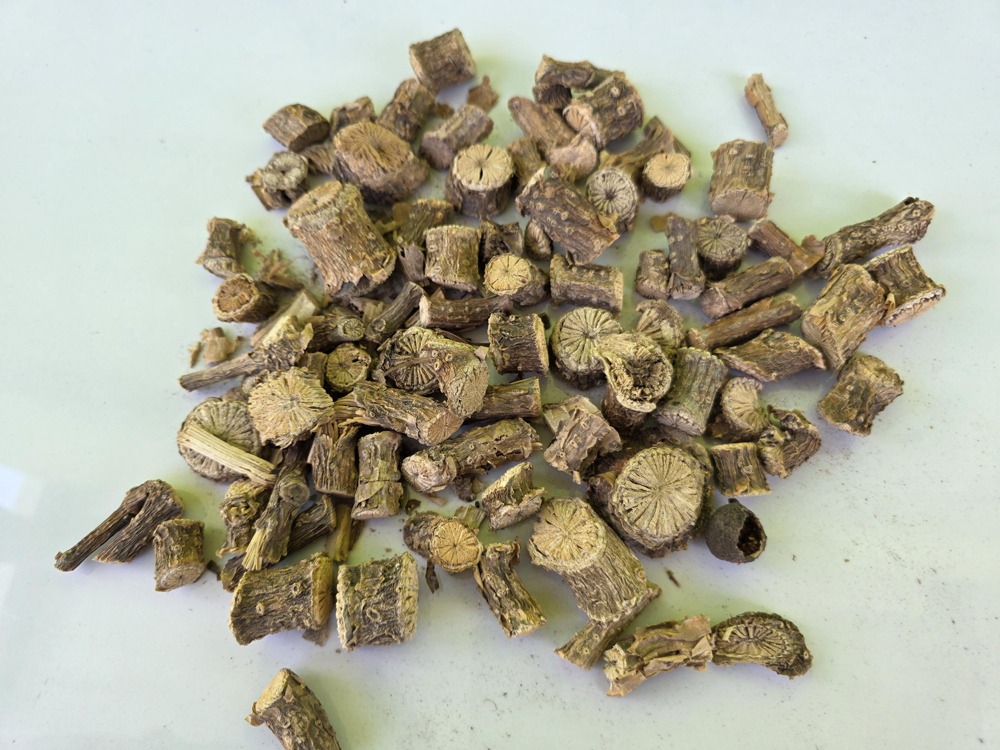
| Appearance | Root pieces cylindrical, greyish-brown outer surface, whitish-buff internally; powder light brown |
| Odour and taste | Slight characteristic odour; taste acrid, causing a burning sensation |
| Active constituents | Plumbagin (principal naphthoquinone) with plumbagic acid glucosides and related naphthoquinones. Published root assays generally indicate plumbagin content under 0.5 per cent of dry weight, HPLC method; confirmed per lot on request |
| Moisture | Not more than 10 per cent (typical trade limit) |
| Total ash | Not more than 8 per cent (typical) |
| Acid-insoluble ash | Not more than 2 per cent (typical) |
| Foreign matter | Not more than 2 per cent (typical) |
| Particle size | Whole and cut root standard; powder 60 to 80 mesh on request |
| Pesticide/heavy-metal/microbial testing | Lead, arsenic, cadmium and mercury tested to AYUSH limits; pesticide residue screened against buyer-nominated panel; total plate count, yeast and mould, E. coli and Salmonella tested to agreed limits |
| Packing | 25 kg HDPE or PP laminated bags with food-grade LDPE inner liner |
| Shelf life | 24 months for root and root bark, 18 months for powder, in sealed original packing |
| Note | All values are typical or indicative. Actual lot values vary with origin, season and processing, and are confirmed on the batch Certificate of Analysis |
Values are typical and indicative. A lot-specific Certificate of Analysis is shared before dispatch.
What is your minimum order quantity for Chitrak root?
50 kg for milled root powder and 100 kg for whole or cut root and root bark. We supply 250 g to 1 kg paid samples for identity and assay checks, adjusted against your first commercial order.
Do you supply shodhit (purified) Chitrak root, and how is it documented?
Yes, Shodhana-processed root is our standard offering for Ayurvedic pharmacy buyers. We also supply raw, unprocessed root for extraction use where the buyer's own process includes purification. Each order specifies clearly which grade is being shipped, and processing details are confirmed in writing on request.
Can you confirm the plumbagin content of a lot before shipment?
Yes. We arrange HPLC-based plumbagin testing on request and share the pre-shipment result along with the Certificate of Analysis. Because plumbagin content varies with origin and season, we recommend confirming your required range at enquiry stage.
What documentation comes with an export shipment?
Every lot ships with a batch Certificate of Analysis covering identity, ash values, moisture and microbiology. Export consignments also carry a phytosanitary certificate, Certificate of Origin, packing list and commercial invoice.
What is the typical lead time for Chitrak root orders?
7 to 14 working days for stock grades from Jaipur. Shodhana-processed lots and custom mesh sizes take 3 to 4 weeks, since purification is a batch process carried out to order.
Enquire about Chitrak (Leadwort)
No payment is taken here — this reaches our sourcing team directly.
Related products