Cinnamon (Dalchini)
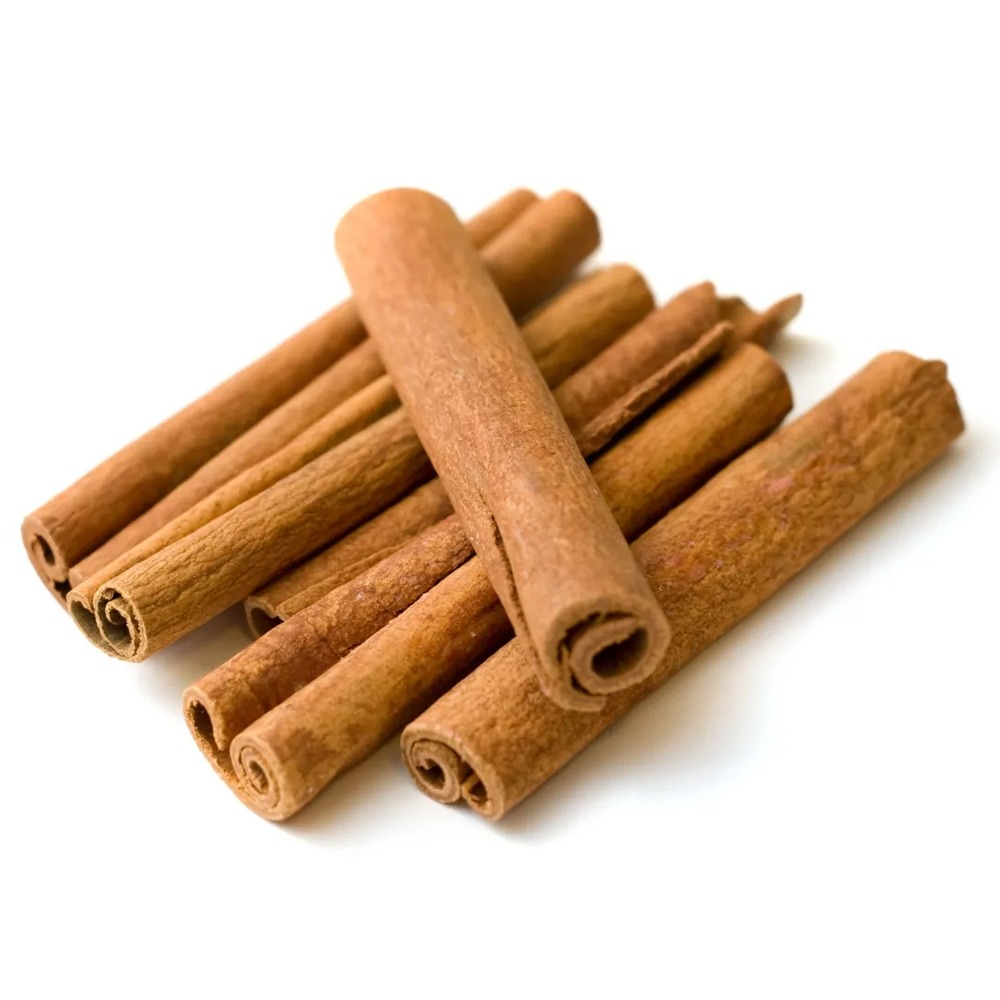
Cinnamon (Dalchini)
Cinnamomum verum J.Presl (syn. Cinnamomum zeylanicum Blume)
Bulk Cinnamon (Dalchini) bark, quills and powder for spice houses, extract makers and food manufacturers, with species and coumarin documentation on request.
- Botanical nameCinnamomum verum J.Presl (syn. Cinnamomum zeylanicum Blume)
- Part usedDried inner bark; leaf for oil distillation
- FamilyLauraceae
- Also known asDalchini, Tuvarachekke, Karuvapatta, Lavangapattai
- Certificate of Analysis
- Samples available
- Export documents handled
Cinnamon in commerce covers two distinct botanical sources, and confirming which one you are buying matters more here than with almost any other spice. Cinnamomum verum, true or Ceylon cinnamon, is one source. Cinnamomum cassia, cassia or Chinese cinnamon, is the other, and it is not the same species.
Botanical identity and the species question
Cinnamomum verum J.Presl belongs to the Lauraceae family. Its bark is thin, papery and multi-layered, rolled into compound quills, with a milder, sweeter flavour than cassia.
Cinnamomum cassia, sometimes sold in trade simply as cinnamon or Chinese cinnamon, has thicker, single-layer bark and a stronger, sharper flavour. India both grows a limited quantity of true cinnamon in Kerala and Tamil Nadu and imports and re-exports cassia bark, so a buyer must state the species explicitly in the purchase order, not just the trade name.
Why the species distinction matters commercially
The two species differ sharply in coumarin, a naturally occurring compound that is restricted in food because of liver-toxicity concerns at high intake. Published surveys put true Ceylon cinnamon generally under roughly 0.3 mg of coumarin per gram, often well below that, against roughly 0.7 to 12 mg per gram for cassia bark.
The European Union regulates coumarin levels in specific food categories under its food additive and flavouring framework, and fine bakery goods have shown high non-compliance rates in market surveys because cassia is often used where a lower-coumarin cinnamon is expected. Buyers selling into the EU on volume should treat species verification, not just a country-of-origin declaration, as the compliance checkpoint.
Where it grows and how it is processed
True cinnamon is cultivated on a limited scale in Kerala, Tamil Nadu and parts of the Western Ghats, alongside larger production from Sri Lanka, the traditional home of the crop. Trees are coppiced and young shoots are harvested, the outer bark scraped off, and the inner bark peeled, rolled into quills while still pliable, and dried.
Why buyers source it
The commercial value sits in the essential oil, principally cinnamaldehyde, along with the coumarin profile that separates true cinnamon from cassia. Buyers choose true cinnamon specifically where a lower-coumarin, EU-compliant declaration is required, and cassia where flavour strength and lower cost matter more than the coumarin ceiling.
Forms that trade
AV Biotech supplies cinnamon as whole quills, quillings (broken pieces), featherings and chips, and ground powder, sourced and documented to species. Species-verified true cinnamon and general-commercial cassia-type material are quoted and shipped separately.
Industry applications of Cinnamon
Cinnamon moves into food, pharmaceutical, cosmetic and extract manufacturing, and the species requirement differs by end use.
Food and beverage manufacturing
Bakery, confectionery, beverage and spice-blend manufacturers are the largest buyers by volume. EU and US bakery and confectionery buyers increasingly specify true cinnamon or a declared coumarin ceiling, because of category-specific coumarin limits in several markets.
Spice blending and export trading
Whole quills and quillings go into masala blends, mulling spice mixes and retail spice packs. Buyers for retail packaging usually want whole or broken quill grades with intact colour and aroma rather than powder, which oxidises and loses volatile oil faster.
Pharmaceutical and Ayurvedic manufacturing
Cinnamon bark and bark powder are used in classical Ayurvedic formulations, cough and digestive preparations, and are Ayurvedic Pharmacopoeia-listed material under Twak. Pharma buyers generally specify true cinnamon and request species confirmation on the Certificate of Analysis.
Extract, oil and oleoresin manufacture
Extract houses distil bark and leaf oil and produce standardised cinnamon extracts and oleoresins for flavour and fragrance use. Leaf oil, rich in eugenol, and bark oil, rich in cinnamaldehyde, are traded and priced separately.
Cosmetic and personal care
Cinnamon bark extract and oil appear in warming body-care products, oral-care formulations and some fragrance applications, generally at low use levels because of the oil's skin-sensitising potential at higher concentration.
Nutraceutical and functional food
Standardised cinnamon extracts, usually water-soluble types low in coumarin, are formulated into blood-sugar-support and metabolic-wellness supplement lines, a segment where species and coumarin data are central to the finished-product claim file.
Common product formats
- Whole quills and quillings for retail and food-service packs
- Ground cinnamon powder for bakery, spice blends and masala mixes
- Bark oil and leaf oil for flavour and fragrance use
- Standardised low-coumarin cinnamon extracts for supplement brands
- Cut bark for Ayurvedic churna and classical formulations
Traditional use and current research
Cinnamon bark is classed in Ayurveda as Twak, used traditionally to support digestion and as a warming spice in classical formulations. The following notes describe traditional positioning and published research directions, not established medical outcomes.
Digestive use
Cinnamon bark is traditionally used in Ayurvedic and other systems of traditional medicine to support digestion and appetite, generally as part of a spice blend rather than as a standalone treatment.
Metabolic and blood-sugar research
Cinnamon, particularly cassia-type material, has been studied for effects on blood glucose and lipid markers in clinical trials, with mixed results across studies. Supplement brands formulating around this research area should note that most published trials used cassia-derived extracts, not true cinnamon, so the extract source should match the cited evidence.
Antimicrobial and antioxidant research
Cinnamon bark oil and extracts have shown antimicrobial and antioxidant activity in laboratory studies, supporting some traditional food-preservation and flavouring use, though this does not translate directly into a therapeutic claim for a finished product.
Why coumarin limits shape formulation choices
Coumarin at high intake is associated with liver effects in toxicology studies, which is why several markets, including the EU, set category-specific limits on coumarin in food. This is a food-safety and compliance consideration, not a traditional-use claim, but it directly affects which species a formulator should choose.
Brands making a blood-sugar or metabolic-wellness claim should confirm whether their intended dose, taken daily and over time, stays within their market's coumarin guidance for the species they are using.
Points buyers should note on claims
Species identity is the single most consequential sourcing decision for a cinnamon-based product with a health positioning. A true cinnamon product and a cassia product are not interchangeable for either flavour strength or coumarin-related compliance.
This information is provided for educational and B2B product-sourcing purposes only. It is not medical advice and these statements have not been evaluated by any regulatory authority. Finished-product claims are the responsibility of the manufacturer.
| Botanical name | Cinnamomum verum J.Presl, syn. Cinnamomum zeylanicum Blume, Fam. Lauraceae (true cinnamon); Cinnamomum cassia (Nees ex L.) J.Presl available separately as cassia-type material |
|---|---|
| Part used | Dried inner bark (quills, quillings, featherings, chips); leaf for oil distillation |
| Appearance | True cinnamon: thin, multi-layered, light tan quills. Cassia: thicker, single-layer, reddish-brown bark |
| Active constituents | Cinnamaldehyde (principal aromatic component of bark oil); eugenol predominant in leaf oil. Coumarin: true cinnamon typically under 0.3 mg/g, cassia-type material typically 0.7 to 12 mg/g (published survey ranges) |
| Volatile oil | Bark typically 0.5 to 2.5 per cent; species and part dependent |
| Moisture | Not more than 12 per cent for bark, 8 per cent for powder (typical) |
| Total ash | Not more than 6 per cent (typical) |
| Acid-insoluble ash | Not more than 2 per cent (typical) |
| Foreign matter | Not more than 2 per cent (typical) |
| Particle size | Whole quills; quillings and featherings; powder 60 to 80 mesh |
| Pesticide/heavy-metal/microbial testing | Tested against EU MRL or buyer-nominated panel; heavy metals to AYUSH or Codex limits; total plate count, yeast and mould, E. coli and Salmonella to agreed limits; species confirmation available by sensory, microscopic or coumarin-ratio check |
| Packing | 25 kg PP/HDPE laminated bags with food-grade liner; export cartons for graded whole quills |
| Shelf life | 24 months for whole bark, 12 to 18 months for powder, in sealed original packing |
| Note | All values are typical or indicative. Actual lot values vary with species, origin and season, and are confirmed on the batch Certificate of Analysis |
Values are typical and indicative. A lot-specific Certificate of Analysis is shared before dispatch.
What is your minimum order quantity for Cinnamon?
100 kg for powder and 250 kg for whole or broken quills. Bark and leaf oil are available from 25 kg. We supply 250 g to 1 kg paid samples for species and sensory verification, adjusted against your first commercial order.
Can you confirm whether a lot is true cinnamon or cassia-type material?
Yes. Every quotation states the species explicitly, and we supply both. True cinnamon and cassia differ visibly in bark structure and are further distinguished by coumarin level, which we can test and report on the Certificate of Analysis on request.
Do you test for coumarin, and can you meet EU-market requirements?
Yes, coumarin testing is available on request for any lot. True cinnamon typically runs well below cassia-type material on coumarin, and we can supply against a buyer-specified coumarin ceiling for EU fine bakery or supplement applications.
What documentation do you provide with an export shipment?
Each shipment carries a lot-specific Certificate of Analysis with species declaration, packing list, commercial invoice, phytosanitary certificate and Certificate of Origin. Coumarin, pesticide residue and microbiology reports are issued on request.
What is the typical lead time for Cinnamon orders?
7 to 12 working days for stock grades from Jaipur. Species-verified true cinnamon in specific grades and custom mesh powder take 2 to 3 weeks, since sorting and testing are done to order.
Enquire about Cinnamon (Dalchini)
No payment is taken here — this reaches our sourcing team directly.
Related products