Amchoor (Dry Mango Powder)
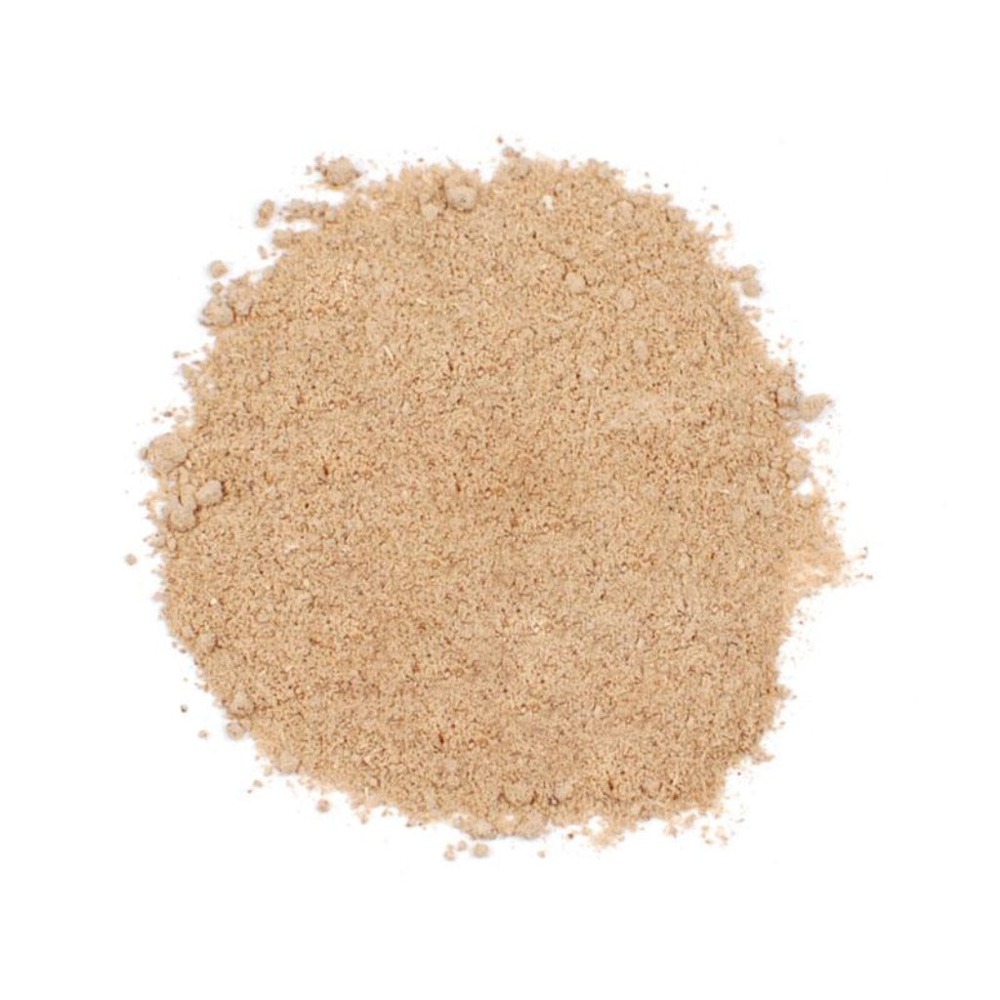
Amchoor (Dry Mango Powder)
Mangifera indica L.
Bulk Amchoor (dry mango powder) from raw green mangoes, in slice and powder grades, for spice blenders, pickle makers, snack and RTE food manufacturers.
- Botanical nameMangifera indica L.
- Part usedUnripe (raw green) fruit, sliced and sun-dried, then milled to powder
- FamilyAnacardiaceae
- Also known asAmchur, Aam Powder, Khatai Powder, Raw Mango Powder
- Certificate of Analysis
- Samples available
- Export documents handled
Amchoor is dried, unripe mango, traded as slices or as a fine sour powder. It is one of the highest-volume souring agents in the Indian spice export basket, alongside tamarind and dried kokum.
Botanical identity and part used
Mangifera indica belongs to the Anacardiaceae family, the same family as cashew and pistachio. The fruit used for amchoor is harvested while still green, firm and starchy, well before the sugars that ripen it into table mango develop.
Only the mesocarp, the fleshy pulp beneath the peel, is used. The stone and peel are removed before drying, and the pulp is sliced thin so it dries quickly without fermenting.
Where it is sourced in India
Raw material is drawn from mango-growing tracts across Uttar Pradesh, the Bundelkhand belt of UP and Madhya Pradesh, and Nandurbar in Maharashtra, which carries its own recognised trade name, Nandurbar Amchur. Rajasthan and Gujarat also supply processing volumes.
Processors use fruit thinned out during the natural fruit-drop stage and small or blemished raw mangoes that are unsuitable for the fresh fruit trade, which keeps the raw material stream separate from table-mango supply.
Harvest and processing
The raw mango season runs March to June, ahead of the main ripening period. Fruit is peeled, sliced into thin strips and spread out for sun drying.
Drying takes roughly two to three days under good sun, until the slices turn brittle, leathery and light brown. Slices are then either packed whole for the pickle trade or ground on hammer or pin mills into powder.
Why buyers source it
Amchoor delivers tartness without the moisture that fresh lemon or tamarind pulp adds, which matters for dry spice blends, packaged masalas and shelf-stable snack seasonings. The souring effect comes mainly from citric and malic acid concentrated during drying.
Buyers also value it as a stable substitute for citric acid additives in labels aiming for a natural, single-ingredient sourcing story. Colour, acidity and freedom from added sulphur are the three checks that separate export-grade from local market material.
Forms that trade
AV Biotech supplies Amchoor as dried slices for pickle and chutney units, and as powder milled to 60, 80 or 100 mesh for spice blending, snack seasoning and RTE food manufacturing. Colour-sorted, low-fibre slices are offered separately from general-grade material.
Industry applications of Amchoor
Amchoor is bought almost entirely for its souring and flavouring function, and the grade required tracks the finished product rather than any medicinal claim.
Spice blending and masala manufacturing
Masala and spice-blend units are the largest buyers, using fine powder in chaat masala, sambar powder, pickle masala and dry rub mixes. Colour and consistent acidity across lots matter more than particle size here, since amchoor is a minor but flavour-defining component.
Pickle, chutney and condiment manufacturing
Pickle manufacturers buy dried slices rather than powder, since slices hold up better in oil-based and brine-based pickle bases over a long shelf life. Chutney and relish makers use both slices and coarse powder depending on the recipe.
Snack, namkeen and RTE food manufacturing
Packaged snack and namkeen producers dust fine amchoor powder onto fried and baked products for a tangy top-note. Ready-to-eat curry-base and instant-mix manufacturers use it as a dry acidulant that does not add moisture to shelf-stable packaging.
Meat, poultry and food-service preparation
Amchoor is used as a natural meat tenderiser and marinade souring agent in food-service and processed-meat formulations, where its mild fruit acids work alongside the citric and malic acid content.
Export and repacking trade
A steady share of volume moves to export houses and private-label spice brands that repack amchoor for retail under their own labels in the Middle East, UK, US and Southeast Asian markets. Repackers usually specify a fixed moisture and mesh band so successive shipments match on shelf.
Quality checks buyers should make
Some traders bulk up amchoor with added starch or dose it with synthetic citric acid to fake sourness cheaply, which shows up as a sharp, flat acidity rather than the layered fruity tang of genuine dried mango. A simple acid-assay check against the declared citric acid range catches most of this before a lot enters production.
Colour should be checked lot to lot as well, since bleached or over-sulphured slices look more uniform than naturally sun-dried material but carry a different sulphite load. Buyers supplying sulphite-sensitive markets should always confirm this on the Certificate of Analysis rather than assuming it from appearance.
Common product formats
- Fine powder, 60 to 100 mesh, for masala and snack seasoning
- Coarse powder for chutney and marinade bases
- Dried slices for pickle and relish manufacturing
- Custom particle-size blends for packaged spice mixes
- Bulk export packs for private-label repacking
Traditional use and current position
Raw mango is described in classical Ayurvedic nighantu texts under the name Amra, with the unripe fruit classed as sour, appetite-stimulating and digestion-supporting when used in food. Amchoor is the dried, concentrated form of this same raw fruit.
These are food-use and traditional-text references, not claims for the processed spice powder as sold. The notes below describe traditional food positioning and general nutrient content, not medical outcomes.
Digestive and appetite use in cooking
Amchoor is traditionally added to lentils, vegetables and snacks as an appetiser and digestive aid, a common role for sour condiments in Indian regional cooking. This is a culinary-tradition use rather than a therapeutic claim for the ingredient in isolation.
Natural source of vitamin C and organic acids
Raw mango pulp carries ascorbic acid alongside citric and malic acid, though drying reduces vitamin C content compared with the fresh fruit. Buyers formulating nutrition-forward snack lines sometimes reference this acid and micronutrient profile on pack.
Natural acidulant positioning
Clean-label snack and sauce brands use amchoor as a plant-derived alternative to added citric acid on an ingredient panel. This is a formulation and labelling consideration, not a health claim, and should be checked against the applicable food-labelling rules in the destination market.
Low-sodium recipe positioning
Because amchoor delivers tartness without salt, some formulators use it to cut added sodium in dry seasoning blends while keeping a strong flavour profile. This is a recipe-formulation choice, not a claim that the ingredient itself lowers sodium intake or blood pressure.
What buyers should note on claims
Amchoor is regulated as a food and spice ingredient in most markets, not as a herbal medicine, so finished-product claims should stay within permitted food-labelling language. Any digestive or nutrient claim on a finished pack needs its own substantiation under the destination country's food law.
This information is provided for educational and B2B product-sourcing purposes only. It is not medical advice and these statements have not been evaluated by any regulatory authority. Finished-product claims are the responsibility of the manufacturer.
| Botanical name | Mangifera indica L., Fam. Anacardiaceae |
|---|---|
| Part used | Unripe (raw green) fruit pulp, sliced and sun-dried; stone and peel removed |
| Appearance | Slices: light brown to beige, thin and brittle. Powder: light beige to tan, free-flowing |
| Odour and taste | Characteristic fruity aroma; taste sour and tangy |
| Active constituents | Citric acid typically not less than 20 per cent; malic and tartaric acid present; ascorbic acid reduced from fresh-fruit level by drying |
| Moisture | Not more than 8 per cent for powder (trade target); up to 10 per cent tolerance per IS 13242 grading guidance |
| Total ash | Not more than 6 per cent (typical trade limit) |
| Acid-insoluble ash | Not more than 1 per cent (typical trade limit) |
| Extraneous / foreign matter | Not more than 1 per cent; free from stone fragments, peel and stalk material |
| Particle size | 60 mesh standard for masala use; 80 and 100 mesh for snack seasoning; slices graded 3 to 8 mm for pickle use |
| Colour and grading | Grade A: uniform light brown to beige, strong aroma. Grade B: darker, uneven colour, permitted for local trade only |
| Sulphur treatment | Unsulphured, sun-dried material standard; sulphur-treated lots not supplied unless specifically ordered and disclosed |
| Heavy metals | Tested against FSSAI food-safety limits on request |
| Pesticide residues | Tested against destination-market MRLs; multi-residue panel available on request |
| Microbiology | Total plate count, yeast and mould, and Salmonella/E. coli tested to FSSAI spice norms; certificate supplied per lot |
| Packing | 25 kg and 50 kg PP woven bags with food-grade LDPE inner liner; export cartons for retail-repack orders |
| Shelf life | 12 months for powder, 18 months for whole dried slices, in sealed original packing, stored dry |
| Note | All values are typical or indicative. Actual lot values vary with crop year and origin, and are confirmed on the batch Certificate of Analysis |
Values are typical and indicative. A lot-specific Certificate of Analysis is shared before dispatch.
What is your minimum order quantity for Amchoor?
500 kg for powder and 1 MT for dried slices. For trial and formulation work we supply 1 to 2 kg paid samples, and the sample cost is adjusted against your first commercial order.
Do you supply sulphur-free Amchoor?
Yes, unsulphured sun-dried material is our standard offering. We can also confirm sulphite absence on the Certificate of Analysis for buyers supplying markets with strict sulphur-residue limits.
What documentation comes with an export shipment?
Every lot ships with a batch Certificate of Analysis covering moisture, ash values, acidity, pesticide residues and microbiology. Export consignments also carry a phytosanitary certificate, Certificate of Origin, packing list and commercial invoice.
Can you customise mesh size, colour grade or packing?
Yes. We mill to 60, 80 and 100 mesh, and offer colour-sorted premium slices separately from general-grade material. Packing can be changed to 20 kg or 25 kg bags, retail pouches or your own private-label packaging.
What is the typical lead time?
7 to 10 working days for stock grades from Jaipur. Custom milling, colour sorting and private-label packing take 2 to 3 weeks. Fresh-season material is best booked ahead, since raw mango supply is seasonal between March and June.
Enquire about Amchoor (Dry Mango Powder)
No payment is taken here — this reaches our sourcing team directly.
Related products