Cloves (Laung)
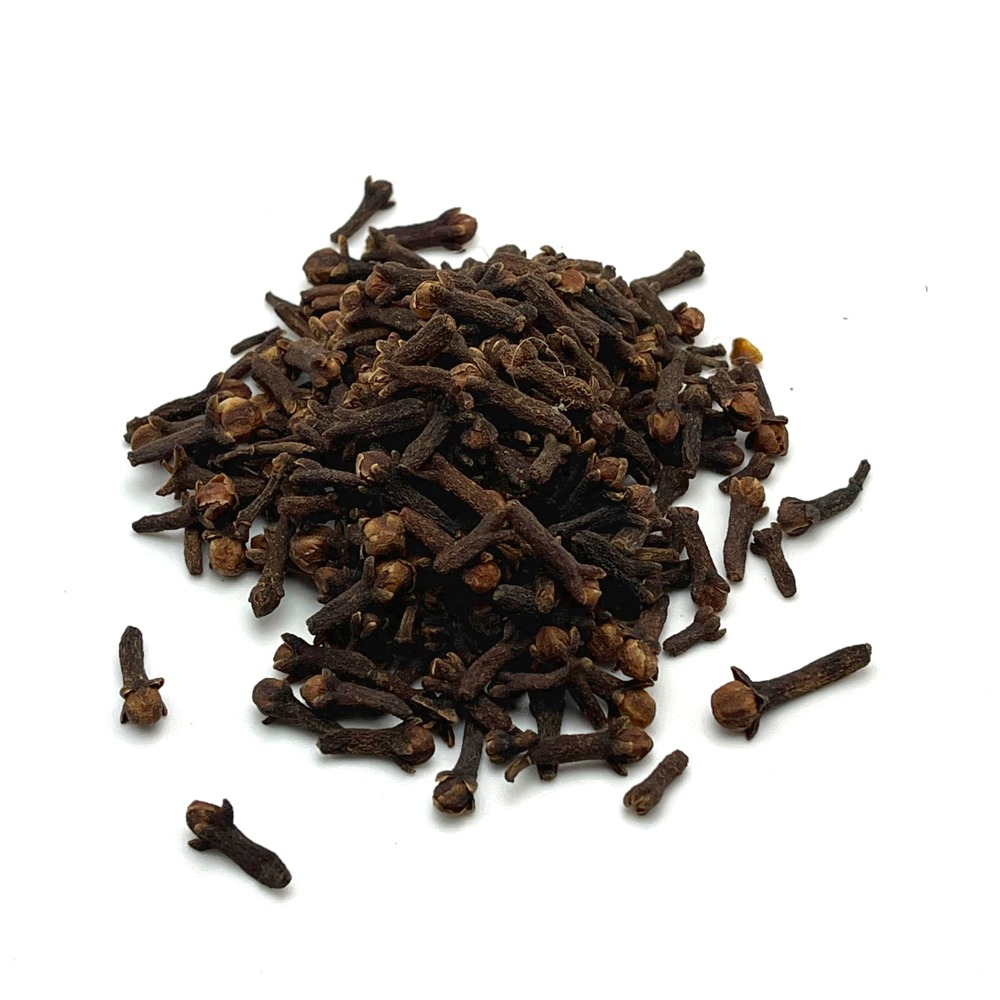
Cloves (Laung)
Syzygium aromaticum (L.) Merr. & L.M.Perry
Bulk Cloves (Laung) in headless, ungarbled and hand-picked grades for spice houses, extract makers and pharma buyers, with eugenol and volatile oil data.
- Botanical nameSyzygium aromaticum (L.) Merr. & L.M.Perry
- Part usedDried unopened flower bud
- FamilyMyrtaceae
- Also known asLaung, Lavang, Grambu, Krambu
- Certificate of Analysis
- Samples available
- Export documents handled
Cloves are the dried, unopened flower buds of Syzygium aromaticum, one of the oldest spices in world trade. Buyers are spice houses, food manufacturers, extract producers, pharmaceutical formulators and oral-care brands.
Botanical identity and part used
Cloves belong to the Myrtaceae family, the myrtle family that also includes eucalyptus and allspice. The tree is an evergreen native to the Maluku Islands of Indonesia and is now cultivated across several tropical regions, including southern India.
The traded spice is the flower bud, picked by hand before it opens, when it is pink to red in colour, then sun-dried until it turns the familiar dark brown.
Where it grows in India
In India, cloves are grown mainly in Kerala and Tamil Nadu, particularly in the Idukki and Kanyakumari districts, alongside larger world supply from Indonesia, Madagascar, Zanzibar (Tanzania) and Sri Lanka. India also imports substantial clove volume to service its domestic and re-export spice trade.
Harvest and processing
Flower buds are hand-harvested over several picking rounds as they mature, since not all buds on a tree ripen together. After drying, buds are cleaned and separated into grades based on size, completeness and the presence of stems.
Grading: whole, headless and mother cloves
Whole, intact cloves with the bud head attached are the premium grade, generally called hand-picked or selected quality. Headless cloves have lost the round bud head during handling, usually through rough threshing, and are graded and priced lower because the head carries a disproportionate share of the essential oil.
Ungarbled cloves are unsorted, straight-off-the-dryer material containing stems, mother cloves (the immature fruit that follows an unpicked flower) and broken pieces. Garbling is the cleaning process that separates whole buds from stems and mother cloves, and the trade watches stem and mother-clove content closely, since both are used historically to bulk out lower-grade lots and dilute true clove-bud assay.
Why buyers source it
The commercial value sits in eugenol, the dominant aromatic compound, and in the volatile oil that carries it. Clove buds typically yield in the range of 15 to 21 per cent volatile oil on distillation, and distilled clove bud oil commonly runs 70 to 90 per cent eugenol, figures buyers use to judge freshness and grade, since both volatile oil yield and eugenol content fall as buds age or are poorly dried.
Forms that trade
AV Biotech supplies cloves as hand-picked whole buds, headless cloves, ungarbled field-run material, clove stems, and ground powder, graded to buyer specification with eugenol and volatile oil data available per lot.
Industry applications of Cloves
Cloves serve food, pharmaceutical, oral-care and extract manufacturing, and each buyer group specifies a different grade.
Food and spice manufacturing
Spice blenders and food manufacturers use whole and headless cloves in garam masala, biryani masala, mulling spice blends and pickling mixes. Whole hand-picked grade is preferred for visible retail packs, while headless and ungarbled-derived material is used for grinding.
Pharmaceutical and dental use
Clove bud oil, rich in eugenol, is used in dental cement, temporary tooth-filling preparations and topical oral-care products, where eugenol's local anaesthetic and antiseptic properties in traditional and pharmacopoeial use are the basis for the formulation. Pharma buyers specify a minimum eugenol percentage in the oil and often require pharmacopoeial-grade documentation.
Extract, oil and oleoresin manufacture
Extract houses distil clove bud oil and clove stem oil, and produce clove oleoresin for flavour and fragrance use. Stem oil has a lower eugenol content than bud oil and is priced accordingly, so buyers should specify bud oil where a high-eugenol product is required.
Ayurvedic and Unani manufacturing
Clove, known as Lavanga in Ayurveda, is used in classical digestive and respiratory formulations and Unani preparations. These buyers typically want whole or hand-picked grade cloves with documented identity.
Cosmetic and personal care
Clove oil and extract are used in oral-care formulations, hair-care products and some fragrance applications, generally at controlled use levels because of eugenol's potency and sensitising potential at higher concentration.
Common product formats
- Whole and ground cloves for retail spice packs and masala blends
- Clove bud oil and clove stem oil for flavour, fragrance and dental use
- Clove oleoresin for food manufacturing
- Ayurvedic and Unani classical formulations
- Oral-care and topical products formulated with clove oil or extract
Buyers should always specify whether they need hand-picked whole buds, headless cloves or ungarbled field-run material, since the price difference between grades reflects a real difference in oil yield and stem/mother-clove content.
Traditional use and current research
Cloves are classed in Ayurveda as Lavanga, used traditionally in digestive, respiratory and dental preparations. The following notes describe traditional positioning and published research directions, not established medical outcomes.
Dental and oral-care use
Eugenol, clove's principal active compound, has documented local anaesthetic and antiseptic properties and has a long history of pharmacopoeial and dental use for temporary relief of toothache and in dental cement formulations. This is one of the more substantiated traditional uses of the spice.
Digestive use
Cloves are traditionally used in Ayurvedic and other systems of traditional medicine to support digestion and to ease occasional bloating, generally as part of a spice blend or after-meal preparation rather than a standalone treatment.
Antimicrobial and antioxidant research
Clove bud oil and eugenol have shown antimicrobial and antioxidant activity in laboratory studies, which supports the spice's traditional role in food preservation and flavouring.
Respiratory use
Traditional practice uses clove, often combined with other spices, in preparations intended to ease occasional cough and throat irritation. This traditional use does not extend to treatment of any diagnosed respiratory condition.
Points buyers should note on claims
Eugenol is a potent compound, and finished products using clove oil at meaningful concentration typically carry usage-level guidance and, in topical products, dilution instructions. Formulators should confirm the eugenol content of the specific oil lot they are using before finalising a dosage or usage claim.
This information is provided for educational and B2B product-sourcing purposes only. It is not medical advice and these statements have not been evaluated by any regulatory authority. Finished-product claims are the responsibility of the manufacturer.
| Botanical name | Syzygium aromaticum (L.) Merr. & L.M.Perry, Fam. Myrtaceae |
|---|---|
| Part used | Dried unopened flower bud |
| Appearance | Dark reddish-brown, nail-shaped bud with a rounded head; hand-picked grade shows an intact head, headless grade shows the head detached |
| Active constituents | Eugenol (principal component of clove bud oil, typically 70 to 90 per cent of the distilled oil) |
| Volatile oil | Typically 15 to 21 per cent on steam distillation of whole buds; falls with age, poor drying and stem/mother-clove content |
| Moisture | Not more than 12 per cent (typical trade limit) |
| Total ash | Not more than 7 per cent (typical) |
| Acid-insoluble ash | Not more than 1 per cent (typical) |
| Foreign matter, stems and mother cloves | Hand-picked/whole grade: essentially free; headless: head-detached buds only, stems limited by grade; ungarbled: field-run, stems and mother cloves present, percentage stated by lot |
| Particle size | Whole buds standard; ground powder 60 to 80 mesh on request |
| Pesticide/heavy-metal/microbial testing | Tested against EU MRL or buyer-nominated panel; heavy metals to Codex or AYUSH limits; total plate count, yeast and mould, E. coli and Salmonella to agreed limits |
| Packing | 25 kg PP/HDPE laminated bags with food-grade liner; export cartons for hand-picked whole grade |
| Shelf life | 24 months for whole buds, 12 to 18 months for powder, in sealed original packing |
| Note | All values are typical or indicative. Actual lot values vary with origin, season and grade, and are confirmed on the batch Certificate of Analysis |
Values are typical and indicative. A lot-specific Certificate of Analysis is shared before dispatch.
What is your minimum order quantity for Cloves?
100 kg for powder and headless grade, 250 kg for hand-picked whole grade. Bud and stem oil are available from 25 kg. We supply 250 g to 1 kg paid samples for grade and eugenol verification, adjusted against your first commercial order.
What is the difference between headless and ungarbled cloves?
Headless cloves have lost the round bud head during handling and are graded lower because the head carries most of the essential oil. Ungarbled cloves are unsorted, field-run material that still contains stems and mother cloves, which dilute the eugenol assay. We supply both, clearly graded and priced apart from hand-picked whole buds.
Can you guarantee a minimum eugenol or volatile-oil content?
We share pre-shipment volatile-oil and eugenol test results against your specification and select lots to meet an agreed range. Fresh, well-dried, low-stem material consistently shows higher volatile-oil yield, so we recommend specifying both the grade and the assay range together.
How do you control stem and mother-clove adulteration?
Our hand-picked grade is visually sorted to remove stems and mother cloves at the yard, and we state stem content explicitly for headless and ungarbled lots. Buyers with a strict specification can request a stated maximum stem percentage, verified on the Certificate of Analysis.
What is the typical lead time for Clove orders?
7 to 12 working days for stock grades from Jaipur. Hand-picked whole grade in specific size ranges and custom-tested eugenol lots take 2 to 3 weeks, since sorting and testing are done to order.
Enquire about Cloves (Laung)
No payment is taken here — this reaches our sourcing team directly.
Related products