Coriander (Dhania)
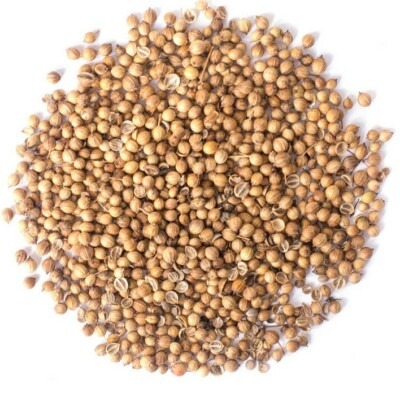
Coriander (Dhania)
Coriandrum sativum L.
Bulk Coriander (Dhania) seed in Eagle, Scooter, Badami and split grades from India, for spice houses, extract makers and food manufacturers seeking oil.
- Botanical nameCoriandrum sativum L.
- Part usedSeed (fruit)
- FamilyApiaceae
- Also known asDhania, Dhaniya, Kothamalli Vithai, Kotthamalli
- Certificate of Analysis
- Samples available
- Export documents handled
Coriander is the dried ripe fruit, traded commercially as seed, of Coriandrum sativum L. India is the world's largest producer and one of the largest exporters of the spice. Buyers are spice houses, food manufacturers, essential-oil distillers and Ayurvedic formulators.
Botanical identity and part used
Coriander belongs to the Apiaceae family, the umbellifer family that also includes cumin, fennel and dill. The plant is an annual herb, and every part is aromatic, but the traded commodity is the dried, round to oval fruit, commonly called seed.
Fresh leaf, sold as cilantro or dhania patta, is a separate fresh-produce trade and is not covered by this specification, which concerns the dried seed only.
Where it grows in India
Coriander is grown across a wide belt of central and western India, with Madhya Pradesh, Rajasthan, Gujarat and Andhra Pradesh among the leading producing states. Rajasthan's growing tracts sit close to AV Biotech's Jaipur base, which shortens the supply chain from field to grading yard.
Harvest and processing
Coriander is a winter (rabi) season crop, sown after the monsoon and harvested in spring. Plants are cut, dried in the field, then threshed to separate the seed, which is further cleaned and graded by size, colour and split content.
Grading: Eagle, Scooter, Badami and split
Trade grades run from Eagle, the premium quality with large, plump, greenish-yellow whole seeds and minimal splits, through Scooter, the most widely traded standard export grade with a good balance of size and colour, down to Badami, the most economical grade used mainly for grinding and blending where visual appearance matters less than aroma retention. Split coriander, where the seed has naturally divided into its two mericarps, is graded and priced separately and is generally directed toward oil extraction and grinding rather than whole-seed retail packs.
Why buyers source it
The commercial value sits in the volatile oil, principally linalool, which drives the seed's characteristic warm, citrus-like aroma. Moisture is controlled to protect this volatile oil content during storage, and high-oil lots are specifically selected for essential-oil and oleoresin extraction.
Forms that trade
AV Biotech supplies coriander as whole seed in Eagle, Scooter and Badami grades, split seed, and ground powder, with volatile oil content confirmed per lot for buyers extracting oil or oleoresin.
Industry applications of Coriander
Coriander moves into food, extract, pharmaceutical and Ayurvedic manufacturing, and grade selection is the main sourcing decision.
Food and spice manufacturing
Spice blenders and food manufacturers are the largest buyers, using whole and ground coriander in curry powders, masala blends, sausage seasoning and pickling spice. Eagle and Scooter grades are preferred where visual appearance and whole-seed presentation matter, while Badami and lower grades go into grinding for blended masalas.
Essential oil and oleoresin manufacture
Extract houses distil coriander seed oil, valued for its linalool content, and produce coriander oleoresin for flavour and fragrance use. These buyers specify a minimum volatile oil percentage and often prefer split or lower whole-seed grades, since oil content, not seed appearance, drives their purchase.
Pharmaceutical and Ayurvedic manufacturing
Coriander, known as Dhanyaka in Ayurveda, is used in classical digestive and carminative formulations, and coriander water (Dhanya jal) is a common household and Ayurvedic digestive preparation. These buyers typically want whole or coarsely crushed seed with documented identity.
Beverage and functional food
Coriander seed and its extract appear in functional beverages, digestive tonics and some brewing applications, where consistent flavour intensity and low microbial load are the key requirements.
Export trading
A significant share of Indian coriander moves through export trading houses into Middle Eastern, European and Southeast Asian markets, where Scooter grade is the standard commercial reference quality most buyers default to.
Common product formats
- Whole seed for retail spice packs, masala blends and pickling mixes
- Ground coriander powder for curry powders and spice blends
- Coriander seed oil and oleoresin for flavour and fragrance use
- Split seed for grinding and extraction feedstock
- Dhanyaka-based Ayurvedic digestive formulations
Traditional use and current research
Coriander seed is classed in Ayurveda as Dhanyaka, used traditionally as a digestive and carminative spice. The following notes describe traditional positioning and published research directions, not established medical outcomes.
Digestive use
Coriander seed is traditionally used to support digestion and ease occasional bloating and gas, most commonly as coriander-infused water or as part of a digestive spice blend taken after meals.
Research on seed constituents
Coriander seed and its essential oil have been studied for antioxidant and antimicrobial activity in laboratory settings, findings consistent with its long traditional use as both a flavouring and a mild digestive aid.
Metabolic and lipid research
Some published studies have examined coriander seed and extract for effects on blood lipid and glucose markers, an early-stage research area that has drawn interest from functional-food and supplement formulators.
Culinary and aromatic role
Coriander's primary global role remains culinary, and its aroma, driven by linalool and related terpenes, is the main reason food manufacturers specify a minimum volatile oil content rather than a health claim.
Points buyers should note on claims
Any digestive or metabolic-wellness claim built on coriander should be traceable to the seed's volatile oil content and species identity, since aroma and constituent strength vary meaningfully between Eagle, Scooter and Badami grade material.
This information is provided for educational and B2B product-sourcing purposes only. It is not medical advice and these statements have not been evaluated by any regulatory authority. Finished-product claims are the responsibility of the manufacturer.
| Botanical name | Coriandrum sativum L., Fam. Apiaceae |
|---|---|
| Part used | Dried ripe fruit (seed) |
| Appearance | Small, round to oval, ridged seed, greenish-yellow to light brown; Eagle grade large and plump, Badami grade smaller and more mixed |
| Active constituents | Volatile oil, principally linalool (coriandrol), the dominant aromatic compound |
| Volatile oil | Typically 0.3 to 1 per cent by steam distillation; high-oil lots selected separately for extraction use |
| Moisture | Not more than 9 to 10 per cent (typical trade limit, protects volatile oil retention) |
| Total ash | Not more than 6.5 per cent (typical) |
| Acid-insoluble ash | Not more than 1.5 per cent (typical) |
| Split seed / foreign matter | Eagle grade: minimal splits, purity above 99 per cent; Scooter: standard export tolerance; Badami: higher split and admixture tolerance; limits stated per grade |
| Particle size | Whole seed standard; split seed as a distinct grade; powder 60 to 80 mesh on request |
| Pesticide/heavy-metal/microbial testing | Tested against EU MRL or buyer-nominated panel; heavy metals to Codex or AYUSH limits; total plate count, yeast and mould, E. coli and Salmonella to agreed limits |
| Packing | 25 kg or 50 kg PP/HDPE laminated bags with food-grade liner; jute bags on request |
| Shelf life | 18 to 24 months for whole seed, 12 months for powder, in sealed original packing |
| Note | All values are typical or indicative. Actual lot values vary with grade, origin and season, and are confirmed on the batch Certificate of Analysis |
Values are typical and indicative. A lot-specific Certificate of Analysis is shared before dispatch.
What is your minimum order quantity for Coriander seed?
500 kg for whole seed and 100 kg for powder and split seed. We supply 500 g to 1 kg samples for grade and volatile-oil verification, adjusted against your first commercial order.
What is the difference between Eagle, Scooter and Badami grade coriander?
Eagle is the premium grade, large, plump, greenish-yellow seeds with minimal splits and purity above 99 per cent. Scooter is the standard, most widely traded export grade with a good balance of size and colour. Badami is the most economical grade, used mainly for grinding and blending where visual appearance matters less than aroma.
Can you supply coriander seed to a guaranteed volatile-oil content?
Yes. We select and test lots against an agreed volatile-oil percentage and share the pre-shipment result before dispatch. Extraction buyers generally prefer higher-oil lots, which we can source separately from standard whole-seed export grades.
What documentation do you provide, and can you supply certified organic coriander?
Each shipment carries a lot-specific Certificate of Analysis, packing list, invoice, Certificate of Origin and phytosanitary certificate. Certified organic coriander under NPOP or NOP standards is available against advance contract, with a transaction certificate.
What is the typical lead time for Coriander orders?
7 to 12 working days for stock grades from Jaipur, immediately after the spring harvest season. Off-season orders, specific grade combinations and organic-certified lots typically take 2 to 3 weeks.
Enquire about Coriander (Dhania)
No payment is taken here — this reaches our sourcing team directly.
Related products