Deodar (Himalayan Cedar)
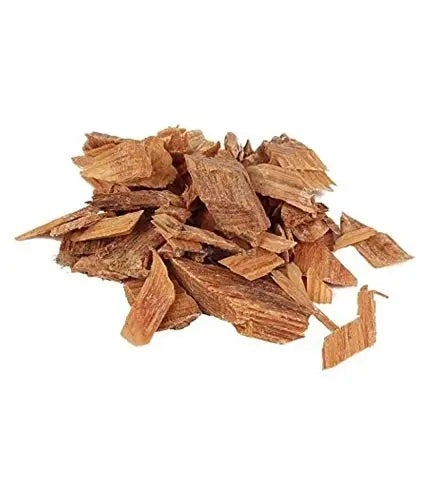
Deodar (Himalayan Cedar)
Cedrus deodara (Roxb. ex D.Don) G.Don
Bulk Deodar heartwood, bark and steam-distilled wood oil (Cedrus deodara) from forest-produce sources in the Western Himalaya, supplied with legal transit documentation.
- Botanical nameCedrus deodara (Roxb. ex D.Don) G.Don
- Part usedHeartwood, bark; wood oil (distilled)
- FamilyPinaceae
- Also known asDevdaru, Devadaru, Diar, Kelon, Deodar Cedar
- Certificate of Analysis
- Samples available
- Export documents handled
Deodar is the heartwood and bark of Cedrus deodara, a large coniferous tree in the Pinaceae family native to the Western Himalaya. Buyers are Ayurvedic and Unani manufacturers, essential-oil traders, and personal-care and fragrance formulators.
Botanical identity and part used
Cedrus deodara is a true cedar, distinct from the many unrelated plants that carry cedar in their common name. The tree grows tall and long-lived, with grey-brown, deeply fissured bark and a durable, aromatic heartwood that darkens with age.
The commercially traded parts are heartwood (chips, shavings and sawdust), bark, and the essential oil recovered from the heartwood by steam distillation, commonly cited at around 2 per cent oil yield. Sapwood is not durable and is not the trade-grade material.
Deodar as forest produce
Deodar is a notified forest tree across its native range, and its wood, bark and oil are classed as forest produce under state forest regulations in Himachal Pradesh, Uttarakhand and Jammu and Kashmir. Movement of deodar wood, bark and oil out of the collection area normally requires a forest transit pass, and felling or lopping is regulated by the state forest department.
Buyers should ask their supplier for the transit pass reference and, where the material originates from private or leasehold land rather than reserved forest, the corresponding harvest permission. This is a routine part of establishing legal origin for a forest-produce item and is separate from the standard export Certificate of Origin.
Where it grows in India
Deodar forms extensive natural and planted forests across Himachal Pradesh, Uttarakhand, and parts of Jammu and Kashmir, typically between 1500 and 3200 metres. It is the state tree of Himachal Pradesh and several tracts are traditionally regarded as sacred.
Harvest and processing
Trade-grade heartwood and bark are recovered from managed felling, thinning operations and, significantly, from sawmill and construction by-product, since deodar timber is separately valued for railway sleepers, construction and furniture. Oil-grade material is chipped and steam-distilled, traditionally by the same cottage and small-scale distillation units long established in the Himachal timber belt.
Why buyers source it
The heartwood carries a sesquiterpene-rich essential oil, the compound group responsible for its persistent, woody aroma and its traditional use as an insect repellent on livestock. Bark and wood extracts are used in Ayurvedic formulations, and the oil itself is a recognised fragrance and personal-care ingredient.
Forms that trade
AV Biotech supplies Deodar as heartwood chips, coarse powder, bark, and steam-distilled wood oil, sourced from within the notified forest-produce supply chain with transit documentation available on request.
Industry applications of Deodar
Deodar wood and oil move into Ayurvedic manufacturing, fragrance and personal care, and agricultural or veterinary repellent use, and each segment draws on a different property of the material.
Ayurvedic and Unani manufacturing
Classical Ayurvedic units use Devdaru heartwood and bark in Kwatha, churna and taila formulations aimed at joint, skin and respiratory-support applications in traditional practice, and the oil in external, massage-oil preparations. Unani practice similarly uses the wood in traditional formulations.
These buyers typically specify heartwood-only material, since sapwood lacks the durability and aroma profile of the mature core wood.
Fragrance and personal-care formulation
Deodar wood oil is used as a base note in soap, incense and perfumery, valued for its woody, long-lasting character. Cosmetic buyers here specify oil clarity, odour profile and, where relevant, a defined sesquiterpene composition.
Veterinary and repellent use
Deodar oil has a long traditional use as an insect repellent applied to the feet and legs of horses, cattle and camels, and coarser wood and bark fractions are used in some veterinary Ayurvedic preparations.
Incense and aromatic-product manufacturing
Heartwood chips and powder are used directly in incense manufacturing and as an aromatic wood in ritual and household-fragrance products, a long-standing use across the Himalayan belt.
Cosmetic oil blending
Deodar oil is blended into hair-care and scalp formulations and massage-oil bases, generally for its aroma and traditional topical use rather than for any specific assayed constituent.
Common product formats
- Kwatha, churna and taila Ayurvedic preparations
- Massage oils and topical liniments
- Soap, incense and perfumery bases
- Veterinary repellent and topical applications
- Aromatic wood chips for incense manufacturing
- Hair-care and scalp-oil formulations
Traditional use and current research
Deodar has a long-standing place in Ayurveda, where it is classed for Kaphavata-shamaka, Deepana, Shothahara and Vedanasthapana actions, broadly meaning traditional use for balancing Kapha and Vata, supporting digestion, and reducing swelling and discomfort. The notes below describe traditional positioning and published research directions, not established medical outcomes.
Joint and muscular applications
Deodar wood oil is traditionally applied externally in massage preparations associated with joint and muscular discomfort. This is a long-documented external, topical use rather than an internal medicinal claim, and finished-product positioning should stay within topical, external-use language.
Respiratory and skin use
Ayurvedic sources describe Devdaru decoctions and preparations used traditionally in respiratory and skin conditions. These are traditional-use descriptions, not clinical findings, and any modern positioning should be evidence-hedged.
Insect-repellent and antimicrobial research interest
The sesquiterpene-rich profile of deodar oil is the basis for its long traditional use as an insect repellent on livestock, and published research has examined cedar-type wood oils for antimicrobial and insect-repellent activity in laboratory studies. This is an active but early-stage area of research.
What buyers should note on claims
Deodar oil and wood are positioned in traditional and current commercial use almost entirely for external and environmental applications, not for internal consumption, and finished-product claims should be built accordingly and checked against the applicable cosmetic or Ayurvedic drug regulation in the destination market.
This information is provided for educational and B2B product-sourcing purposes only. It is not medical advice and these statements have not been evaluated by any regulatory authority. Finished-product claims are the responsibility of the manufacturer.
| Botanical name | Cedrus deodara (Roxb. ex D.Don) G.Don, Fam. Pinaceae |
|---|---|
| Part used | Heartwood (chips, shavings, powder); bark; steam-distilled wood oil |
| Appearance | Heartwood: light to reddish-brown, resinous, aromatic; bark: greyish-brown, deeply fissured; oil: pale yellow to amber liquid |
| Active constituents | Sesquiterpene-rich essential oil (himachalenes and related sesquiterpenes); typical heartwood oil yield around 2 per cent by steam distillation |
| Moisture | Not more than 12 per cent for wood chips and powder (typical) |
| Total ash | Not more than 5 per cent for wood, not more than 8 per cent for bark (typical) |
| Foreign matter | Not more than 2 per cent; sapwood content specified separately by grade |
| Particle size | Chips 5 to 20 mm; coarse and fine powder 40 to 80 mesh; oil supplied as liquid |
| Legal origin | Forest-produce item; forest transit pass and harvest permission reference available on request for the sourcing state |
| Pesticide/heavy-metal/microbial testing | Tested against buyer-nominated panel on request |
| Packing | 25-50 kg PP/HDPE bags for wood chips and powder; oil in lined drums, jerry cans or smaller lab-scale containers |
| Shelf life | 36 months for wood chips and powder, 24 months for oil, stored cool and away from direct light |
Values are typical and indicative. A lot-specific Certificate of Analysis is shared before dispatch.
What is your minimum order quantity for Deodar wood or oil?
250 kg for wood chips, powder or bark, and 5 kg for essential oil. Paid samples of 250 g wood or 100 ml oil are supplied for evaluation before you place a commercial order.
Is Deodar wood legally sourced, and can you provide forest transit documentation?
Yes. Deodar is a notified forest-produce item in its source states, and movement out of the collection area requires a forest transit pass. We can provide the transit pass reference and, where applicable, harvest permission documentation alongside the standard export paperwork.
Do you supply heartwood-only material, and why does that matter?
Yes, our standard offering is heartwood, since sapwood lacks the durability, aroma and oil content that make deodar commercially valuable. Sapwood content is specified separately by grade, and buyers with a strict heartwood-only requirement should state this on the purchase order.
What documentation comes with an export shipment?
Every lot ships with a batch Certificate of Analysis, packing list, invoice, Certificate of Origin and phytosanitary certificate where applicable. Forest transit pass references are provided on request for buyers with a legal-origin compliance requirement.
What is the typical lead time?
10 to 15 working days for stock wood and bark grades from Jaipur. Essential oil orders and custom particle-size specifications take 2 to 4 weeks depending on volume and distillation scheduling.
Enquire about Deodar (Himalayan Cedar)
No payment is taken here — this reaches our sourcing team directly.
Related products