Black Turmeric (Kali Haldi)
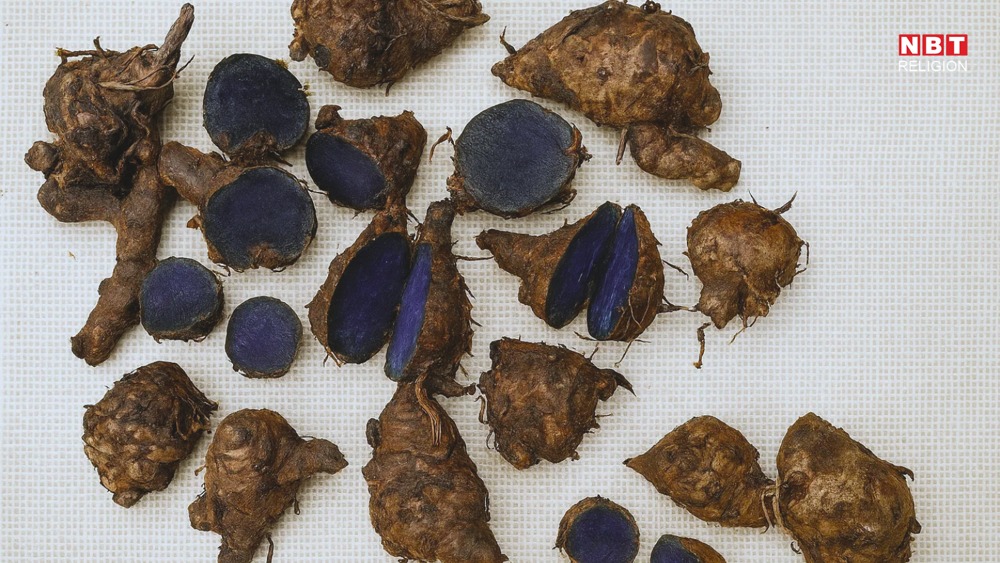
Black Turmeric (Kali Haldi)
Curcuma caesia Roxb.
Cultivated Curcuma caesia rhizome with documented legal-origin paperwork, supplied dried or as powder to extract makers and Ayurvedic manufacturers.
- Botanical nameCurcuma caesia Roxb.
- Part usedRhizome
- FamilyZingiberaceae
- Also known asKali Haldi, Kali Halad, Karpoora Haridra, Nar Kachur
- Certificate of Analysis
- Samples available
- Export documents handled
Black turmeric is the rhizome of Curcuma caesia, a member of the ginger family distinguished by a bluish-black to grey-black internal colour, unlike the orange-yellow of common turmeric. It is a slower-moving, higher-value botanical than Curcuma longa, traded in far smaller volumes and priced accordingly.
Botanical identity and part used
The plant produces broad lanceolate leaves and a rhizome system with a pale outer skin and a striking bluish-black to slate-grey interior when freshly cut, which fades toward grey-brown on drying. The rhizome, not leaf or flower, is the part that enters commercial trade.
Conservation status and why documentation matters here
Curcuma caesia is listed by conservation assessments as endangered to critically endangered across parts of its native range, driven by decades of wild over-harvesting combined with a naturally narrow, patchy distribution. It is treated as a protected or restricted species under regional forest and biodiversity regulations in several Indian states.
Because of this status, buyers should always request the material's origin documentation before contracting. Legally sourced supply comes from cultivated stock grown under registered nurseries or contracted farms, not wild collection, and a responsible supplier provides paperwork establishing cultivated origin, any applicable state biodiversity or forest transit permit, and chain-of-custody from farm to warehouse. AV Biotech sources exclusively from cultivated, contracted farms and supplies this origin documentation with every lot; buyers exporting the material should also confirm their own market's import requirements for a species carrying conservation status, since some destination countries apply additional biodiversity-access paperwork on top of India's own export documentation.
Where it grows in India
Black turmeric occurs, and is increasingly cultivated, across Madhya Pradesh, Chhattisgarh, Jharkhand, Odisha, West Bengal's sub-Himalayan Terai belt and pockets of the Northeast. Cultivated plantings under contract farming have expanded in Madhya Pradesh and Chhattisgarh specifically to reduce pressure on wild populations.
Harvest and processing
Rhizomes are lifted at the end of the growing season, typically November to January, once the aerial foliage has died back. After harvest, rhizomes are washed, sliced and sun or shade dried before milling, a process similar to common turmeric but requiring closer handling to preserve the characteristic dark colour and camphor-forward aroma.
Forms that trade
AV Biotech supplies black turmeric as dried whole rhizome, cut/sliced rhizome and milled powder, with cultivated-origin documentation and, where applicable, the relevant state transit or biodiversity paperwork provided per lot.
Industry applications of Black Turmeric
Black turmeric is a specialty botanical bought in far smaller volumes than common turmeric, concentrated among manufacturers seeking its distinct chemical and aromatic profile rather than curcumin content alone.
Ayurvedic and traditional pharmaceutical manufacturing
Classical and regional Ayurvedic and folk-medicine manufacturers use black turmeric rhizome powder in topical pastes, churna blends and traditional formulations distinct from those using common turmeric. Buyers in this segment prioritise confirmed species identity, since black turmeric is easily confused with related Curcuma species at the raw-material stage.
Extract and essential oil manufacturing
Extract houses process rhizome for essential oil and standardised extracts, valued for a chemical profile dominated by camphor, ar-turmerone, curzerenone and eucalyptol rather than the curcumin/curcuminoid profile that drives common turmeric extract pricing. Oil composition varies meaningfully by growing region and season, so buyers formulating to a target profile should request a batch-specific GC-MS report.
Cosmetic and personal-care formulation
Formulators use rhizome powder and extract in specialty skincare positioned around its traditional use and distinctive colour, typically in small-batch or premium product lines rather than mass-market formats.
Research and phytochemical study
Academic and contract research buyers source rhizome in small kilogram lots for phytochemical profiling, essential-oil chemotyping and pharmacological screening, reflecting the species' active research interest relative to its trade volume.
Sourcing note for all buyers
Given the conservation status, buyers should factor origin verification into their supplier qualification process for this ingredient specifically, in addition to the routine identity and purity testing applied to other botanicals.
Common product formats
- Black turmeric churna and topical paste bases
- Rhizome extract for specialty formulations
- Essential oil for aromatic and cosmetic use
- Research-grade rhizome for phytochemical study
- Premium skincare and haircare formulations
Traditional use and current research
Black turmeric holds a distinct place in regional Ayurvedic and folk-medicine traditions across central and eastern India, used historically in topical applications and in preparations described as supporting general wellness. It is treated in classical literature as a variant Haridra with its own indications, separate from common turmeric.
Traditional topical and general-wellness use
Folk practice uses black turmeric rhizome paste applied topically, and rhizome powder in traditional preparations associated with skin and general wellbeing. These are traditional-use descriptions, not demonstrated clinical outcomes.
Areas of published research interest
Phytochemical and pharmacological reviews report investigation of Curcuma caesia extracts for antioxidant, anti-inflammatory, antimicrobial and neuroprotective activity in laboratory and animal-model studies. Camphor and ar-turmerone, the dominant compounds in its essential oil, are cited as contributors to these observed activities.
Research stage and limitations
Much of the published research on Curcuma caesia is at the extract or isolated-compound stage, conducted in vitro or in animal models. This is an active but early research area, and findings at this stage do not establish outcomes in humans.
What buyers should note on claims
Essential-oil composition in Curcuma caesia varies substantially by growing region and season, with camphor and curzerenone levels reported across wide ranges in published chemotype studies. A research citation built on one chemotype's oil profile may not apply to material from a different growing region.
This information is provided for educational and B2B product-sourcing purposes only. It is not medical advice and these statements have not been evaluated by any regulatory authority. Finished-product claims are the responsibility of the manufacturer.
| Botanical name | Curcuma caesia Roxb., Fam. Zingiberaceae |
|---|---|
| Part used | Rhizome, dried whole, cut/sliced or milled to powder |
| Appearance | Pale buff outer skin; bluish-black to slate-grey internal colour fresh, fading to grey-brown on drying; powder greyish-brown |
| Active constituents | Essential oil dominated by camphor, ar-turmerone, curzerenone, eucalyptol and curzerene; reported proportions vary widely by origin and season (e.g. camphor commonly cited in the 8 to 28 per cent range of the oil across chemotype studies) |
| Essential oil yield | Variable by lot; confirmed by steam distillation on the specific batch, GC-MS profile available on request |
| Moisture | Not more than 10 to 12 per cent (typical trade limit) |
| Total ash | Not more than 7 per cent (indicative) |
| Acid-insoluble ash | Not more than 1.5 per cent (indicative) |
| Foreign matter | Not more than 2 per cent |
| Origin verification | Cultivated-origin declaration and, where applicable, state forest/biodiversity transit documentation supplied per lot; wild-collected material not supplied |
| Particle size | Whole and sliced rhizome standard; powder milled to 60 to 80 mesh on request |
| Pesticide/heavy-metal/microbial testing | Pesticide residues against EU MRL panel, heavy metals against AYUSH limits, microbiology available per lot on request |
| Packing | 25 kg HDPE or PP laminated bags with food-grade inner liner; smaller sample and research-lot packing available |
| Shelf life | 18 to 24 months from date of packing in sealed original packing, stored dry and away from direct sunlight |
| Note | All values are typical or indicative. Actual lot values vary with origin, season and cultivation practice, and are confirmed on the batch Certificate of Analysis |
Values are typical and indicative. A lot-specific Certificate of Analysis is shared before dispatch.
What is your minimum order quantity for black turmeric?
25 kg for rhizome powder or cut rhizome trial lots, and 100 kg for standard commercial orders. Essential oil is quoted separately given batch-dependent yield. Paid samples of 250 g to 500 g are available for evaluation.
How do you confirm this material is not wild-collected, given its conservation status?
We source exclusively from cultivated, contracted farms and supply a cultivated-origin declaration with every lot. Where a state requires forest or biodiversity transit documentation for this species, that paperwork is provided alongside the shipment documents.
Do I need any additional import paperwork for this ingredient because of its conservation status?
Some destination markets apply biodiversity-access or CITES-adjacent documentation for species with a conservation listing, separate from standard phytosanitary requirements. We recommend confirming your specific import requirement with your customs broker; we can supply the origin and chain-of-custody documents needed to support that filing.
Can you provide a GC-MS profile of the essential oil for a specific batch?
Yes. Because camphor, ar-turmerone and curzerenone levels vary meaningfully by growing region and season, we run a batch-specific GC-MS report on request rather than quoting a single fixed oil profile across all lots.
What is the typical lead time?
2 to 3 weeks for dried rhizome and powder from contracted cultivation stock, since volumes are smaller and more seasonal than common turmeric. Essential-oil lots and larger volumes should be booked in advance of the November to January harvest window.
Enquire about Black Turmeric (Kali Haldi)
No payment is taken here — this reaches our sourcing team directly.
Related products