Garcinia Cambogia (Malabar Tamarind)
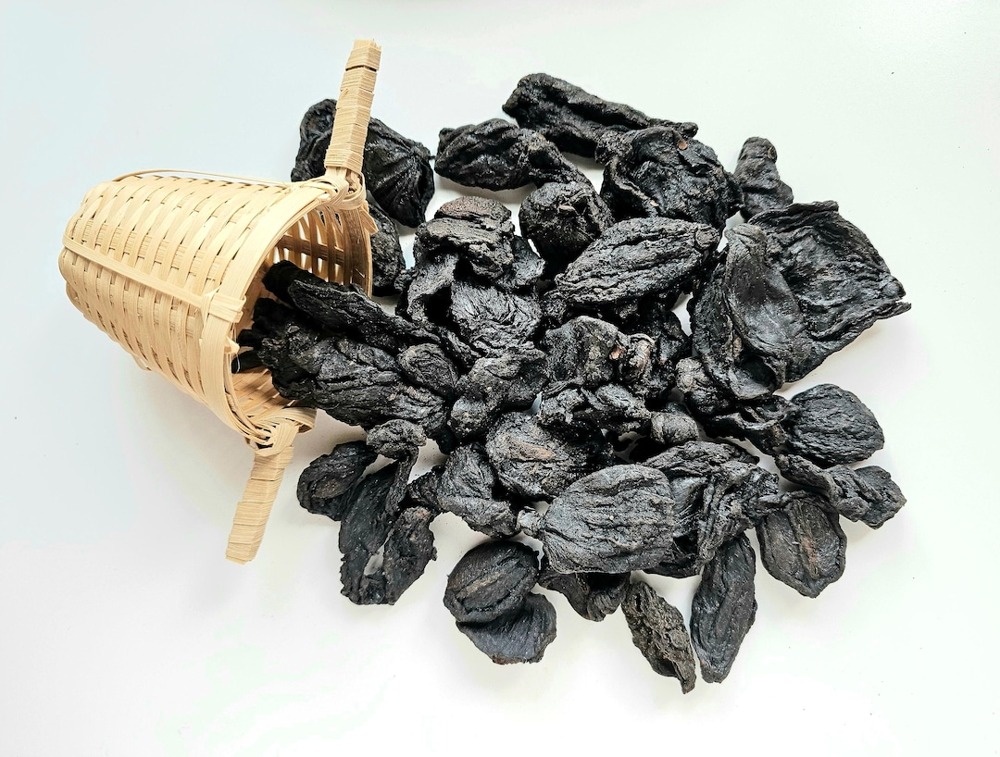
Garcinia Cambogia (Malabar Tamarind)
Garcinia gummi-gutta (L.) Robson (syn. Garcinia cambogia (Gaertn.) Desr.)
Bulk Garcinia cambogia fruit rind (Garcinia gummi-gutta) in dried, cut and powder grades, plus HCA-standardised extract feedstock, from India.
- Botanical nameGarcinia gummi-gutta (L.) Robson (syn. Garcinia cambogia (Gaertn.) Desr.)
- Part usedDried fruit rind (pericarp)
- FamilyClusiaceae (Guttiferae)
- Also known asKudampuli, Kodampuli, Vrikshamla, Uppage, Punarpuli, Goraka, Fish Tamarind, Cambooge
- Certificate of Analysis
- Samples available
- Export documents handled
Garcinia cambogia is the dried fruit rind of Garcinia gummi-gutta (L.) Robson, a Western Ghats tree fruit sold in Kerala as Kudampuli. Buyers are extract houses, weight-management supplement brands, Ayurvedic units and South Indian food processors.
Botanical identity and naming
The accepted botanical name is Garcinia gummi-gutta. The older name Garcinia cambogia remains the commercial name in the supplement trade and appears on most labels and specifications. Both names should be shown on documentation to avoid confusion at customs and in audits.
The traded part is the dried rind of the ripe fruit. Seed and pulp are discarded during processing, and the flesh carries very little of the marker compound.
Where it grows
The tree is native to the Western Ghats and grows across Kerala, coastal Karnataka, Goa, Tamil Nadu and parts of Maharashtra. Sri Lanka also supplies material under the name Goraka.
It is largely a homestead and semi-wild crop rather than a plantation crop. Fruit ripens through the monsoon and into the post-monsoon months, and the rind is smoke-dried or sun-dried immediately after halving.
Processing and how it affects quality
Kerala practice is to smoke-dry the rind over a low fire, which gives the dark, leathery Kudampuli used in fish curry. Smoke-dried rind carries a distinctly smoky note and often higher polycyclic aromatic hydrocarbon risk.
Extract-grade material is usually sun-dried or mechanically dried instead, to keep the rind lighter in colour and free of smoke taint. If you are buying for extraction, state the drying method, because it changes both colour and the contaminant panel you need.
The marker compound
The commercial value sits in hydroxycitric acid, written HCA. It is an organic acid concentrated in the rind. Dried rind commonly assays in the region of 10 to 30 per cent HCA, depending on origin, maturity and drying, so ask for the lot figure rather than assuming a single number.
Extracts are standardised far higher. The supplement trade works mainly at 50 and 60 per cent HCA by HPLC, with higher-purity calcium and potassium HCA salts also traded.
Regulatory position, stated plainly
Garcinia cambogia has drawn regulatory attention. The US FDA has issued warnings about weight-loss products containing it, in most cases linked to undeclared pharmaceutical adulterants rather than to the botanical itself. Case reports of liver injury associated with certain multi-ingredient products have also been published, and reviews describe the human weight-loss evidence as weak and inconsistent.
Several markets restrict or scrutinise HCA-based weight-management claims. Check the current position in every market you sell into before you commit to label copy.
Forms that trade
AV Biotech supplies dried rind in whole and cut form, milled rind powder, and extract-feedstock grade selected on HCA assay.
Industry applications of Garcinia cambogia
Garcinia serves two very different trades. One buys it as a souring food ingredient, the other as an extract feedstock. The grade, drying method and specification differ completely between them.
Extract manufacturing and nutraceuticals
This is the larger commercial stream by value. Extract houses take dried rind and produce HCA-standardised powders, most commonly at 50 and 60 per cent HCA by HPLC, and calcium or potassium HCA salts.
Supplement brands formulate these into capsules, tablets, gummies and drink mixes positioned around appetite and weight management. Claim wording is the critical constraint in this segment, not supply.
Extract buyers should specify drying method, HCA assay, residual solvent and heavy metals, and should keep a documented identity test on file given the adulteration history of finished products in this category.
South Indian food and culinary use
Kudampuli is the traditional souring agent in Kerala fish curry, and the smoke-dried rind is a named regional ingredient. Food processors use it in ready-to-cook curry pastes, retort-packed fish preparations and regional spice kits.
These buyers want smoke-dried rind with the characteristic dark colour and aroma. HCA assay is irrelevant here; appearance, pliability and smoke character decide the purchase.
Ayurvedic manufacturing
Ayurvedic units use the rind as Vrikshamla in churna and kwath preparations, traditionally in digestive and metabolic formulations. Powder mesh and pharmacopoeial-style limits matter more than HCA level.
Beverage and functional formats
Functional beverage and effervescent brands use HCA extract in weight-management drink mixes. The extract is acidic and hygroscopic, so formulators usually work with the calcium or potassium salt rather than the free acid.
Common product formats
- HCA-standardised extract capsules and tablets at 50 and 60 per cent
- Calcium and potassium hydroxycitrate salt ingredients
- Weight-management gummies, drink mixes and effervescent tablets
- Kudampuli for Kerala fish curry and regional ready-to-cook kits
- Vrikshamla churna and Ayurvedic kwath bases
- Multi-herb metabolic support blends
- Culinary souring pastes and retort curry bases
Traditional use and current evidence
Garcinia has a long South Indian food history and a much shorter, more contested supplement history. Both deserve to be described accurately.
Traditional positioning
Traditionally used in Ayurveda as Vrikshamla, described as sour and digestive, and included in preparations aimed at appetite and digestive fire. In Kerala households the rind is primarily a food souring agent rather than a medicine.
How HCA is studied
Hydroxycitric acid has been studied as a competitive inhibitor of ATP citrate lyase, an enzyme involved in fatty acid synthesis. This mechanism is the basis of most marketing in the category.
Translation to human outcomes is where the evidence weakens. Systematic reviews of HCA trials report small, inconsistent effects on body weight and note that many trials are short, small or poorly controlled.
Appetite and weight-management positioning
Brands commonly formulate HCA extracts into products targeting appetite control and weight management alongside diet and exercise. Several regulators have challenged strong weight-loss claims on this ingredient.
Position finished products conservatively and hold substantiation for the exact extract specification you use, not for the botanical in general.
Safety signals buyers must know
The US FDA has issued public warnings about weight-loss products containing Garcinia cambogia. In most of those cases the problem was undeclared pharmaceutical ingredients such as sibutramine, added to finished products, rather than the plant material.
Separately, case reports have associated some multi-ingredient Garcinia-containing supplements with liver injury. Causality is not established and the products involved usually contained several botanicals. Manufacturers should still treat this as a live pharmacovigilance topic.
Digestive and culinary use
As a food ingredient, the rind is traditionally used to sour and to balance oily fish preparations. Studies suggest the rind also carries organic acids and polyphenols, though research on the food use is limited.
What buyers should do
Run identity and purity testing on incoming extract, keep an adulterant screen for synthetic weight-loss drugs on finished goods, and confirm the claim position in each destination market before printing labels.
This information is provided for educational and B2B product-sourcing purposes only. It is not medical advice and these statements have not been evaluated by any regulatory authority. Finished-product claims are the responsibility of the manufacturer.
| Botanical name | Garcinia gummi-gutta (L.) Robson, syn. Garcinia cambogia (Gaertn.) Desr., Fam. Clusiaceae |
|---|---|
| Part used | Dried fruit rind (pericarp) only; seed and pulp removed at processing |
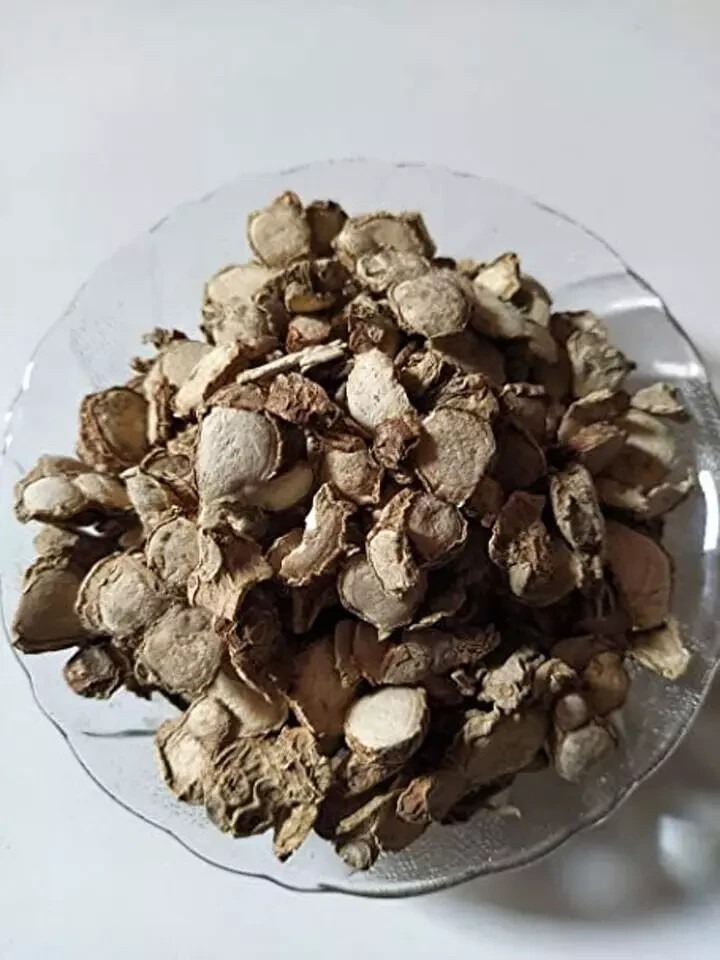
| Appearance | Sun-dried rind: light to dark brown curved segments. Smoke-dried Kudampuli: near-black, leathery, distinctly smoky. Powder light brown to greyish brown, acidic taste |
| Active constituents with typical assay | Hydroxycitric acid (HCA) is the trade marker. Dried rind commonly assays in the region of 10 to 30 per cent HCA depending on origin, maturity and drying. Commercial extracts standardised at 50 and 60 per cent HCA by HPLC; calcium and potassium hydroxycitrate salts and higher-purity grades traded separately. All figures indicative and confirmed per lot |
| Moisture | Not more than 10 per cent for rind and powder (typical); extract powders normally not more than 5 per cent |
| Total ash | Not more than 6 per cent (typical) on dried rind |
| Acid-insoluble ash | Not more than 1.5 per cent (typical); higher values usually indicate sand or ash residue from open drying |
| Foreign matter | Not more than 2 per cent; seed and pulp fragments, stalk and other Garcinia species specified separately |
| Particle size | Whole halved rind and cut pieces as dried; cut and sifted 3 to 10 mm; powder 40, 60 and 80 mesh. The rind is acidic and hygroscopic, so fine powder cakes readily and is normally packed with a moisture barrier |
| Pesticide / heavy-metal / microbial testing | Pesticide residues tested against EU MRL or a buyer-nominated panel. Heavy metals: lead NMT 10 ppm, arsenic NMT 3 ppm, cadmium NMT 0.3 ppm, mercury NMT 1 ppm to AYUSH limits. Microbiology: total plate count, yeast and mould, E. coli and Salmonella to agreed limits. Aflatoxin screening on request. Polycyclic aromatic hydrocarbon testing recommended on smoke-dried Kudampuli. Residual solvent testing on extract grades |
| Packing | 25 kg HDPE or PP laminated bags with food-grade LDPE inner liner for rind and powder; 20 to 25 kg fibre drums with double polyliner for extract-grade and hygroscopic material |
| Shelf life | 24 months for dried rind and 12 to 18 months for powder, in sealed original packing under cool dry storage |
Values are typical and indicative. A lot-specific Certificate of Analysis is shared before dispatch.
What is your minimum order quantity for Garcinia cambogia?
100 kg for rind powder and cut grades, 500 kg for whole dried rind, and 25 kg for HCA-standardised extract. We supply 250 g to 1 kg samples so your lab can confirm HCA assay by HPLC before you commit to a commercial order.
What HCA content should I expect from the rind, and from extract?
Dried rind commonly assays in the region of 10 to 30 per cent HCA depending on origin, maturity and drying method, so we quote against the lot figure rather than a fixed number. Commercial extracts are standardised at 50 and 60 per cent HCA by HPLC, with calcium and potassium hydroxycitrate salts available separately.
What is the difference between smoke-dried Kudampuli and extraction-grade rind?
Kudampuli is smoke-dried over a low fire, which gives the dark leathery rind used in Kerala fish curry and a distinct smoky aroma. Extraction-grade rind is sun or mechanically dried to keep the colour lighter and avoid smoke taint. If you are extracting, ask for the non-smoked grade and include a PAH check on any smoke-dried material.
What should I know about the regulatory position on Garcinia cambogia?
The US FDA has issued warnings about weight-loss products containing Garcinia cambogia, mostly linked to undeclared pharmaceutical adulterants added to finished products rather than to the plant. Case reports of liver injury with some multi-ingredient supplements have also been published. Review the claim position in each market before finalising labels, and keep an adulterant screen on finished goods.
What documentation and lead time apply?
Every lot ships with a Certificate of Analysis covering HCA assay, moisture, ash values, heavy metals, pesticide residues and microbiology, with residual solvent results on extract grades. Export consignments carry a phytosanitary certificate, Certificate of Origin, packing list and invoice. Lead time is 10 to 15 working days for stock grades and 3 to 4 weeks for organic or assay-specific lots.
Enquire about Garcinia Cambogia (Malabar Tamarind)
No payment is taken here — this reaches our sourcing team directly.
Related products