Atibala (Country Mallow)
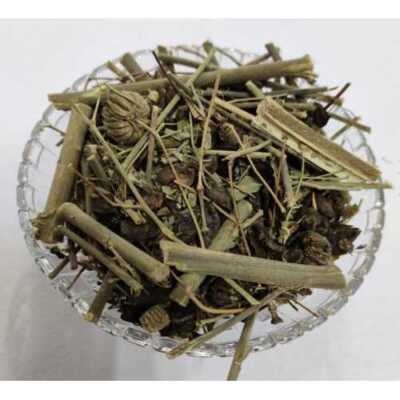
Atibala (Country Mallow)
Abutilon indicum (L.) Sweet
Bulk Atibala root (Abutilon indicum) in whole, cut and powder grades for Ayurvedic, nutraceutical and cosmetic manufacturers sourcing from India.
- Botanical nameAbutilon indicum (L.) Sweet
- Part usedRoot (Atibalamoola, primary trade grade); whole plant, seed and leaf traded separately
- FamilyMalvaceae
- Also known asKanghi, Kakahiya, Kakuhia, Peddatutti, Thuthi, Tutturbenda, Atibala moola
- Certificate of Analysis
- Samples available
- Export documents handled
Atibala is the dried root of Abutilon indicum, a Malvaceae shrub used across classical Ayurvedic formulations as a Bala-group strengthening herb. Buyers source it for churna, kwatha, taila and arishta manufacture, and increasingly for demulcent cosmetic bases.
Botanical identity and part used
Abutilon indicum belongs to the Malvaceae family, the mallow family that also gives commerce Bala and cotton. It is a soft-wooded undershrub with velvety, heart-shaped leaves and small yellow flowers that mature into a ring of beaked carpels.
The root, known in trade as Atibalamoola, is the officinal part used in most classical formulations. Whole plant material, seed and leaf are traded as separate lots and are not interchangeable with root-only material in a specification sheet.
Where it grows in India
Atibala grows as a common weed of roadsides, field margins and waste ground across the hotter plains of India, up to about 1,200 metres elevation. It is collected and semi-cultivated in Rajasthan, Gujarat, Maharashtra and Tamil Nadu, with Rajasthan supplying a large share of the organised root trade.
Because the plant is widespread rather than concentrated in a named belt, supply is aggregated from multiple collection points and standardised at the processing unit rather than sourced from a single named tract.
Harvest and processing
Roots are dug after the monsoon, once the plant has set seed and the taproot has thickened, typically between October and February. Freshly lifted roots are washed to remove adhering soil, cut into short pieces and shade or sun dried to a stable moisture level.
Dried root is graded by thickness, colour and fibre content before milling. Powder for capsule and churna use is typically milled to 60 to 80 mesh.
Why buyers source it
Atibala is one of the ten roots that make up Dashmoola, and it also appears independently in Balya and Vrishya formulations alongside Bala. Formulators frequently substitute or combine Atibala with Sida cordifolia root, so buyers should confirm which species a formulation actually specifies before ordering.
The root carries mucilage, tannins, asparagine and small quantities of alkaloids, but no single assay marker is used to standardise commercial lots the way withanolides standardise Ashwagandha. Identity is instead confirmed through pharmacognostic checks and mucilage content, which is why a reliable supply chain with documented botanical identification matters more here than for assay-driven herbs.
Forms that trade
AV Biotech supplies Atibala as whole dried root, cut and sifted root, and milled root powder. Whole-plant cut material and seed are offered as separate line items for buyers whose formulation specifically calls for panchang or beej rather than root.
Industry applications of Atibala
Atibala moves mainly through Ayurvedic manufacturing, with smaller but growing volumes into nutraceuticals and cosmetics. Confirming plant part and species against the buyer's own formulation sheet is the first sourcing check.
Ayurvedic and pharmaceutical manufacturing
Classical Ayurvedic units buy cut root and coarse powder for Dashmoola-based kwatha and churna, and for Balya, Vrishya and Vata-pacifying preparations. Atibala is also an ingredient in several arishta and taila formulations where it is decocted alongside Bala and other Panchamoola roots.
These buyers generally want root-only material with a botanical identification certificate, since Atibala is frequently confused with or substituted by Sida cordifolia in the trade.
Nutraceutical and supplement brands
Supplement manufacturers buy milled root powder, usually 60 to 80 mesh, for capsules and multi-herb Vata-support blends. Extract buyers are a smaller segment and typically ask for a mucilage or total-extractive specification rather than a named marker compound.
Cosmetic and personal care
The mucilage content makes Atibala root and leaf extract useful as a demulcent and emollient base in hair oils, scalp treatments and soothing skin preparations. Formulators here prioritise low microbial load and consistent colour over any single assay figure.
Food and functional nutrition
Use in food and beverage applications is limited and mostly confined to traditional tonic formulations rather than mainstream functional foods, reflecting the herb's classical rather than modern-nutraceutical positioning.
Veterinary use
Coarse root powder and mill screenings are used in veterinary Ayurvedic tonics and occasionally in livestock feed premixes, generally at lower cost grades than pharmaceutical-facing material.
Common product formats
- Dashmoola churna and kwatha concentrates
- Balya and Vrishya classical Ayurvedic formulations
- Single-herb and multi-herb Vata-support capsules
- Hair oils, scalp serums and soothing skin bases
- Veterinary tonics and feed premixes
- Traditional decoctions and liquid extracts
Traditional use and current research
Ayurveda classifies Atibala as Balya, meaning strength-promoting, and Vrishya, a term used for rejuvenative and reproductive-support herbs. It is grouped with Bala, Shalaparni, Prishnaparni and Gokshura as one of the Laghu Panchamoola roots within Dashmoola.
The notes below describe traditional positioning and early research directions, not confirmed medical outcomes.
General strength and Vata disorders
Classical texts position Atibala for Vata-related weakness and joint discomfort, usually administered as part of a Dashmoola decoction rather than as a single herb. This traditional use is long-standing but has limited dedicated clinical study on the isolated root.
Wound healing and skin application
Ayurvedic practice uses Atibala paste and oil externally for wound care and skin irritation, a use consistent with its classification as Vranaropana, meaning wound-healing. Laboratory studies on plant extracts have looked at anti-inflammatory and analgesic activity, though this work is preliminary.
Urinary and diuretic use
The root is traditionally used as a mild diuretic, described in classical texts under Mutrala action. This traditional use has not been substantiated in controlled human trials to date.
Respiratory and digestive support
Atibala fruit and leaf preparations are used traditionally as an expectorant and demulcent for cough, and the mucilage content supports this traditional digestive and respiratory soothing use.
Emerging pharmacological interest
Published phytochemical work has identified sesquiterpene lactones, flavonoids and triterpenoids in Abutilon indicum, and small studies have explored antidiabetic and antimicrobial activity. These findings come mainly from extract and cell-based studies, not human clinical trials.
What buyers should note on claims
Because Atibala lacks a standardised marker-compound assay, any health claim built on published research should be traced back to the specific plant part, extraction method and dose used in that study rather than assumed to apply to raw root powder generally.
This information is provided for educational and B2B product-sourcing purposes only. It is not medical advice and these statements have not been evaluated by any regulatory authority. Finished-product claims are the responsibility of the manufacturer.
| Botanical name | Abutilon indicum (L.) Sweet, Fam. Malvaceae |
|---|---|
| Part used | Dried root (Atibalamoola, root-only grade); whole plant, seed and leaf quoted separately |
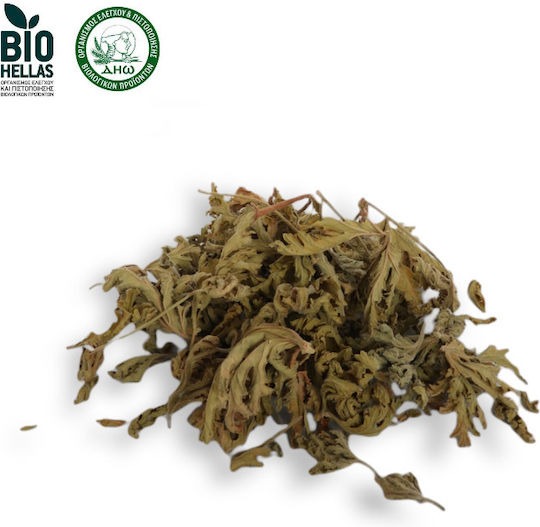
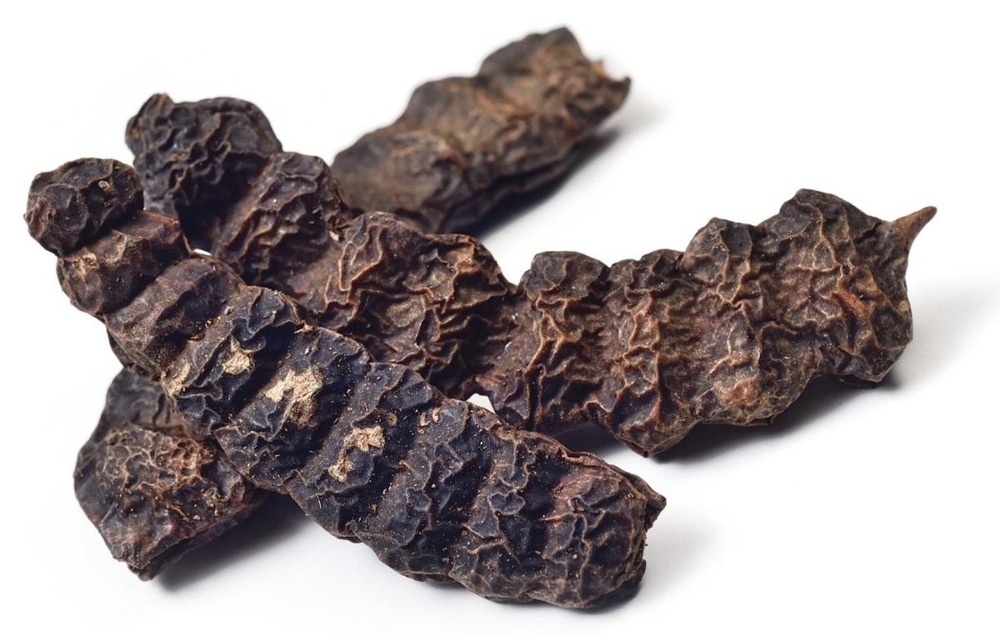
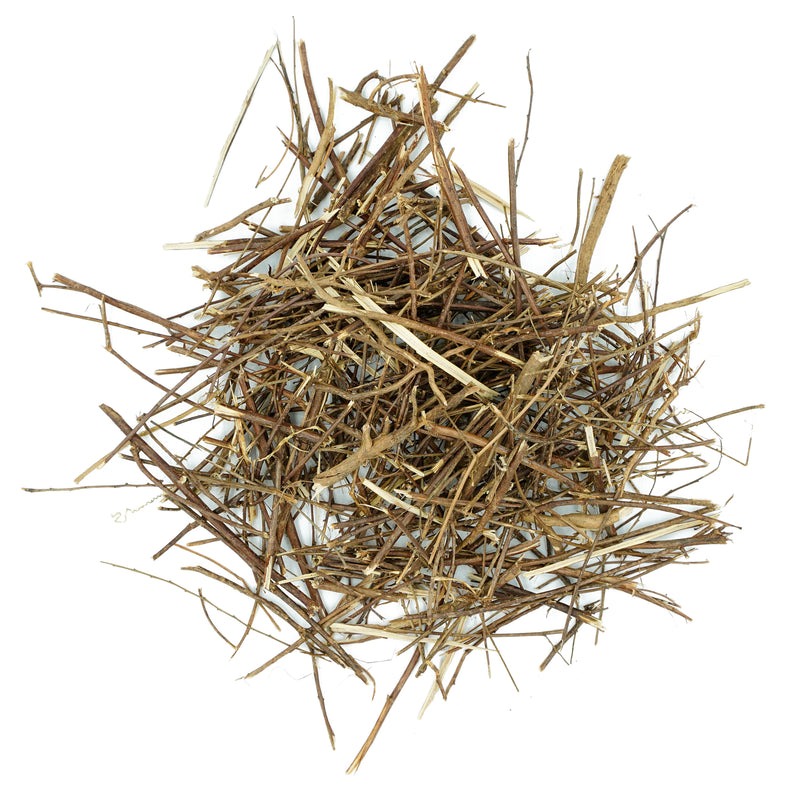
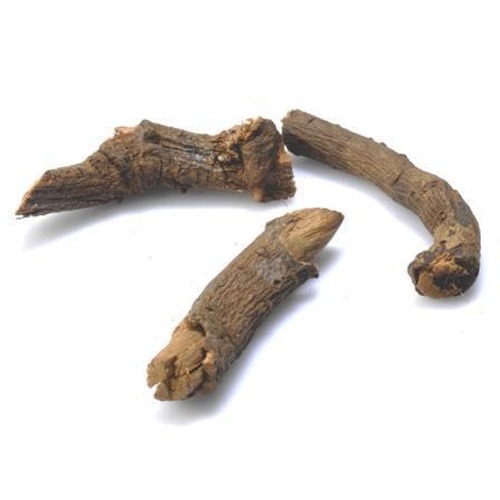
| Appearance | Yellowish-grey to light brown root pieces with fibrous bark; powder light beige to greyish-brown |
| Odour and taste | Mild, mucilaginous; taste bland to slightly sweet |
| Active constituents | Mucilage (galactose and galacturonic-acid based), tannins, asparagine and trace alkaloids. No single industry-standard marker assay; identity confirmed by pharmacognostic evaluation and mucilage content |
| Moisture | Not more than 10 per cent (typical trade limit) |
| Total ash | Not more than 10 per cent (typical trade limit) |
| Acid-insoluble ash | Not more than 2 per cent (typical trade limit) |
| Foreign matter | Not more than 2 per cent (typical trade limit) |
| Particle size | 60 to 80 mesh standard for powder; whole and cut grades for decoction use; custom mesh on request |
| Heavy metals | Lead NMT 10 ppm, Arsenic NMT 3 ppm, Cadmium NMT 0.3 ppm, Mercury NMT 1 ppm (AYUSH limits) |
| Pesticide residues | Tested against EU MRL; organic lots screened on a multi-residue panel |
| Microbiology | Total plate count NMT 100,000 cfu/g, Yeast and mould NMT 1,000 cfu/g, E. coli and Salmonella absent |
| Packing | 25 kg HDPE or PP laminated bags with food-grade LDPE inner liner; 50 kg for whole and cut root |
| Shelf life | 24 months for powder, 36 months for whole dried root, in sealed original packing |
| Note | All values are typical or indicative. Actual lot values vary with origin, season and grade, and are confirmed on the batch Certificate of Analysis |
Values are typical and indicative. A lot-specific Certificate of Analysis is shared before dispatch.
What is your minimum order quantity for Atibala?
100 kg for milled root powder and 500 kg for whole or cut root. For trial and formulation work we supply 1 to 2 kg paid samples, adjusted against your first commercial order.
Is your Atibala confirmed as Abutilon indicum and not Sida cordifolia?
Yes. The two roots are frequently confused in the trade because both are called Bala-group herbs. We supply Abutilon indicum root only under this listing and provide a pharmacognostic identification note on request.
What documentation comes with an export shipment?
Every lot ships with a batch Certificate of Analysis covering moisture, ash values, heavy metals, pesticide residues and microbiology. Export consignments also carry a phytosanitary certificate, Certificate of Origin, packing list and commercial invoice.
Can you supply whole-plant or seed material instead of root?
Yes. Whole-plant cut material (panchang) and seed are stocked as separate line items alongside root. Confirm the plant part your formulation specifies before placing an order, since the three are not interchangeable in a specification.
What is the typical lead time?
7 to 12 working days for stock grades from Jaipur. Custom milling and larger contracted volumes take 2 to 3 weeks, and the post-monsoon harvest window from October is the best time to book forward orders.
Enquire about Atibala (Country Mallow)
No payment is taken here — this reaches our sourcing team directly.
Related products