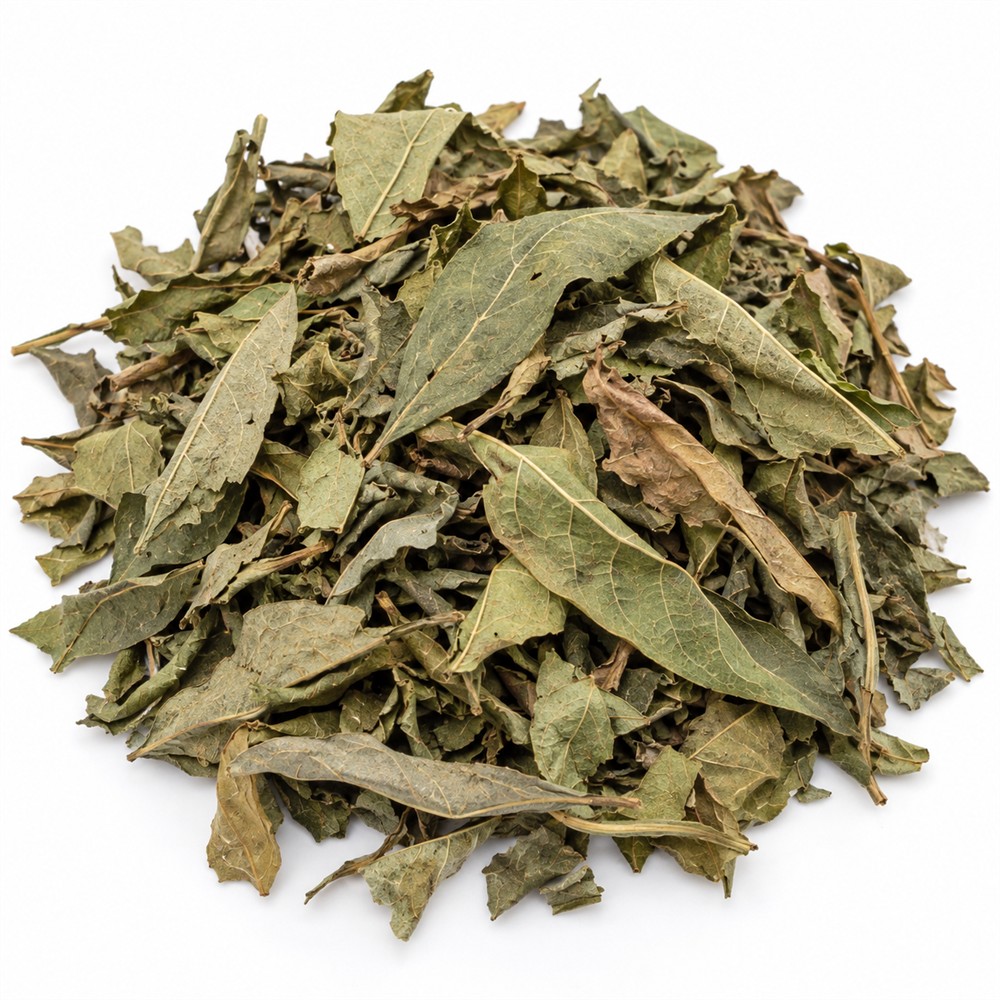
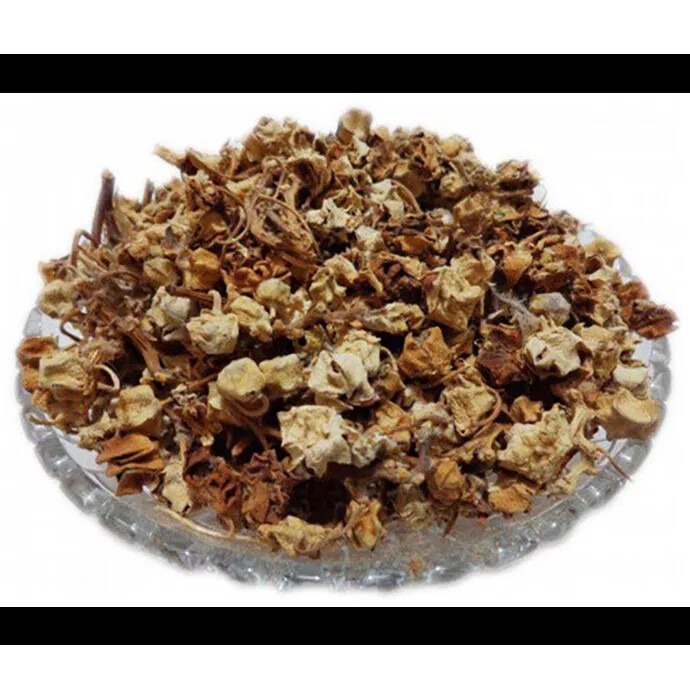
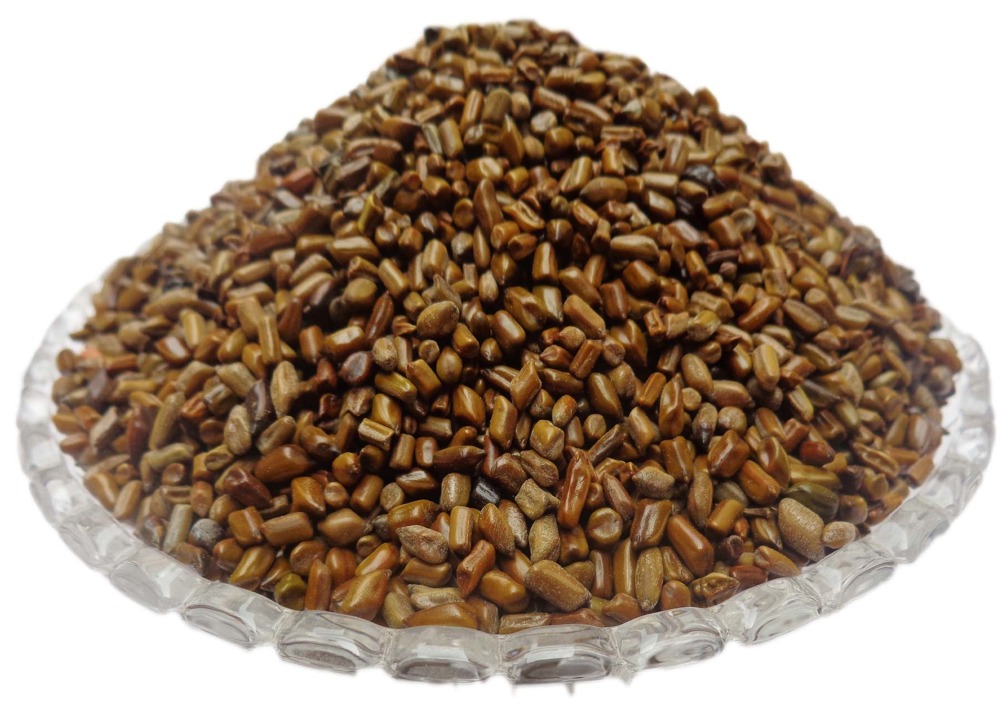
Gokshura
Gokshura
Tribulus terrestris L.
Dried fruit of Tribulus terrestris, the saponin-bearing gokhru sourced in bulk by Ayurvedic, nutraceutical and sports-nutrition extract manufacturers.
- Botanical nameTribulus terrestris L.
- Part usedDried ripe fruit; whole plant and root traded separately
- FamilyZygophyllaceae
- Also known asGokhru, Chhota Gokhru, Laghu Gokshura, Gokharu, Nerinjil, Palleru kaya, Bhakhra, Khar-e-Khasak Khurd, Sarate
- Certificate of Analysis
- Samples available
- Export documents handled
Gokshura is the dried ripe fruit of Tribulus terrestris L., a prostrate annual of the Zygophyllaceae family. It is one of the most exported Indian botanicals in the sports and vitality supplement trade. AV Biotech supplies whole fruit, de-spined and crushed material, cut and sifted, powder and standardised extract.
What genuine Gokshura fruit looks like
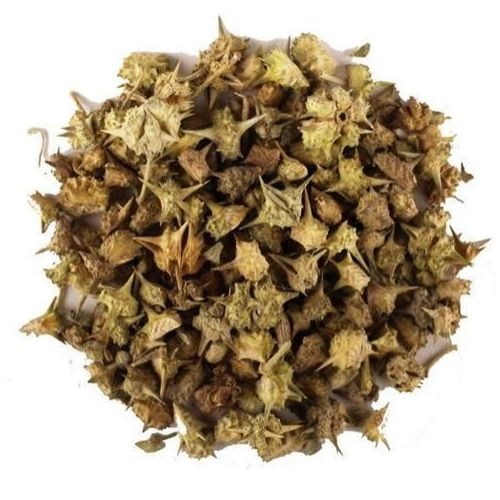
The fruit is small, roughly 1 cm across, light or greenish yellow, and five-ribbed. It carries five pairs of short stiff spines about 5 mm long, pointing downwards. The spine tips almost meet in pairs, forming a pentagonal frame around the fruit.
A ripe fruit splits into five segments called cocci. Each is semi-lunar or flat on one side, one-chambered, armed with a pair of spines, and holds four or more seeds. Taste is slightly astringent.
These features are worth knowing, because two other plants are traded under similar names.
Chhota gokhru, bada gokhru and winged caltrops
Chhota gokhru is Tribulus terrestris and is the pharmacopoeial drug. Bada gokhru is Pedalium murex, a plant from a different family, Pedaliaceae, with larger four-angled fruit. Classical texts allow it as a substitute in some contexts, but in the modern raw-material trade it functions as an adulterant.
A third species, Tribulus alatus Delile or winged caltrops, occurs in arid regions and bears fruit with wing-like expansions instead of the classic paired spines. It can turn up mixed into wild-collected lots.
If your specification says Tribulus terrestris, ask for a written species declaration and a macroscopic identity note on the certificate of analysis.
Where it grows and when it is collected
Tribulus terrestris favours hot, dry, sandy ground. It grows as a common weed on pasture land, roadsides and waste ground across India, and up to about 3,000 m in Kashmir. Commercial supply comes largely from Rajasthan, Gujarat, Haryana and Madhya Pradesh.
Collection is post-monsoon, broadly September to December, once the fruit has matured and dried on the plant. Material is then winnowed, cleaned of sand and stalk, and sun-dried to under about 10 per cent moisture.
Handling the spines
Gokshura is awkward material. The spines interlock, so whole fruit has low bulk density and fills a container long before it fills a weight target. Spines also puncture polythene liners and jam fine sieves.
For most industrial use, de-spined or crushed fruit is the practical grade. It packs denser, mills cleanly and cuts freight cost per usable kilo. Whole fruit still has a market where the buyer wants visual verification of species.
Constituents and standardisation
The Ayurvedic Pharmacopoeia of India lists potassium nitrate, sterols and sapogenins including diosgenin, gitogenin and hecogenin. Modern trade works with steroidal saponins, principally protodioscin, along with prototribestin, dioscin, tribulosin, flavonoid glycosides and beta-sitosterol.
Extracts are standardised either on total saponins by gravimetric method, commonly 20 to 60 per cent, or on protodioscin by HPLC, commonly 20 to 45 per cent. These are different measurements and cannot be compared directly.
Industrial applications of Gokshura
Gokshura has an unusually split buyer base. The Indian Ayurvedic trade buys fruit, and the international supplement trade buys extract, often from aerial parts.
Ayurvedic and pharmaceutical manufacturing
Fruit is the pharmacopoeial drug and the classical raw material. It goes into Gokshuradi Guggulu, Trikantaka Ghrita, churna, kwath and tablet lines. Powder at 60 to 80 mesh suits tablet and capsule production, while cut and sifted fruit suits decoction.
Urinary-comfort and men's wellness formulations are the largest classical outlets. Guggul-based tablet lines are steady repeat buyers of fine fruit powder.
Nutraceutical and sports nutrition
This is the biggest export segment. Brands buy standardised extracts, typically declared on saponins by gravimetric method or on protodioscin by HPLC. Blends with Ashwagandha, Safed Musli, Shilajit and Fenugreek are standard.
These buyers usually require a species declaration, an irradiation statement, a non-GMO declaration and full heavy-metal data by ICP-MS.
Extraction and phytochemical units
Extractors buy de-spined crushed fruit or aerial parts on assay. Because protodioscin content varies strongly with geography and chemotype, a trial batch before contracting is normal practice. Yield per tonne can differ noticeably between collection regions.
Veterinary and animal nutrition
Coarse fruit powder is used in cattle and poultry vitality and urinary premixes. This segment takes lower grades and helps absorb off-spec material from cleaning lines.
Cosmetic and personal care
Saponin-bearing extracts are used in cleansing systems, hair tonics and scalp preparations. Saponins foam naturally, so they suit sulphate-free wash bases. Volumes are modest compared with the supplement trade.
Common product formats we supply into
- Gokshuradi Guggulu and other classical tablet formats
- Gokshura churna, capsules and kwath
- Urinary-comfort and kidney-wellness formulations
- Sports nutrition and men's vitality supplements
- Standardised saponin and protodioscin extracts
- Testosterone-support style blends for export markets
- Herbal tea and decoction premixes
- Cattle and poultry vitality premixes
- Hair tonics, scalp preparations and cleansers
- Ayurvedic proprietary syrups and tonics
Traditional uses and research context
Gokshura is one of the most researched Indian botanicals, and also one of the most over-claimed in retail marketing. The Ayurvedic Pharmacopoeia of India lists actions including brimhana, vrishya, ashmarihara and basti shodhana for the fruit.
Urinary tract and kidney wellness traditions
Gokshura is traditionally used in Ayurveda in preparations supporting comfortable urine flow and urinary tract wellness. Mutrakrichhra and ashmari appear among its classical therapeutic indications. This is its oldest and most consistent documented use, and it remains the core of Indian formulation demand.
Vitality and reproductive wellness
Classical texts place Gokshura in the vrishya group, associated with reproductive vitality. Studies have examined protodioscin-rich extracts in relation to hormonal and libido parameters, with mixed and often modest results in human trials. Brands commonly formulate it into products targeting general vitality and men's wellness.
The evidence does not support strong physiological claims, and several regulators have acted against overstated marketing. Careful claim wording protects both the brand and the retailer.
Sports and performance formulations
Gokshura appears widely in performance and recovery blends. Published human trials on athletic performance are limited and results are inconsistent. Products in this space are usually positioned around general vitality and stamina support rather than measured performance gains.
Antioxidant and metabolic research
Research suggests that the saponin and flavonoid fractions show antioxidant activity in laboratory models, and preliminary work has examined effects on lipid and glucose parameters. Findings remain largely pre-clinical. Formulators typically use this to position products around general metabolic wellness.
Notes for formulators
The Ayurvedic Pharmacopoeia of India gives a traditional dose of 3 to 6 g of powder, or 20 to 30 g for decoction. Tribulus-based supplements attract regulatory attention in several export markets, and some sports bodies scrutinise vitality ingredients closely. Confirm permitted claims and any sports-supplement testing requirements before finalising labels.
This information is provided for educational and B2B product-sourcing purposes only. It is not medical advice and these statements have not been evaluated by any regulatory authority. Finished-product claims are the responsibility of the manufacturer.
| Botanical name | Tribulus terrestris L. (Zygophyllaceae) |
|---|---|
| Part used | Dried ripe fruit; aerial parts and root supplied separately on request |
| Appearance | Fruit about 1 cm across, light to greenish yellow, five-ribbed, with five pairs of stiff downward-pointing spines about 5 mm long. Splits into five cocci. Powder: greenish-brown to fawn |
| Odour and taste | Faint characteristic odour; slightly astringent taste |
| Identity | Macroscopic identity note plus written species declaration. Bada gokhru (Pedalium murex) and winged caltrops (Tribulus alatus) are excluded by inspection and stated on the certificate of analysis |
| Active constituents (typical assay) | Steroidal saponins including protodioscin, prototribestin, dioscin and tribulosin; sapogenins diosgenin, gitogenin and hecogenin; flavonoid glycosides, beta-sitosterol and potassium nitrate. Extracts standardised to 20-60% total saponins by gravimetric method, or 20-45% protodioscin by HPLC |
| Moisture / loss on drying | Not more than 10% (typical 6-9%) |
| Total ash | Not more than 15% (API limit for Gokshura fruit) |
| Acid-insoluble ash | Not more than 2% (API limit; the fruit grows on sandy ground, so this is the key cleaning indicator) |
| Foreign matter | Not more than 1% (API limit), including stalk, leaf and other plant parts |
| Alcohol-soluble extractive | Not less than 6% (API limit) |
| Water-soluble extractive | Not less than 10% (API limit) |
| Particle size | Whole fruit; de-spined and crushed 3-8 mm; cut and sifted 2-6 mm; powder 60, 80 or 100 mesh BSS to order |
| Heavy metals | Lead NMT 10 ppm, Arsenic NMT 3 ppm, Cadmium NMT 0.3 ppm, Mercury NMT 1 ppm (API / WHO basis, by ICP-MS) |
| Pesticide residues | Tested to API appendix; EU MRL screen (Reg. 396/2005) available on request |
| Aflatoxins | B1 not more than 5 ppb, total not more than 10 ppb (EU herbal-material basis) |
| Microbiology | Total plate count NMT 10^5 cfu/g; yeast and mould NMT 10^3 cfu/g; E. coli, Salmonella, S. aureus and P. aeruginosa absent |
| Packing | 25 kg paper-laminated or HDPE bags with a heavier-gauge food-grade liner, since spines pierce standard liners; 20-25 kg fibre drums for powder; jumbo bags for crushed fruit |
| Shelf life | 36 months for whole and crushed fruit; 24 months for powder, in original sealed packing |
Values are typical and indicative. A lot-specific Certificate of Analysis is shared before dispatch.
Are you supplying chhota gokhru or bada gokhru?
Chhota gokhru, which is Tribulus terrestris and the pharmacopoeial drug. Bada gokhru is Pedalium murex, a different family with larger four-angled fruit, and we supply it only if you order it by name. Every lot ships with a written species declaration and a macroscopic identity note, which also confirms exclusion of Tribulus alatus, the winged caltrops sometimes found in wild-collected material.
Should I order whole fruit or de-spined crushed fruit?
De-spined crushed fruit for almost any industrial use. The interlocking spines make whole fruit very low in bulk density, so a container fills up long before it reaches a useful weight, and freight cost per usable kilo rises sharply. Whole fruit makes sense mainly when you or your customer want to verify the species by eye.
Can you meet a 45 per cent protodioscin specification?
That figure belongs to a standardised extract, not to raw fruit. We supply extracts standardised on protodioscin by HPLC, typically in the 20 to 45 per cent range, or on total saponins by gravimetric method, typically 20 to 60 per cent. Confirm which marker and method you need, because the two numbers describe different things and are not interchangeable.
How do you control sand and grit in the fruit?
Tribulus grows on sandy ground, so cleaning is the main quality step. Material is winnowed, de-stoned and air-classified before grading, and we test acid-insoluble ash on every lot against the pharmacopoeial limit of 2 per cent. Total ash can run up to 15 per cent under the same monograph, so acid-insoluble ash is the figure that actually tells you how clean a lot is.
What is available in aerial parts, and when is fresh crop ready?
We supply aerial parts separately for extraction buyers, since much of the international supplement trade standardises on herb rather than fruit. Collection is post-monsoon, broadly September to December, so fresh-crop material is at its widest availability from October to January. Book six to eight weeks ahead for large tonnages or organic-certified lots.
Enquire about Gokshura
No payment is taken here — this reaches our sourcing team directly.
Related products