Cassia Tora (Charota)
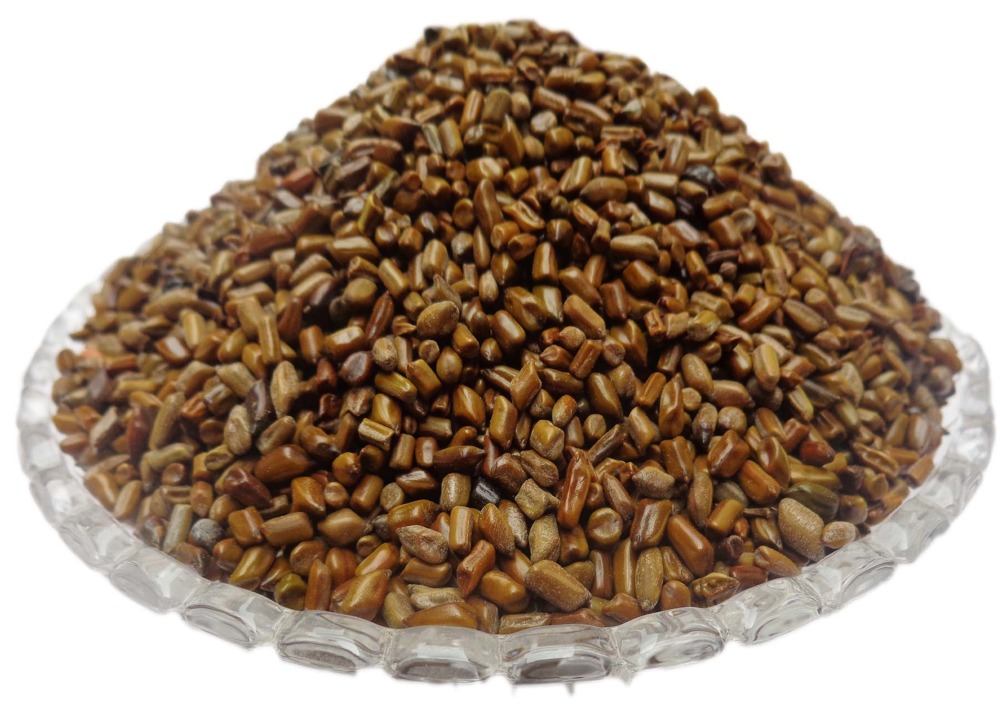
Cassia Tora (Charota)
Senna tora (L.) Roxb. (syn. Cassia tora L.)
Bulk Cassia tora seed for two distinct trade streams: galactomannan gum feedstock and Ayurvedic Chakramarda seed, from Rajasthan and Madhya Pradesh.
- Botanical nameSenna tora (L.) Roxb. (syn. Cassia tora L.)
- Part usedSeed
- FamilyFabaceae (Caesalpiniaceae)
- Also known asChakramarda, Chakvad, Puvarasu, Takara, Kasondi, Sickle Pod
- Certificate of Analysis
- Samples available
- Export documents handled
Cassia tora is a self-sown annual legume whose seed enters trade through two separate routes. One is the industrial gum sector, where the seed endosperm is split and milled into cassia gum powder. The other is the Ayurvedic sector, where the whole seed is traded as Chakramarda for classical formulations.
Botanical identity and part used
The plant belongs to the Fabaceae family, sub-family Caesalpiniaceae, and is a common weed of roadsides and fallow land across India. Only the seed is traded; leaves and pods have no established commercial specification.
India is the principal global source of cassia tora seed and remains the largest producer of cassia gum, since the crop is not cultivated at meaningful commercial scale outside the subcontinent.
Where it grows in India
Cassia tora grows extensively as a rain-fed crop and volunteer weed in Rajasthan, Madhya Pradesh and Gujarat. Most volume is collected from wild and semi-wild stands rather than dedicated plantations, which makes seasonal supply variable.
Harvest and processing
Plants are harvested when pods ripen and dry, typically between November and January. Threshed seed is cleaned, graded by size and colour, and then split into two commercial streams.
For the gum trade, seed is heat- and mechanically-treated to separate the endosperm (cassia split) from the husk and germ. The split is milled to cassia gum powder, a galactomannan polysaccharide with a mannose-to-galactose ratio of roughly 5:1.
For the Ayurvedic trade, whole cleaned seed is sun-dried, sieved to remove broken seed and foreign matter, and supplied intact. This seed is not split or processed and carries a different specification from gum-grade seed.
Why buyers source it
Gum buyers value cassia gum as a lower-cost galactomannan thickener with functional properties close to guar and locust bean gum, used across food, pet food and industrial formulations. Refined grades meet the tighter purity and microbial limits required by EU, UK and Japanese food regulations.
Ayurvedic buyers value the seed for its anthraquinone content, chiefly chrysophanol, emodin and rhein, along with torachrysone, and use it in classical laxative, dermatological and ophthalmic preparations.
Forms that trade
AV Biotech supplies raw cleaned seed for the gum industry and whole sun-dried seed for the Ayurvedic and nutraceutical trade. Buyers should specify which stream they need, since gum-grade and Ayurvedic-grade seed are graded to different criteria and are not interchangeable.
Industry applications of Cassia tora seed
Cassia tora seed splits into two commercial pipelines that do not overlap. A buyer sourcing for one should not assume the same lot suits the other.
Gum and hydrocolloid manufacturing
Gum processors buy raw seed as feedstock to produce cassia gum powder, a galactomannan thickener and stabiliser. Refined cassia gum, typically above 75 per cent galactomannan purity, goes into pet food, processed meat, dairy analogues and industrial thickening applications.
Semi-refined grades serve industrial and technical uses where food-grade purity is not required, such as paper sizing, textile printing and mining flocculants.
Ayurvedic and pharmaceutical manufacturing
Classical Ayurvedic units buy whole Chakramarda seed for churna, kwatha and topical formulations targeting skin conditions such as dadru (ringworm) and kustha. It is traditionally classified as kustaghna, meaning used against skin disorders, and dadrughna.
These buyers want whole, unsplit, unhulled seed with documented identity, since Ayurvedic Pharmacopoeia listings apply to the intact seed rather than to gum-split material.
Nutraceutical and functional food
Some functional food and supplement brands use roasted or processed Chakramarda seed powder in digestive-support blends, drawing on its traditional laxative and anthelmintic classification.
Cosmetic and personal care
Cassia gum is used as a natural thickener and film-former in shampoos, conditioners and lotions, valued as an alternative to synthetic and some other plant gums in clean-label formulations.
Common product formats
- Raw cleaned seed for gum extraction
- Cassia splits (endosperm halves) for milling
- Refined and semi-refined cassia gum powder
- Whole sun-dried Chakramarda seed for Ayurvedic use
- Chakramarda churna and classical decoctions
- Digestive-support supplement blends
Traditional use and current research
Cassia tora seed, known in Ayurveda as Chakramarda, is classified as kustaghna (used traditionally for skin disorders) and dadrughna (traditionally used for ringworm-type conditions). The following notes describe traditional positioning and published research directions, not established medical outcomes.
Digestive and laxative use
Traditional Ayurvedic use includes the seed as a mild laxative, attributed to its anthraquinone glycosides such as emodin and aloe-emodin. Formulators building digestive-support products reference this traditional classification.
Skin-related traditional use
Chakramarda has long been applied topically in traditional practice for dadru (ringworm-type skin conditions) and other dermatological complaints. Phytochemical studies report anthraquinone derivatives, including torachrysone, chrysophanol and rhein, as the constituents of interest in this context.
Anthelmintic and ophthalmic traditional classification
Classical texts describe the seed as anthelmintic and ophthalmic. These are traditional-use classifications rather than clinically validated indications, and finished-product claims should be built on the manufacturer's own supporting data.
Research interest in seed phytochemistry
Published phytochemical screening has identified alkaloids, flavonoids, tannins, saponins, glycosides and anthraquinones in the seed, with torachrysone reported as a compound of particular interest for further study. This remains an active research area rather than an established therapeutic finding.
What buyers should note on claims
Anthraquinone content varies with origin, harvest timing and processing, so any claim substantiation should reference the same seed specification used in the cited study or Ayurvedic text, not a generic cassia tora reference.
This information is provided for educational and B2B product-sourcing purposes only. It is not medical advice and these statements have not been evaluated by any regulatory authority. Finished-product claims are the responsibility of the manufacturer.
| Botanical name | Senna tora (L.) Roxb. syn. Cassia tora L., Fam. Fabaceae |
|---|---|
| Part used | Seed (whole seed for Ayurvedic trade; split endosperm for gum trade) |
| Appearance | Small, glossy, rhomboid, greenish-brown to brown seed; gum powder off-white to pale yellow |
| Active constituents (Ayurvedic grade) | Anthraquinone derivatives — chrysophanol, emodin, rhein and torachrysone; assay confirmed on the batch Certificate of Analysis |
| Active constituent (gum grade) | Galactomannan, typically above 75 per cent in refined cassia gum powder; mannose-to-galactose ratio approximately 5:1 |
| Moisture | Not more than 10 per cent (whole seed); not more than 12 per cent (gum powder), typical trade limit |
| Total ash | Not more than 6 per cent, typical trade limit |
| Acid-insoluble ash | Not more than 1.5 per cent, typical trade limit |
| Foreign matter | Not more than 2 per cent (whole seed grade) |
| Particle size | Whole seed as harvested and cleaned; gum powder milled to 80, 100 or 200 mesh on request |
| Pesticide/heavy-metal/microbial testing | Screened against EU MRL and AYUSH heavy-metal limits; microbial testing (TPC, yeast and mould, E. coli, Salmonella) available per lot |
| Packing | 50 kg PP/HDPE bags for raw seed; 25 kg multi-wall paper or PP bags with liner for gum powder |
| Shelf life | 24 months for whole seed in original sealed packing; 24 months for gum powder stored dry |
| Note | All values are typical or indicative. Actual lot values vary with origin, season and processing stream, and are confirmed on the batch Certificate of Analysis |
Values are typical and indicative. A lot-specific Certificate of Analysis is shared before dispatch.
What is your minimum order quantity for Cassia tora seed?
500 kg for raw seed supplied to the gum industry, 100 kg for milled gum powder, and 25 kg for whole Ayurvedic-grade seed. Paid samples of 500 g to 1 kg are available for trial and are adjusted against your first commercial order.
Can you supply both gum-grade seed and Ayurvedic whole seed, and are they the same material?
No, they are graded differently. Gum-grade seed is supplied for endosperm splitting and milling, while Ayurvedic-grade seed is whole, unsplit and sieved for foreign matter. Tell us which stream you need so we grade and pack accordingly.
What documentation comes with an export shipment?
Every lot ships with a batch Certificate of Analysis covering moisture, ash, foreign matter and, for gum powder, galactomannan content. Export consignments also carry a phytosanitary certificate, Certificate of Origin, packing list and commercial invoice.
Can you customise mesh size or purity for gum powder?
Yes. We supply refined cassia gum milled to 80, 100 or 200 mesh, and can source toward a buyer-specified galactomannan purity range for food, pet-food or industrial applications.
What is the typical lead time and shelf life?
7 to 12 working days for stock grades from Jaipur; larger gum-industry volumes may need 3 to 4 weeks depending on season. Shelf life is 24 months from packing date for both raw seed and gum powder when stored dry in unopened packing.
Enquire about Cassia Tora (Charota)
No payment is taken here — this reaches our sourcing team directly.
Related products