Gurmar
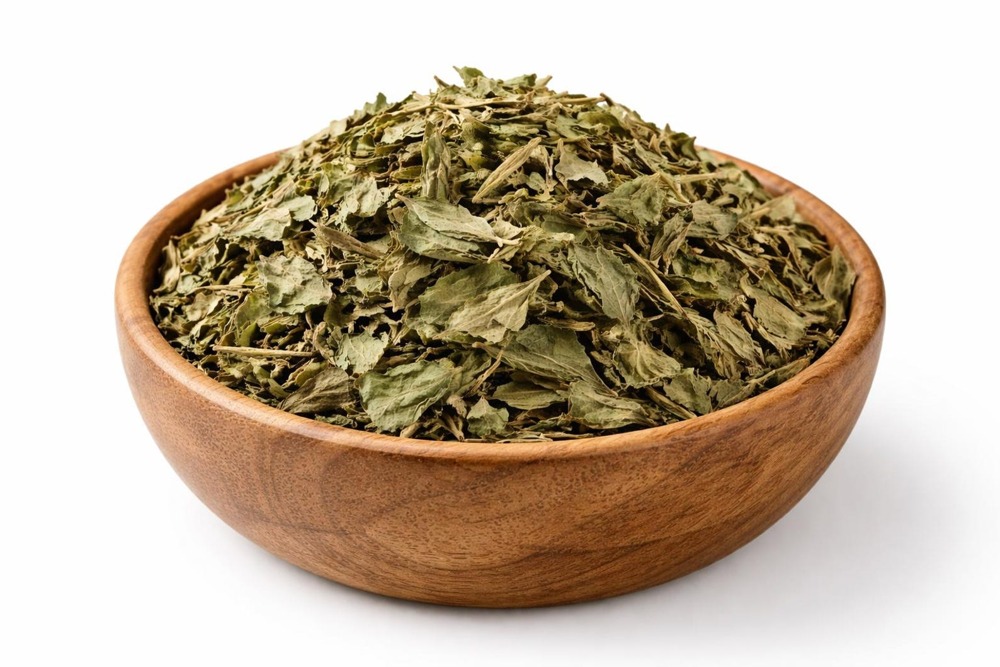
Gurmar
Gymnema sylvestre
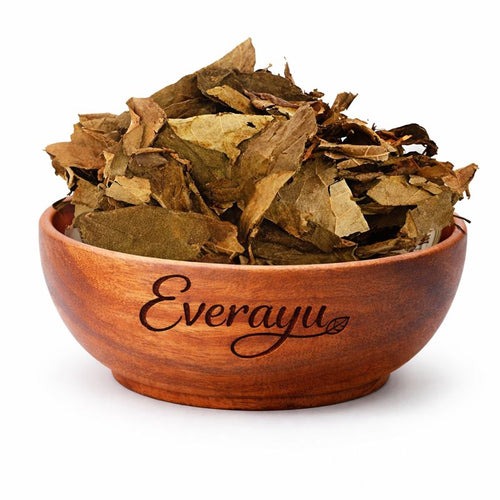
Gurmar is the dried leaf of Gymnema sylvestre, supplied in bulk to nutraceutical brands, Ayurvedic manufacturers and standardised extract producers.
- Botanical nameGymnema sylvestre
- Part usedLeaves (primary), stem
- FamilyApocynaceae
- Also known asMeshashringi, Madhunashini, Sirukurinjan, Podapatri, Gudmar
- Certificate of Analysis
- Samples available
- Export documents handled
Gurmar is the dried leaf of Gymnema sylvestre, one of the most exported Indian botanicals in the metabolic wellness category. Buyers are supplement brands, Ayurvedic manufacturers and extract houses.
Botanical identity
Gymnema sylvestre (Retz.) R.Br. ex Sm. is placed in the Apocynaceae family, in the subfamily Asclepiadoideae. Older references list it under Asclepiadaceae, and both appear in trade documents.
It is a woody climbing vine with opposite, oval leaves and small yellow flowers. The Hindi name Gurmar translates roughly as sugar destroyer, and the Sanskrit name Madhunashini carries the same sense.
A practical identity check
Gurmar has an unusual property that the trade uses as a quick field check. Chewing a fresh or dried leaf temporarily suppresses the ability to taste sweetness, an effect attributed to the gymnemic acids.
This is not a substitute for laboratory identity testing, but it is a genuine first-pass check on a sample. A leaf lot that produces no sweetness suppression at all deserves a closer look.
Growing regions and collection
The vine grows across central and peninsular India, in dry and moist deciduous forest. Supply comes mainly from Madhya Pradesh, Chhattisgarh, Maharashtra, Karnataka, Tamil Nadu, Andhra Pradesh and Kerala.
A large share of the material is still wild-collected rather than farmed, though cultivation is increasing under organic and traceability programmes. Leaves are picked once mature, generally after the monsoon.
Wild collection has a direct commercial consequence. Batch-to-batch variation is higher than for a cultivated field crop, which is why lot-specific testing matters more here than in many other herbs.
Active constituents
The compounds of interest are the gymnemic acids, a group of triterpene saponins. The related sapogenin is gymnemagenin, and the plant also contains gymnemasaponins and a polypeptide called gurmarin.
Published work reports leaves yielding roughly 4% to 5% total gymnemic acids, though figures move with origin, maturity and analytical method.
The assay trap buyers should know about
Gurmar extract is quoted in two different ways, and they are not comparable. Levels such as 25%, 50% and 75% gymnemic acids are usually determined gravimetrically or by UV.
A figure such as 25% gymnemagenin by HPLC is a different measurement of a different compound. A 75% gravimetric extract and a 25% HPLC extract are not simply ranked by the bigger number.
Always ask for the percentage together with the analytical method. Comparing two quotations without that detail is the single most common purchasing error in this material.
Forms that trade
We supply whole dried leaves, cut and sifted material, tea-bag cut and powder at 60 or 80 mesh. Standardised extracts are produced to the buyer's declared assay and method.
Industry applications of Gurmar
Gurmar sells into a narrower band of industries than most herbs, but the volumes in that band are substantial and export-driven.
Nutraceutical and supplement brands
This is the dominant segment, particularly for the US and European markets. Brands formulate gymnema into capsules, tablets, powders and gummies positioned around metabolic and sugar-craving support.
Almost all of this segment buys standardised extract rather than plain leaf powder. Extract at 25% and 75% gymnemic acids are the two most commonly ordered levels.
Clean-label and traceability requirements are strong here, so buyers routinely ask for collection-region documentation alongside the Certificate of Analysis.
Ayurvedic and herbal pharma
Gurmar is used as Meshashringi and Madhunashini in Ayurvedic manufacturing. It appears in churna, vati and kwath preparations, and in multi-herb formulations directed at madhumeha.
These manufacturers usually buy leaf powder at 60 or 80 mesh, or coarse cut for decoction bases. Their focus is on botanical identity and low foreign matter rather than on a high extract assay.
Extract and phytochemical manufacture
Extract houses buy leaf-only material and reject lots carrying significant stem and twig content. Stems dilute the gymnemic acid figure, so leaf purity is the main negotiating point.
These buyers commonly run both gravimetric and HPLC methods on incoming lots to build their own conversion basis between the two.
Herbal tea and functional beverage
Tea-bag cut gurmar is blended into wellness infusions, often alongside cinnamon, fenugreek or jamun seed. The leaf itself is not strongly flavoured, which makes it easy to blend.
This segment needs a clean, uniform cut with low dust so the material runs through tea-bagging machinery.
Veterinary and animal nutrition
Gurmar powder is used in some livestock and companion animal feed premixes within herbal metabolic support formulations. Feed-grade buyers prioritise consistent mesh, microbial load and price.
Common product formats
- Capsules, tablets, gummies and stick packs using standardised extract
- Churna, vati and kwath preparations in Ayurvedic manufacturing
- Tea bags and loose wellness infusion blends
- Functional beverage and sugar-reduction concept products
- Multi-herb metabolic support blends with fenugreek, cinnamon and jamun
- Livestock and companion animal feed premixes
Traditional uses and current research
Gurmar has been used in Ayurveda for a very long time, and its traditional names describe its most striking property rather than a claimed outcome.
Traditional positioning
Traditionally used in Ayurveda under the names Meshashringi and Madhunashini, in formulations directed at madhumeha, a classical category relating to sugar in the body.
Traditional practice also made use of the leaf's ability to blunt the taste of sweetness. That property is observable, immediate and is part of why the herb acquired its reputation.
What studies suggest
Gymnemic acids are the most studied constituents. Studies suggest they may interact with sweet taste receptors, which is the accepted explanation for the temporary sweetness suppression after chewing a leaf.
Research has also examined gymnema extracts in relation to sugar absorption and to markers of glucose handling, in laboratory, animal and some human studies. Results vary with extract type and study design, and the evidence base is not uniform.
Further work has looked at the related polypeptide gurmarin and at antioxidant and lipid-related activity. These remain areas of investigation rather than settled conclusions.
Because published trials use extracts at very different standardisation levels and by different methods, results from one preparation cannot be assumed to apply to another.
How brands position finished products
Commonly formulated into products targeting healthy blood sugar support, sugar-craving management, metabolic wellness and weight management routines. Permitted wording differs sharply between markets.
In India, claims are governed by the Drugs and Magic Remedies (Objectionable Advertisements) Act, FSSAI nutraceutical regulations and AYUSH licensing rules. Several export markets restrict glycaemic claims on food supplements entirely.
Points buyers should note
Because of its association with blood sugar, formulators generally review interaction with prescribed glucose-lowering medication before launching a consumer product. Suitability during pregnancy is usually assessed separately.
Consumers may also notice the temporary taste effect, so chewable and powder formats are typically designed with that in mind.
This information is provided for educational and B2B product-sourcing purposes only. It is not medical advice and these statements have not been evaluated by any regulatory authority. Finished-product claims are the responsibility of the manufacturer.
| Botanical name | Gymnema sylvestre (Retz.) R.Br. ex Sm. |
|---|---|
| Family | Apocynaceae (subfamily Asclepiadoideae; formerly Asclepiadaceae) |
| Part used | Dried leaves; leaf-only grade specified separately from leaf-and-stem material |
| Appearance | Green to olive-green leaves; powder light to medium green |
| Odour and taste | Faint characteristic odour; slightly bitter, with temporary sweetness suppression on chewing |
| Active constituents | Gymnemic acids (triterpene saponins), gymnemagenin, gymnemasaponins, gurmarin |
| Gymnemic acids (raw leaf) | Typically around 4% to 5% total on dry basis; varies with origin, maturity and method |
| Extract standardisation | 25%, 50% and 75% gymnemic acids (gravimetric / UV); or 25% gymnemagenin (HPLC). State method with percentage |
| Moisture | Not more than 10% (typical) |
| Total ash | Not more than 12% (typical) |
| Acid-insoluble ash | Not more than 3% (typical) |
| Foreign matter | Not more than 2% (typical); stem and twig content specified separately by grade |
| Particle size | Whole leaf; cut and sifted 2 to 8 mm; tea-bag cut 0.5 to 2 mm; powder 60 or 80 mesh |
| Pesticide residues | Tested against buyer-nominated panel; EU or USP limits available on request |
| Heavy metals | Lead, cadmium, mercury and arsenic tested to agreed limits |
| Microbiology | Total plate count, yeast and mould, E. coli, Salmonella to agreed limits |
| Traceability | Collection region documented per lot; relevant where material is wild-collected |
| Packing | 25 kg PP or HDPE laminated bags with food-grade inner liner; fibre drums for powder |
| Shelf life | 24 months whole and cut; 12 to 18 months powder, in original sealed packing |
Values are typical and indicative. A lot-specific Certificate of Analysis is shared before dispatch.
What is your minimum order quantity for Gurmar?
MOQ is 100 kg per grade for whole leaf, cut and sifted, tea-bag cut and powder, and 25 kg for standardised extract. Samples of 100 to 500 g are provided so your lab can verify identity and assay. Multiple grades can be combined into a single shipment.
What is the difference between 75% gymnemic acids and 25% gymnemagenin extract?
They measure different things by different methods, so the numbers are not directly comparable. Gymnemic acid percentages such as 25%, 50% and 75% are usually gravimetric or UV figures. A 25% gymnemagenin figure is an HPLC result on the sapogenin. Always give us the percentage and the method together, otherwise two quotations cannot be compared fairly.
Do you supply leaf-only Gurmar without stem content?
Yes, and we recommend it for extraction. Gymnemic acids sit mainly in the leaf, so stem and twig content dilutes the assay while the lot may still look acceptable. We supply a leaf-only grade with a declared stem limit, and a standard leaf-and-stem grade at a lower price for general herbal use.
Is your Gurmar wild-collected or cultivated, and can you supply organic?
Both are available. A significant share of Indian gurmar is still wild-collected from deciduous forest areas, which increases lot-to-lot variation, so we document the collection region per lot. Certified organic material under NPOP, NOP or EU standards is available from certified farms or certified wild-collection areas, with a transaction certificate.
What is the lead time for bulk Gurmar orders?
Ready stock in standard grades usually dispatches within 7 to 10 working days of order confirmation. Leaf-only selection, custom mesh or specific assay screening typically adds 10 to 15 days. Standardised extract to a defined assay is generally produced to order and takes about 3 to 4 weeks, subject to raw material availability.
Enquire about Gurmar
No payment is taken here — this reaches our sourcing team directly.
Related products