Bibhitaki
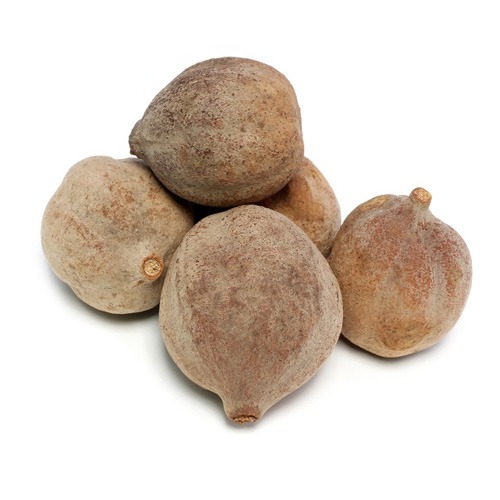
Bibhitaki
Terminalia bellirica (Gaertn.) Roxb.
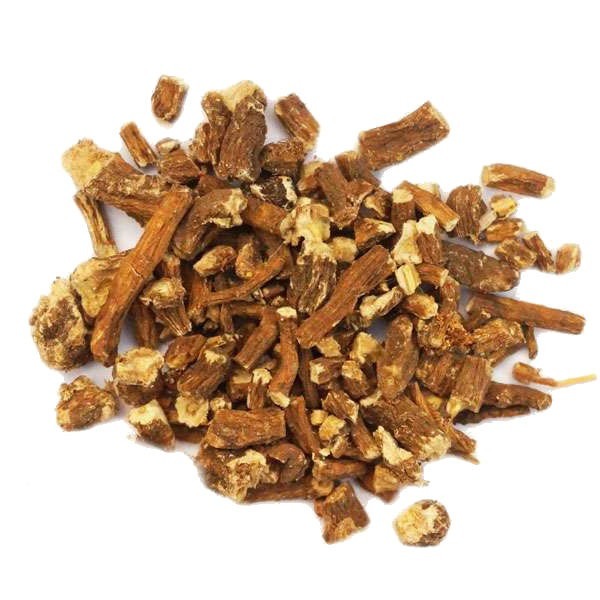
Dried fruit rind of Terminalia bellirica, the second Triphala myrobalan, supplied in bulk to Ayurvedic, extract, cosmetic and feed manufacturers.
- Botanical nameTerminalia bellirica (Gaertn.) Roxb.
- Part usedDried fruit pericarp (deseeded rind); whole fruit and kernel traded separately
- FamilyCombretaceae
- Also known asBaheda, Behada, Bahera, Vibhitaka, Thanrikkai, Thanikkaya, Tannikka, Tare kai, Bhomora, Bayada
- Certificate of Analysis
- Samples available
- Export documents handled
Bibhitaki is the dried fruit of Terminalia bellirica (Gaertn.) Roxb., a large deciduous tree of the Combretaceae family. It is the second of the three fruits in Triphala. AV Biotech supplies deseeded rind, whole fruit, cut and sifted material, powder and kernel.
How it differs from Haritaki
Both herbs share a family and a Triphala role, but they are not interchangeable in a plant. Bibhitaki fruit is nearly spherical and 25 to 40 mm across, while Haritaki is ovoid and clearly ribbed. Fresh Bibhitaki carries a silvery or whitish downy surface that dulls to grey-brown on drying.
The rind is thicker, running 3 to 5 mm. Extractive values are also markedly lower. The Ayurvedic Pharmacopoeia of India sets water-soluble extractive for Bibhitaki at not less than 35 per cent, against 60 per cent for Haritaki.
That difference matters commercially. A buyer testing Bibhitaki against Haritaki limits will reject good material, and a supplier blending the two will be caught by extractive testing.
Growing regions and harvest
The tree is a lowland species, found in plains and forest up to about 900 m. Commercial collection is concentrated in Madhya Pradesh, Chhattisgarh, Maharashtra, Odisha, Jharkhand and parts of Karnataka. Fruits ripen towards November and are collected through the dry months that follow.
Collected fruits are sun-dried until the rind hardens. Because the fruit is fleshier than Haritaki, drying takes longer and under-dried lots are the most common quality problem. Moisture above about 10 per cent invites mould during monsoon storage.
Deseeding and the kernel question
The stone is a large share of whole-fruit weight, and the kernel inside it is a separate commodity. Baheda giri, the kernel, is oil-rich and is sold to soap and oil units, not to Ayurvedic manufacturers.
The pharmacopoeial drug is the pericarp only. Powder made from whole crushed fruit carries kernel fat, which lowers tannin assay, raises acid value and clogs fine sieves. Buyers should specify deseeded rind, often traded as baheda chilka, and ask for an extractive value on the lot.
Constituents and buyer interest
Reported tannin content in the rind typically falls between 20 and 30 per cent. Gallic acid, ellagic acid, chebulagic acid, ethyl gallate and corilagin are the usual markers. The lignans termilignan, thannilignan and anolignan B are also reported and attract research interest.
Bulk demand comes from Triphala production, single-herb churna, standardised extract manufacture and hair care. Forms in regular trade are whole fruit, deseeded rind, cut and sifted, powder at 40 to 100 mesh, kernel, and standardised extracts.
Industrial applications of Bibhitaki
Bibhitaki sells into four main streams, plus a separate market for the kernel. Grade selection differs sharply between them.
Ayurvedic and pharmaceutical manufacturing
Triphala is the dominant outlet. Classical Triphala is made from equal parts of Bibhitaki, Haritaki and Amla by weight, so any Triphala plant is a steady Bibhitaki buyer. Deseeded rind at 60 to 80 mesh is the working grade.
Single-herb Bibhitaki churna, kwath and tablet lines also use the same material. Manufacturers filing with AYUSH usually require pharmacopoeial extractive and ash figures on the certificate of analysis.
Nutraceutical and supplement brands
Export supplement brands buy standardised extracts, generally declared on total tannins or on gallic acid by HPLC. Fine powder is used in capsules and in digestive and respiratory blends. Batch traceability to collection region is often requested for these orders.
Cosmetic and personal care
The rind powder is a long-standing ingredient in herbal hair colour and hair-wash blends. Its tannins give a warm brown tone that pairs with henna and indigo. Formulators buy at 100 mesh so the finished paste stays smooth.
Extraction and natural tannin trade
Extractors buy on assay and on extractive yield. Because Bibhitaki extractive values are lower than Haritaki, solvent-to-material ratios differ, and buyers usually run a trial batch before contracting volume.
Kernel, feed and industrial uses
Baheda giri, the kernel, carries a fixed oil used in soap and industrial oil blends. Deoiled cake and coarse rind powder move into cattle and poultry feed premixes. These are distinct order lines with their own pricing.
Common product formats we supply into
- Triphala churna, tablets and capsules
- Single-herb Bibhitaki churna and kwath
- Respiratory and throat-care herbal syrups
- Digestive tonics and avaleha bases
- Herbal hair colour, hair packs and hair oils
- Standardised tannin and gallic acid extracts
- Herbal tooth powder and gargle bases
- Cattle and poultry feed premixes
- Soap and industrial oil from kernel
- Natural dye and vegetable tanning inputs
Traditional uses and research context
Bibhitaki is one of the most widely used fruits in Ayurveda, mainly through Triphala. The Ayurvedic Pharmacopoeia of India lists actions including kaphapittajit and kasahara. Its Sanskrit name Vibhitaka is the root of most regional trade names.
Respiratory and throat traditions
Bibhitaki is traditionally used in Ayurveda in preparations for cough and throat comfort. This is the traditional use that most distinguishes it from Haritaki, which is associated more with elimination. Commercial cough syrups, lozenges and kadha blends draw on this tradition.
Digestive support
As a Triphala component, Bibhitaki appears in a very large share of Indian digestive formulations. Traditional texts describe it as bhedaka, meaning it promotes movement. Products are commonly positioned around digestive regularity and gut comfort.
Antioxidant and polyphenol activity
The fruit rind is dense in hydrolysable tannins and phenolic acids. Studies suggest that gallic acid, ellagic acid and related polyphenols show antioxidant activity in laboratory assays. Supplement brands typically formulate it into antioxidant and general wellness products.
Metabolic research interest
Research has explored Terminalia bellirica extracts in relation to uric acid metabolism and lipid parameters, including work on xanthine oxidase inhibition. Evidence is preliminary and largely pre-clinical. Formulators generally position such products around joint comfort or metabolic wellness rather than any defined outcome.
Eye and skin traditions
Classical texts describe Bibhitaki as beneficial for the eyes and hair, and it appears in traditional netra and kesha preparations. In modern trade this survives mainly in hair-care and external-application products.
Safety notes for formulators
The traditional dose given in the Ayurvedic Pharmacopoeia of India is 3 to 6 g of powder. The kernel is not the pharmacopoeial part and should not be included in medicinal powders. Buyers formulating for export should verify permitted claims and any ingredient restrictions in the destination market.
This information is provided for educational and B2B product-sourcing purposes only. It is not medical advice and these statements have not been evaluated by any regulatory authority. Finished-product claims are the responsibility of the manufacturer.
| Botanical name | Terminalia bellirica (Gaertn.) Roxb. (Combretaceae) |
|---|---|
| Part used | Dried fruit pericarp, deseeded; whole fruit and kernel supplied separately |
| Appearance | Whole: nearly spherical to ovoid fruit 25-40 mm across, grey to greyish-brown, finely wrinkled, rind 3-5 mm thick. Powder: light brown to fawn |
| Odour and taste | Faint characteristic odour; astringent taste |
| Active constituents (typical assay) | Hydrolysable tannins 20-30%; gallic acid, ellagic acid, chebulagic acid, ethyl gallate and corilagin as markers; lignans termilignan, thannilignan and anolignan B reported. Extracts commonly standardised to 20-40% tannins or a declared gallic acid figure by HPLC |
| Moisture / loss on drying | Not more than 10% (typical 7-9%) |
| Total ash | Not more than 7% (API limit for Bibhitaka) |
| Acid-insoluble ash | Not more than 1% (API limit) |
| Foreign matter | Not more than 2% (API limit) |
| Alcohol-soluble extractive | Not less than 8% (API limit) |
| Water-soluble extractive | Not less than 35% (API limit) |
| Kernel content in deseeded rind | Nil to trace; declared on request for extraction buyers |
| Particle size | Powder 40, 60, 80 or 100 mesh BSS to order; cut and sifted 2-8 mm; whole fruit ungraded or size-sorted |
| Heavy metals | Lead NMT 10 ppm, Arsenic NMT 3 ppm, Cadmium NMT 0.3 ppm, Mercury NMT 1 ppm (API / WHO basis, by ICP-MS) |
| Pesticide residues | Tested to API appendix; EU MRL screen (Reg. 396/2005) available on request |
| Aflatoxins | B1 not more than 5 ppb, total not more than 10 ppb (EU herbal-material basis) |
| Microbiology | Total plate count NMT 10^5 cfu/g; yeast and mould NMT 10^3 cfu/g; E. coli, Salmonella, S. aureus and P. aeruginosa absent |
| Packing | 25 kg paper-laminated or HDPE bags with food-grade LDPE liner; 20-25 kg fibre drums; 500-800 kg jumbo bags for whole fruit |
| Shelf life | 36 months for whole and cut; 24 months for powder, in original sealed packing |
Values are typical and indicative. A lot-specific Certificate of Analysis is shared before dispatch.
Is your Baheda powder made from deseeded rind or whole fruit?
Our standard pharmacopoeial grade is milled from deseeded rind only. Whole-fruit powder carries kernel fat, which pulls down the tannin assay and raises acid value. If you specifically want whole-fruit powder for a feed or industrial application we can supply it, but it should be ordered as a separate grade.
Why are the extractive values lower than for Haritaki?
Because they are different species with different chemistry. The Ayurvedic Pharmacopoeia of India sets water-soluble extractive for Bibhitaki at not less than 35 per cent and alcohol-soluble at not less than 8 per cent, against 60 and 40 per cent for Haritaki. Testing Bibhitaki against Haritaki limits will produce false rejections.
Can you supply Triphala-ready material for all three fruits together?
Yes. We supply Bibhitaki, Haritaki and Amla as matched lots milled to the same mesh, which keeps blend uniformity consistent in your churna line. We can also supply a pre-blended Triphala in the classical equal-parts ratio, or to a custom ratio you specify, with a single certificate of analysis.
What testing is done for mould and moisture?
Every lot is tested for loss on drying, total plate count, yeast and mould, and pathogens including E. coli and Salmonella. Bibhitaki is fleshier than Haritaki and dries more slowly, so we hold moisture below 10 per cent and re-dry lots that drift. Steam-sterilised material is available where you need a lower microbial load.
When is fresh-crop material available?
Fruits ripen towards November and collection runs through the following dry months. Fresh-crop lots are generally available from December to March, and that is the best window for large contracts and for organic-certified material. We hold buffer stock through the year for smaller repeat orders.
Enquire about Bibhitaki
No payment is taken here — this reaches our sourcing team directly.
Related products