Hadjod
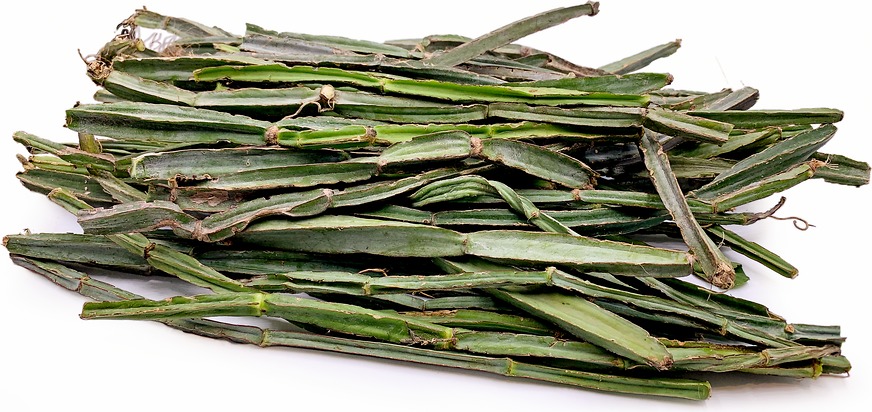
Hadjod
Cissus quadrangularis L.
Bulk Hadjod (Cissus quadrangularis) dried stem and powder for bone-health, joint and sports nutrition formulations, with ketosteroid assay on request.
- Botanical nameCissus quadrangularis L.
- Part usedDried stem (primary trade grade); whole plant and root traded separately
- FamilyVitaceae
- Also known asAsthisanhari, Asthishrinkhala, Vajravalli, Harjora, Hadjora, Pirandai, Nalleru, Chaudhari, Mangaraveli, Changeri Lata
- Certificate of Analysis
- Samples available
- Export documents handled
Hadjod is the dried stem of Cissus quadrangularis L., a succulent climber of the Vitaceae family. Its Sanskrit names Asthisanhari and Asthishrinkhala both translate roughly as bone-joiner, which is exactly how the trade positions it.
Botanical identity and part used
The plant is unmistakable in the field. Stems are fleshy, bright green and sharply four-angled, constricted into segments 8 to 10 cm long with a node and tendril at each joint.
The commercially traded drug is the dried stem. Whole-plant and root material is sold at lower value and should not be substituted into a stem specification. Dried stem pieces are pale brown to greyish, lighter than fresh material, with the quadrangular section still visible in cross-cut.
Where it grows and when it is cut
The creeper grows wild across the drier parts of India and is also cultivated on a small scale. Supply comes mainly from Rajasthan, Gujarat, Madhya Pradesh, Maharashtra, Andhra Pradesh, Tamil Nadu and Karnataka.
Stems are cut through the drier months, after the monsoon growth has hardened. Very young, soft green growth carries high water and dries down poorly, so mature segmented stem is preferred.
Processing and quality pitfalls
Fresh stem is around 80 per cent water, which makes drying the critical step. Segments are chopped and either sun dried or tray dried. Slow or incomplete drying produces mould and a sour, fermented odour that cannot be corrected later.
The stem contains calcium oxalate crystals, and material that is mishandled or adulterated with mature woody base sections shows high acid-insoluble ash. Buyers should also check for admixture with other Cissus species, which look similar once dried and cut.
What buyers assay
The trade marker is the group of 3-keto steroids, commonly called ketosterones. Extracts are widely sold standardised to 2.5 per cent 3-keto steroids by gravimetry, and that figure has become the sports-nutrition benchmark.
The stem also carries calcium, phytosterols including beta-sitosterol, ascorbic acid, carotenoids, flavonoids such as quercetin, and stilbenes. Raw stem powder assays well below extract levels, so powder and extract are priced and specified separately.
Forms that trade
AV Biotech supplies Hadjod as dried cut stem, coarse powder and fine powder, plus extract-grade feedstock selected for low woody content. Organic-certified lots are available against advance contract.
Industry applications of Hadjod
Hadjod has a narrower buyer base than most Ayurvedic herbs, but demand in each segment is steady and specification-driven.
Ayurvedic and pharmaceutical manufacturing
Classical units buy cut stem and coarse powder for churna, kwath, taila and lepa preparations positioned around bone and joint support. Hadjod appears in multi-herb orthopaedic formulations alongside Guggul, Ashwagandha and Arjuna.
These buyers usually specify stem-only material and Ayurvedic-style testing for ash and extractive values.
Nutraceutical and bone-health brands
This is the fastest-growing outlet. Brands use 80 mesh stem powder for capsules and tablets, and standardised extract at 2.5 per cent 3-keto steroids for higher-dose formats.
Calcium-and-vitamin-D bone formulas increasingly carry Hadjod as the botanical component. Buyers here demand consistent assay documentation rather than appearance grading.
Sports nutrition
Cissus extract is an established ingredient in joint-support and recovery stacks sold to strength athletes. Standardised extract dominates this segment. Powder is used mainly in blended or clean-label products.
Extraction houses
Extractors buy cut stem selected for low woody base content, because old lignified stem drags yield down. Leaf and tendril content is also negotiated, since it dilutes the ketosteroid fraction.
Food and traditional culinary use
Tender fresh stem, known as Pirandai in Tamil Nadu, is used in traditional chutneys and pickles. This is a fresh-produce channel and is separate from the dried herbal trade.
Common product formats
- Bone-health capsules and tablets with calcium and vitamin D
- Standardised Cissus extract at 2.5 per cent 3-keto steroids
- Joint-support and recovery stacks for sports nutrition
- Classical Ayurvedic churna, kwath and taila preparations
- External lepa and pain-balm bases
- Multi-herb orthopaedic syrups and granules
- Veterinary joint and fracture-support preparations
Traditional use and research context
Ayurvedic texts class Hadjod under Asthisandhanakara dravyas, herbs traditionally associated with bone and joint support. The names Asthisanhari and Vajravalli reflect that long-standing positioning.
Bone and fracture-recovery positioning
This is the dominant commercial application. Studies suggest that Cissus quadrangularis extract influences osteoblast activity and bone-turnover markers in preclinical models, and published work has examined osteoclastogenesis in an oestrogen-deficient animal model.
Brands commonly formulate it into products targeting bone density and post-fracture recovery support. Human evidence remains limited in scale.
Joint comfort and mobility
Traditionally used in Ayurveda in external and internal preparations for joint discomfort. Sports nutrition brands position extract-based products around joint comfort during heavy training loads.
Metabolic and weight-management research
Some clinical work has examined Cissus extract in relation to body composition and metabolic markers in adults. Study sizes are small and results are preliminary, so positioning should stay at the wellness level.
Antioxidant and anti-inflammatory framing
The stem carries flavonoids, stilbenes, carotenoids and ascorbic acid. Studies suggest antioxidant activity in laboratory assays, and reviews have discussed anti-inflammatory effects in preclinical models.
Digestive traditions
Tender stem is eaten as a traditional food in parts of south India and is described in folk practice as supporting digestion. This is a culinary tradition rather than a researched outcome.
Notes buyers should carry into claims
Most cited studies use a standardised extract, not plain stem powder. A 500 mg powder capsule cannot borrow the substantiation of an extract trial run at a different ketosteroid load.
The stem contains calcium oxalate. Buyers formulating for populations advised to limit oxalate intake should factor this into their own safety assessment.
This information is provided for educational and B2B product-sourcing purposes only. It is not medical advice and these statements have not been evaluated by any regulatory authority. Finished-product claims are the responsibility of the manufacturer.
| Botanical name | Cissus quadrangularis L., Fam. Vitaceae |
|---|---|
| Part used | Dried stem (stem-only grade); whole plant and root quoted separately |
| Appearance | Cut stem: pale brown to greyish-green angular segments with visible nodes. Powder: light brown to greenish-brown, free-flowing |
| Odour and taste | Faint characteristic odour; taste slightly acrid and mucilaginous |
| Active constituents (typical assay) | 3-keto steroids (ketosterones), phytosterols including beta-sitosterol, flavonoids such as quercetin, stilbenes, carotenoids, ascorbic acid and calcium. Raw stem powder assays well below extract levels. Extracts commonly standardised to 2.5 per cent 3-keto steroids by gravimetry, which is the accepted sports-nutrition benchmark |
| Moisture / loss on drying | Not more than 10 per cent (typical 6 to 9 per cent). Fresh stem is roughly 80 per cent water, so drying control is critical |
| Total ash | Not more than 20 per cent (indicative; stem is naturally high in mineral and calcium oxalate content) |
| Acid-insoluble ash | Not more than 5 per cent (indicative). Higher values point to adhering soil or woody base admixture |
| Foreign matter | Not more than 2 per cent; leaf and tendril content declared separately on extract-grade material |
| Particle size | Cut and sifted 3 to 10 mm; powder at 40, 60, 80 or 100 mesh BSS |
| Heavy metals | Lead NMT 10 ppm, Arsenic NMT 3 ppm, Cadmium NMT 0.3 ppm, Mercury NMT 1 ppm (AYUSH basis, by ICP-MS) |
| Pesticide residues | Multi-residue screen against EU MRL (Reg. 396/2005) on request; organic lots screened as standard |
| Microbiology | Total plate count NMT 10^5 cfu/g; yeast and mould NMT 10^3 cfu/g; E. coli, Salmonella, S. aureus and P. aeruginosa absent |
| Aflatoxins | B1 not more than 5 ppb, total not more than 10 ppb (EU herbal-material basis) |
| Identity note | Other Cissus species look similar once dried and cut. Macroscopic and HPTLC identity confirmation available on request |
| Packing | 20 to 25 kg HDPE or paper-laminated bags with food-grade LDPE liner; fibre drums for powder; 500 to 800 kg jumbo bags for cut stem |
| Shelf life | 36 months for cut stem, 24 months for powder, in sealed original packing |
Values are typical and indicative. A lot-specific Certificate of Analysis is shared before dispatch.
What is your minimum order quantity for Hadjod?
100 kg for milled stem powder, 500 kg for cut stem, and 25 kg for standardised extracts. Evaluation samples of 250 g to 1 kg are supplied so your QC team can confirm identity, mesh and colour before you place a bulk order.
Do you supply stem-only material, and how is it checked?
Yes. Our standard offering is dried stem with leaf, tendril and woody base content controlled at grading. Other Cissus species look very similar once dried, so identity is confirmed macroscopically and by HPTLC fingerprint on request. Whole-plant grade is quoted separately and should not be substituted into a stem specification.
Can you supply extract standardised to 2.5 per cent 3-keto steroids?
Yes. That gravimetric figure is the accepted benchmark in bone-health and sports-nutrition formulations, and we supply against it on contract. Raw stem powder assays well below extract levels, so please confirm whether you need powder or extract before we quote against an assay.
Why is total ash higher on Hadjod than on other herbs?
The stem is naturally mineral-rich and contains calcium oxalate, so total ash runs higher than on most leaf and root materials. Acid-insoluble ash is the figure to watch instead, because a high value there points to adhering soil or woody base admixture rather than natural mineral content.
What is the typical lead time?
Seven to twelve working days for stock grades from Jaipur. Organic-certified lots, custom mesh and extract-grade feedstock selection take three to four weeks. Stems are cut through the drier months after the monsoon growth hardens, so large programmes are best contracted ahead of that window.
Enquire about Hadjod
No payment is taken here — this reaches our sourcing team directly.
Related products