Shatavari
Shatavari
Asparagus racemosus Willd.
Bulk Shatavari root and powder (Asparagus racemosus) for Ayurvedic, women's health supplement, nutraceutical and extract manufacturers sourcing saponin-rich material.
- Botanical nameAsparagus racemosus Willd.
- Part usedTuberous root (dried, peeled)
- FamilyAsparagaceae (listed as Liliaceae in the Ayurvedic Pharmacopoeia of India)
- Also known asSatavar, Satamuli, Satmuli, Shatawar, Narayani, Satavari Kizhangu, Pilli-teegalu, Halavu Makkala Thayi, Abhiru
- Certificate of Analysis
- Samples available
- Export documents handled
Shatavari is the dried tuberous root of Asparagus racemosus, sourced mainly by Ayurvedic manufacturers and by supplement brands building women's health and lactation-support ranges.
Botanical identity and part used
Shatavari is a spiny, much-branched perennial climber found across India. Modern classification places it in Asparagaceae; the Ayurvedic Pharmacopoeia of India lists it under Liliaceae.
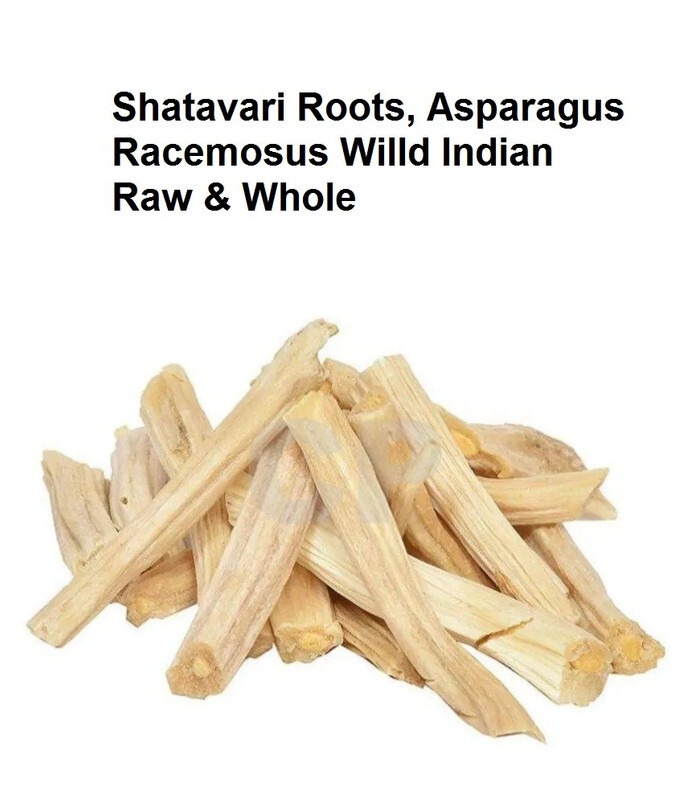
The traded drug is the tuberous root only. Roots run 10 to 30 cm long and 0.1 to 0.5 cm thick, tapering at both ends, cream coloured with longitudinal wrinkles and a distinctly sweetish taste.
Where it grows in India
Commercial cultivation is concentrated in Rajasthan, Madhya Pradesh, Gujarat, Uttar Pradesh, Maharashtra, Karnataka and Kerala. It performs well in light sandy soils under drip irrigation, which suits Rajasthan's growing conditions.
Harvest and processing
Shatavari is a long-cycle crop. Roots are lifted 18 to 20 months after planting, typically in November and December when the above-ground growth begins turning pale yellow. An 18-month crop yields roughly 4 to 5 tonnes per hectare of fresh tubers, rising to about 6 tonnes at 20 months.
After lifting, each root is washed and peeled to strip the thick fibrous outer wall, then dried. Peeled roots recover only about 15 to 20 per cent dry matter from fresh weight, and that low recovery is the main reason Shatavari carries a higher price than most root drugs.
Why buyers source it, and what to check
The value sits in steroidal saponins, principally shatavarins I to IV, alongside sarsasapogenin, sitosterol, glycosides and a high mucilage content.
Peeling is the quality checkpoint buyers most often skip. Unpeeled or partly peeled root carries more fibre and gives lower extractive values. Shatavari is unusual among Indian root drugs for its very tight pharmacopoeial limits: total ash not more than 5 per cent, acid-insoluble ash not more than 0.5 per cent, and water-soluble extractive not less than 45 per cent. Material that fails these is almost always under-peeled or soil-contaminated.
Species substitution is the second risk. Asparagus adscendens and Asparagus gonoclados are traded in the same channels, so identity confirmation matters.
Forms that trade
AV Biotech supplies peeled dried root, cut and sifted root, and milled powder at 80 mesh. Extract feedstock is graded on peeling quality and extractive value. Organic-certified lots are available against advance contract.
Industry applications of Shatavari
Shatavari has a narrower buyer base than Ashwagandha, but the segments that use it buy consistently and specify tightly.
Ayurvedic and pharmaceutical manufacturing
The largest consumer. Shatavari is the base of Shatavari Ghrita, Shatavari Gula and Shatavari Kalpa, and appears in Brahma Rasayana, Mahanarayana Taila, Phala Ghrita and Ashwagandharishta.
These units buy cut root and coarse powder against Ayurvedic Pharmacopoeia of India parameters, and reject fibrous, unpeeled material on extractive value.
Nutraceutical and women's health brands
Supplement manufacturers buy 80 mesh powder and standardised extract for capsules, tablets and drink mixes in women's wellness, hormonal balance and lactation-support ranges.
Extracts are usually standardised on total saponins by gravimetry at 20, 30, 40 or 60 per cent. A defined Shatavarin IV assay by HPLC or HPTLC is available for pharma-grade specifications and is worth requesting when clinical positioning is involved.
Food, beverage and functional nutrition
Shatavari goes into lactation teas, malt-based tonics, nutrition drinks and functional powders. Its mucilage content gives body to liquid formats, which some formulators use deliberately.
Cosmetic and personal care
The high mucilage and saponin content suits moisturising and mild cleansing applications. Formulators use root extract in body lotions, hydrating serums and gentle wash bases.
Veterinary and animal husbandry
Shatavari is a long-standing ingredient in veterinary galactagogue preparations for dairy cattle, usually supplied as coarse powder or mill screenings.
Common product formats
- Shatavari Ghrita, Shatavari Kalpa, Shatavari Gula and classical churnas
- Women's wellness capsules, tablets and daily powders
- Lactation-support teas, malt tonics and drink mixes
- Standardised extracts at 20 to 60 per cent total saponins
- Menopause and hormonal-balance supplement blends
- Hydrating lotions, serums and mild cleansing bases
- Veterinary galactagogue premixes for dairy cattle
Traditional use and current research
Shatavari is classified in Ayurveda as a Rasayana and as Stanyakara, a term for herbs traditionally associated with breast-milk production. The Ayurvedic Pharmacopoeia of India also lists Balya, Medhya, Vrishya and Pittahara among its actions.
Its listed traditional applications include Amlapitta, Raktapitta, Kshaya, Sutika Roga, Stanya Dosha and Stanya Kshaya. The notes below describe traditional positioning and published research directions, not statements of medical outcome.
Women's health positioning
This is Shatavari's dominant commercial position worldwide. Traditional Ayurvedic use across the reproductive lifespan supports formulation into products targeting cycle comfort, hormonal balance and general women's wellness.
Lactation support formulations
The classical Stanyakara classification underpins its use in postnatal and lactation-support products. Brands commonly formulate it into teas, tonics and powders positioned around nursing support.
Digestive comfort
The root's high mucilage content underlies traditional use in Amlapitta and related conditions. Products in this space are usually positioned around digestive comfort and soothing rather than any clinical indication.
General tonic and vitality use
As a Rasayana and Balya herb, Shatavari is used in convalescence and general strength formulations, often alongside Ashwagandha in Ayurvedic tonic blends.
Antioxidant and cellular support
Studies suggest antioxidant activity linked to its saponin and flavonoid content. Products using this angle are positioned around antioxidant support.
What buyers should note on claims
Total saponin figures obtained by gravimetry are not equivalent to a defined Shatavarin IV assay, and the two should not be compared across quotes. Where finished-product positioning references published work, match the extract type and assay method used in that work.
This information is provided for educational and B2B product-sourcing purposes only. It is not medical advice and these statements have not been evaluated by any regulatory authority. Finished-product claims are the responsibility of the manufacturer.
| Botanical name | Asparagus racemosus Willd., Fam. Asparagaceae (API: Liliaceae) |
|---|---|
| Part used | Dried peeled tuberous root |
| Appearance | Cream to pale yellow root pieces, 10 to 30 cm long, longitudinally wrinkled; powder yellowish-cream |
| Odour and taste | Faint; taste sweetish, slightly mucilaginous |
| Active constituents | Sugar, glycosides, saponin and sitosterol (API). Steroidal saponins shatavarins I to IV and sarsasapogenin. Extracts standardised to 20, 30, 40 or 60 per cent total saponins by gravimetry; Shatavarin IV by HPLC or HPTLC on request |
| Moisture | Not more than 10 per cent (typical trade limit) |
| Total ash | Not more than 5 per cent (API limit) |
| Acid-insoluble ash | Not more than 0.5 per cent (API limit) |
| Foreign matter | Not more than 1 per cent (API limit) |
| Alcohol-soluble extractive | Not less than 10 per cent (API limit) |
| Water-soluble extractive | Not less than 45 per cent (API limit); the practical indicator of proper peeling |
| Peeling | Outer fibrous wall removed. Unpeeled and part-peeled material is quoted as a separate, lower grade |
| Identity | Asparagus racemosus confirmed by macroscopic and microscopic examination; screened against Asparagus adscendens and A. gonoclados |
| Particle size | 80 mesh standard for powder; 40 and 60 mesh for classical formulations; cut and sifted for extraction feedstock |
| Heavy metals | Lead NMT 10 ppm, Arsenic NMT 3 ppm, Cadmium NMT 0.3 ppm, Mercury NMT 1 ppm (AYUSH limits) |
| Pesticide residues | Tested against EU MRL; organic lots screened on a multi-residue panel |
| Microbiology | Total plate count NMT 100,000 cfu/g, Yeast and mould NMT 1,000 cfu/g, E. coli and Salmonella absent |
| Packing | 25 kg HDPE or PP laminated bags with food-grade LDPE inner liner; 50 kg bags for whole dried root; fibre drums on request |
| Shelf life | 24 months for powder, 36 months for whole dried root, in sealed original packing |
| Note | All values are typical or indicative. Actual lot values vary with crop age, peeling quality and origin, and are confirmed on the batch Certificate of Analysis |
Values are typical and indicative. A lot-specific Certificate of Analysis is shared before dispatch.
Is your Shatavari root peeled, and why does it matter?
Our standard grades are peeled. The thick fibrous outer wall is stripped before drying, which is what allows the material to meet the Ayurvedic Pharmacopoeia of India limits of not more than 5 per cent total ash and not less than 45 per cent water-soluble extractive. Unpeeled root is available as a separately quoted economy grade.
What is your minimum order quantity for Shatavari?
100 kg for milled powder, 250 kg for whole or cut root, and 25 kg for standardised extracts. Paid samples of 1 to 2 kg are available for formulation and extraction trials, adjusted against your first commercial order.
Can you supply extract standardised to a specific saponin level?
Yes. We supply 20, 30, 40 and 60 per cent total saponin grades by gravimetry, which is the industry-standard method. A defined Shatavarin IV assay by HPLC or HPTLC is available for pharma-grade requirements. Please state which method your specification uses, as the numbers are not comparable.
How do you confirm the species is Asparagus racemosus?
Every lot is verified by macroscopic and microscopic examination against the pharmacopoeial description, and screened against Asparagus adscendens and Asparagus gonoclados, which move through the same trade channels. HPTLC identity is available on request for extract buyers.
What is the typical lead time and when should I contract?
7 to 12 working days for stock grades from Jaipur, and 3 to 4 weeks for organic-certified or custom-milled material. Shatavari is an 18 to 20 month crop harvested in November and December, so annual programmes are best contracted ahead of that window rather than bought spot.
Enquire about Shatavari
No payment is taken here — this reaches our sourcing team directly.
Related products