Arhar (Pigeon Pea / Tur Dal)
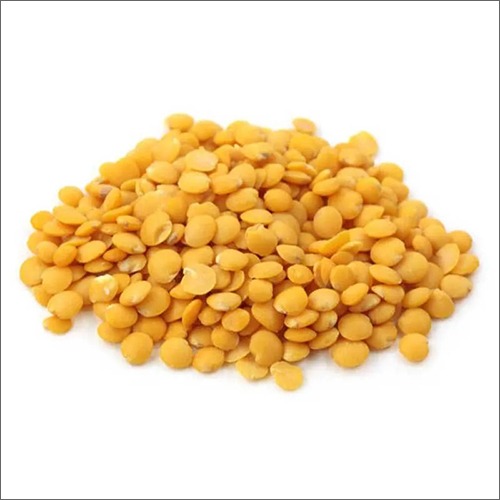
Arhar (Pigeon Pea / Tur Dal)
Cajanus cajan (L.) Millsp. (syn. Cajanus indicus Spreng.)
Bulk Arhar (pigeon pea) whole grain and split Tur Dal from India's key growing belts, Sortex-cleaned and graded for dal mills, food processors and exporters.
- Botanical nameCajanus cajan (L.) Millsp. (syn. Cajanus indicus Spreng.)
- Part usedSeed, traded as whole grain and split dal
- FamilyFabaceae (Leguminosae)
- Also known asToor, Tuvar, Congo Pea, Adhaki (Sanskrit), Kandulu
- Certificate of Analysis
- Samples available
- Export documents handled
Arhar, traded internationally as pigeon pea and domestically as Tur Dal, is India's second most important pulse crop after chickpea. It moves through the bulk grain trade as whole seed and, after milling, as split dal in several finish grades.
Botanical identity and part used
Cajanus cajan is a member of the Fabaceae family, grown as a woody, semi-perennial shrub cultivated as an annual crop across the Indian subcontinent. The plant is known in Ayurvedic dietetic texts by the Sanskrit name Adhaki and is classed among the Simbi Dhanya, the pulse group of foods.
The traded commodity is the dried seed, either as whole grain or, after dal-mill processing, as split cotyledon with or without the seed coat.
Where it grows in India
Six states account for more than 80 per cent of India's tur production: Maharashtra, Madhya Pradesh, Karnataka, Uttar Pradesh, Gujarat and Jharkhand. Maharashtra leads in both area and output, followed by Karnataka, where the Gulbarga belt has earned a Geographical Indication tag for its Tur Dal.
India accounts for roughly 70 per cent of world pigeon pea production, grown across about 5.4 million hectares, which makes it both the largest producer and the largest consumer of this pulse.
Harvest and processing
Arhar is a kharif crop, sown with the onset of monsoon in June and July and harvested in December and January, a cycle of roughly five to six months. After harvest, dried seed is cleaned, and a share of the crop is sent to dal mills for dehusking and splitting into the familiar yellow-orange dal.
Milled dal is offered plain, with a natural matte surface, or oil-polished, lightly coated with edible oil or glycerine to slow moisture uptake and extend shelf appeal. Both finishes move in separate trade streams.
Why buyers source it
Tur Dal is a daily dietary staple across India and a steady-demand commodity for food processors, dal packers and diaspora-market exporters. Buyers select between whole grain, chilka dal (split with skin) and dhuli dal (split, skinless) depending on the finished product line.
Consistent moisture control and low broken-grain percentage matter most to packaged-food buyers, since both affect cooking time and shelf appearance in retail packs.
Forms that trade
AV Biotech supplies Arhar as whole grain, chilka (split with skin) and dhuli (split, skinless) dal, in plain and oil-polished finish, Sortex-cleaned to buyer-specified purity.
Industry applications of Arhar
Arhar moves overwhelmingly into food-grade trade, with by-products supporting the animal feed sector.
Dal milling and food processing
Dal mills are the primary buyers of whole-grain arhar, processing it into chilka and dhuli dal for retail and institutional food packing. Food manufacturers use dal flour and split dal in snack, papad and instant-mix formulations.
Retail and export dal packing
Packaged-food brands and export houses buy Sortex-cleaned, graded dal for branded retail packs sold domestically and to diaspora markets in the Gulf, United Kingdom, North America and East Africa. Buyers in these markets typically specify plain or oil-polished finish and a maximum broken-grain percentage.
Institutional and bulk catering supply
Bulk caterers, government nutrition programmes and hospitality buyers purchase whole grain and dal in large volumes, prioritising consistent cooking quality and low foreign-matter content over cosmetic grading.
Animal feed and by-product use
Husk and broken grain recovered during dal milling, known as chuni, is a widely used protein-rich cattle feed ingredient, giving the crop a secondary demand stream beyond direct food use.
Seed and agronomic trade
A smaller volume of graded seed moves into the certified seed trade for the following season's sowing, handled separately from food-grade grain.
Quality checks buyers should make
Moisture control matters more for arhar than for most pulses, since grain stored above the recommended limit is prone to weevil infestation and colour darkening within a few months. Buyers should confirm moisture, live-infestation status and broken-grain percentage on the Certificate of Analysis before accepting a shipment, rather than relying on visual inspection of a sample bag alone.
Common product formats
- Whole dried grain for milling and bulk catering
- Chilka Tur Dal (split with skin)
- Dhuli Tur Dal (split, skinless), plain or oil-polished
- Dal flour for snack and papad manufacturing
- Chuni (husk and broken-grain) cattle feed by-product
Traditional dietetic classification and nutritional profile
Arhar is classed in Ayurvedic dietetic texts under the Sanskrit name Adhaki, grouped with the Simbi Dhanya, or pod-bearing pulses. Classical properties recorded include Madhura and Kashaya rasa, Laghu and Ruksha guna, Sita virya and Katu vipaka.
These are traditional dietary classifications, not medical claims, and modern interest in this pulse centres mainly on its role as a plant-protein staple. The notes below describe traditional and nutritional positioning, not treatment outcomes.
Protein and dietary fibre content
Dry tur dal is a concentrated plant-protein source, commonly cited around 20 to 22 grams of protein per 100 grams, alongside substantial dietary fibre. This nutrient density is the main reason it anchors the protein portion of a typical Indian thali.
Traditional digestive and Kapha-Pitta classification
Classical texts describe Adhaki's Karma as Kaphahara and mildly Sangrahi, or absorbent, properties traditionally associated with lentil-based diets. These are dietetic descriptions from Ayurvedic nutrition science, not therapeutic claims.
Traditional use in lactation-supportive diets
Some classical sources list Stanyavriddhi, a traditional association with lactation support, among Adhaki's properties. This is a traditional dietary reference and not a substitute for medical guidance on maternal nutrition.
Everyday staple positioning
Because arhar is consumed daily across most Indian households, it functions primarily as a food-security staple rather than a functional or nutraceutical ingredient. Buyers formulating pulse-protein products should treat it as a food raw material governed by food-safety standards rather than a herbal ingredient.
What buyers should note on claims
Any protein or nutrition claim on a finished food product using arhar should be based on the buyer's own lab analysis of the specific lot and processing method used. Ayurvedic dietetic classification does not substitute for a nutrition label required under food law.
This information is provided for educational and B2B product-sourcing purposes only. It is not medical advice and these statements have not been evaluated by any regulatory authority. Finished-product claims are the responsibility of the manufacturer.
| Botanical name | Cajanus cajan (L.) Millsp., Fam. Fabaceae |
|---|---|
| Part used | Dried seed, supplied as whole grain or split dal (chilka or dhuli) |
| Appearance | Whole grain: round to oval, buff to reddish-brown seed coat. Split dal: yellow-orange cotyledon, plain matte or oil-polished finish |
| Nutritional constituents | Protein typically 20 to 22 per cent, carbohydrate around 60 per cent and dietary fibre substantial, on a dry-weight basis (indicative, varies by variety and crop year) |
| Moisture | Not more than 12 per cent for export-grade lots; up to 14 per cent for domestic-grade stock |
| Foreign matter | Not more than 0.5 to 1 per cent, Sortex-cleaned to buyer-specified purity of 97 to 99.5 per cent |
| Broken grains | Not more than 1 to 2 per cent for export-grade dal |
| Weevil and insect damage | Nil live infestation; damaged-grain percentage confirmed per lot |
| Grain/particle size | Whole grain as harvested; split dal graded by mesh into small, medium and bold sizes on request |
| Colour uniformity | Sorted for consistent colour; admixture with other pulse varieties not permitted in graded lots |
| Pesticide residues | Tested against destination-market MRLs on request |
| Heavy metals and microbiology | Tested to FSSAI food-safety norms; certificate supplied per lot |
| Packing | 50 kg PP woven bags standard; 25 kg retail-repack bags and jute bags available on request |
| Shelf life | 12 months for whole grain and split dal in sealed original packing, stored dry |
| Note | All values are typical or indicative. Actual lot values vary with crop year, variety and origin, and are confirmed on the batch Certificate of Analysis |
Values are typical and indicative. A lot-specific Certificate of Analysis is shared before dispatch.
What is your minimum order quantity for Arhar or Tur Dal?
1 MT for domestic-grade whole grain or split dal, and 5 MT for export-grade Sortex-cleaned lots. For trial orders we can supply smaller quantities against a paid sample arrangement.
Can you supply both chilka and dhuli dal, plain and oil-polished?
Yes. We supply chilka (split with skin) and dhuli (split, skinless) dal in both plain matte and oil-polished finish, depending on your packaging and retail-market requirement.
What documentation comes with an export shipment?
Every lot ships with a batch Certificate of Analysis covering moisture, foreign matter, broken percentage and microbiology. Export consignments also carry a phytosanitary certificate, Certificate of Origin, packing list and commercial invoice.
Can you customise grain size, purity level or packing?
Yes. We Sortex-clean to a buyer-specified purity level and can grade split dal into small, medium and bold sizes. Packing can be changed to 25 kg or 50 kg bags, jute bags or your own private-label packaging.
What is the typical lead time, and is arhar available year-round?
7 to 12 working days for stock grades from Jaipur. The main harvest runs December to January, so fresh-crop material and larger contracted volumes are best booked shortly after harvest for year-round supply planning.
Enquire about Arhar (Pigeon Pea / Tur Dal)
No payment is taken here — this reaches our sourcing team directly.
Related products