Chia Seeds
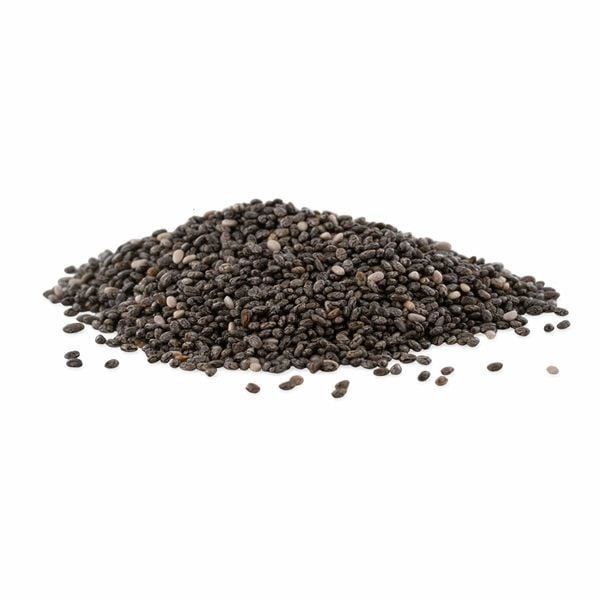
Chia Seeds
Salvia hispanica L.
Bulk black and white Chia seeds (Salvia hispanica) from India for food, nutraceutical and beverage manufacturers, supplied by weight and purity grade.
- Botanical nameSalvia hispanica L.
- Part usedSeed
- FamilyLamiaceae
- Also known asChia, Salba Chia
- Certificate of Analysis
- Samples available
- Export documents handled
Chia is the small oval seed of Salvia hispanica, a plant in the mint family originally native to Mexico and Guatemala and now grown as a commercial oilseed and functional-food crop in several countries including India. Buyers source it primarily for its oil and fibre content and its established position as a functional-food ingredient.
Botanical identity and part used
Chia belongs to the Lamiaceae family, the same family as mint and basil. Only the seed is traded commercially; the plant is not grown in India for leaf or other plant-part use.
Where it grows in India
Chia cultivation in India has expanded over the past decade in response to rising domestic and export demand, grown as a rabi (winter) crop in states with suitable agro-climatic conditions, including parts of Gujarat, Maharashtra, Madhya Pradesh and Rajasthan. India has become a meaningful supplier in the global chia trade alongside the traditional producers, Mexico, Bolivia, Argentina and Paraguay.
Harvest and processing
Chia is typically sown in the winter season and harvested after roughly 120 to 150 days, once the seed heads dry on the plant. Harvested material is threshed, cleaned to remove husk and plant debris, and graded by seed colour, either black or the less common white variety, and by purity.
Post-harvest handling focuses on keeping the seed dry and free of foreign matter, since chia's high mucilage content means the seed absorbs moisture readily and can clump or develop off-odours if stored damp.
Why buyers source it
Chia's commercial value rests on its oil, fibre and protein composition. The seed carries roughly 26 to 35 per cent oil by weight, of which alpha-linolenic acid, an omega-3 fatty acid, makes up around 60 per cent of total fatty acids, among the highest concentrations known in a terrestrial plant source. Indian-grown seed is commonly offered in the 18 to 22 per cent total omega-3 and 16 to 23 per cent protein range, with exact figures confirmed per lot.
Demand comes from packaged-food manufacturers, bakery and beverage brands, nutraceutical companies and export traders supplying international functional-food markets.
Forms that trade
AV Biotech supplies raw cleaned chia seed in black and white varieties, graded by purity level, typically up to 99.9 per cent for food-grade material. Milled chia flour and chia oil are available through contract processing for buyers with a specific formulation need.
Industry applications of Chia seed
Chia moves primarily into food, beverage and nutraceutical manufacturing, with buyers differentiating mainly by purity grade, seed colour and particle form.
Packaged food and bakery
Bakery manufacturers use whole chia seed as a visible inclusion in bread, crackers, granola bars and bakery mixes, valued for its crunch, neutral flavour and nutrition-label appeal. Whole seed with high purity and low broken-seed content is preferred for visible top-dressing applications.
Beverage and functional drinks
Chia's mucilage-forming property, where the seed absorbs many times its weight in liquid to form a gel, is used deliberately in chia-water drinks, smoothies and functional beverages for texture and satiety positioning.
Nutraceutical and supplement manufacturing
Supplement brands use milled chia flour and whole seed in protein blends, meal-replacement powders and omega-3 supplement formats, usually specifying an omega-3 or protein percentage range rather than a generic seed grade.
Export and bulk trading
A significant share of Indian chia output moves through export channels to international food manufacturers, where black chia is the dominant commercial variety and white chia trades at a premium as a specialty item.
Pet food and animal nutrition
Lower-grade and screening-fraction chia is used in premium pet-food formulations, drawing on the same omega-3 and fibre positioning used in human food applications.
Common product formats
- Whole raw chia seed, black and white varieties
- Milled chia flour for bakery and protein blends
- Chia seed for beverage and smoothie inclusion
- Chia oil through contract cold-press extraction
- Functional-food and meal-replacement powder blends
- Premium pet-food inclusion grade
Traditional use and current research
Chia has a long history of use as a staple food in Mesoamerica and has more recently gained a place in global functional-food formulation on the strength of its published nutrient composition. The following notes describe nutritional composition and published research directions, not established medical outcomes.
Omega-3 fatty acid content
Chia is recognised as one of the richest known plant sources of alpha-linolenic acid, a plant-based omega-3 fatty acid, making up roughly 60 per cent of the seed's total fatty acid content. Brands commonly position chia-containing products around plant-based omega-3 intake.
Dietary fibre and satiety
The seed's mucilage-forming soluble fibre is widely referenced in formulations aimed at digestive regularity and satiety, since the seed can absorb significant liquid and form a gel-like consistency when soaked.
Protein content
Chia seed protein content of roughly 16 to 23 per cent, depending on origin and lot, supports its use in plant-protein blends and vegetarian and vegan nutrition formats.
Mineral and antioxidant composition
Published nutritional profiles report calcium, phosphorus, magnesium and antioxidant compounds in chia seed, and formulators reference these in general nutrition-panel and ingredient-story communication.
What buyers should note on claims
Omega-3, protein and fibre content vary by origin, harvest season and seed colour, so any nutrition or health claim on a finished product should be based on the actual lot's tested composition, not a generic published average.
This information is provided for educational and B2B product-sourcing purposes only. It is not medical advice and these statements have not been evaluated by any regulatory authority. Finished-product claims are the responsibility of the manufacturer.
| Botanical name | Salvia hispanica L., Fam. Lamiaceae |
|---|---|
| Part used | Seed |
| Appearance | Small oval seed, glossy black (standard grade) or ivory-white (specialty grade), approximately 1 to 2 mm |
| Active constituents | Oil content approximately 26 to 35 per cent; alpha-linolenic acid (omega-3) approximately 60 per cent of total fatty acids; total omega-3 typically 18 to 22 per cent of seed weight; protein typically 16 to 23 per cent |
| Purity | Up to 99.9 per cent for food-grade material; specified per lot against buyer requirement |
| Moisture | Not more than 7 per cent, typical trade limit |
| Total ash | Not more than 5 per cent, typical trade limit |
| Foreign matter | Not more than 0.5 per cent for food-grade purity; broken and discoloured seed reported separately |
| Particle size | Whole seed as cleaned; milled chia flour available on request |
| Pesticide/heavy-metal/microbial testing | Screened against EU MRL and Codex/FSSAI limits; microbial testing (TPC, yeast and mould, E. coli, Salmonella) available per lot |
| Packing | 25 kg PP or multi-wall paper bags with food-grade LDPE inner liner; vacuum packs for smaller specialty orders |
| Shelf life | 24 months in sealed original packing, stored in a cool, dry place |
| Note | All values are typical or indicative. Actual lot values vary with origin and season, and are confirmed on the batch Certificate of Analysis |
Values are typical and indicative. A lot-specific Certificate of Analysis is shared before dispatch.
What is your minimum order quantity for chia seeds?
500 kg for raw whole seed and 100 kg for milled chia flour. Paid samples of 250 g to 500 g are available for trial and formulation testing, adjusted against your first commercial order.
Do you supply both black and white chia seed?
Yes. Black chia is our standard, higher-volume offering, while white chia is a specialty grade available in smaller volumes at a premium. Specify the variety and purity level you need when requesting a quote.
What documentation comes with an export shipment?
Every lot ships with a batch Certificate of Analysis covering purity, moisture, ash and, where tested, fat and protein content. Export consignments also carry a phytosanitary certificate, Certificate of Origin, packing list and commercial invoice.
Can you customise purity level or packing for chia seed?
Yes. We supply against buyer-specified purity levels from 99 per cent up to 99.9 per cent, and can pack in 25 kg bags, vacuum-sealed retail-ready formats, or jumbo bags for bulk manufacturing contracts.
What is the typical lead time?
7 to 12 working days for stock grades from Jaipur. Organic-certified lots and white chia orders take 3 to 4 weeks. Peak availability follows the winter harvest, so larger contracted volumes are best booked in advance.
Enquire about Chia Seeds
No payment is taken here — this reaches our sourcing team directly.
Related products