Black Pepper (Kali Mirch)
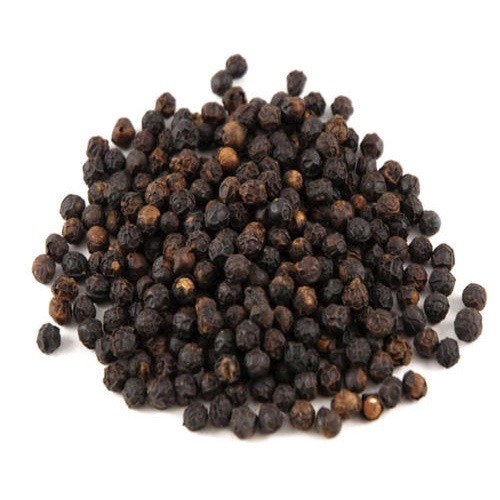
Black Pepper (Kali Mirch)
Piper nigrum L.
Bulk black pepper (Piper nigrum), Malabar Garbled MG1 and Ungarbled grades, for spice, extract and pharmaceutical manufacturers sourcing from India.
- Botanical namePiper nigrum L.
- Part usedDried unripe fruit (peppercorn), whole and ground
- FamilyPiperaceae
- Also known asKali Mirch, Maricha, Marich, King of Spices
- Certificate of Analysis
- Samples available
- Export documents handled
Black pepper is the dried, unripe fruit of Piper nigrum, a climbing perennial vine of the Piperaceae family. It is the highest-volume spice in world trade, and India's Malabar coast remains one of the crop's original and most referenced growing regions.
Botanical identity and part used
The vine produces pendulous fruit spikes bearing small round drupes. Berries are harvested while still green and unripe, then dried whole in the sun, during which the skin darkens and wrinkles to produce the familiar black peppercorn.
Trade uses the whole dried berry, called the corn, either sold whole or ground. White pepper, by contrast, is the same fruit harvested riper and de-husked, and is quoted and graded as a separate product.
Where it grows in India
Kerala's Malabar coast, along with parts of Karnataka's Kodagu (Coorg) district and Tamil Nadu's Wayanad-adjoining tracts, forms the traditional Indian pepper belt. Malabar-origin pepper carries strong trade recognition internationally and is referenced by name in export grading terminology even when the crop moves through other Indian ports.
Harvest and processing
Harvest runs November to February in most tracts, when one or two berries on the spike start turning red, signalling optimum piperine and oil development. Spikes are hand-picked, berries stripped, and sun-dried for 7 to 10 days until moisture drops to a stable level.
Post-harvest, lots are winnowed and sieved to remove stalks, dust, pinheads and light or shrivelled berries, a step called garbling. Garbled pepper is materially cleaner and denser than ungarbled lots straight off the drying yard.
Grading the trade actually quotes
Indian pepper is graded under the Pepper Grading and Marking Rules using Agmark categories, with the trade shorthand built around two families: Garbled Malabar pepper, most commonly quoted as MG1 (Malabar Garbled Grade 1), and Ungarbled Malabar pepper (UNG), offered across several grade bands.
Bulk density is the single most-quoted physical parameter, since it tracks berry maturity and fullness directly. MG1 typically runs around 550 to 600 g/litre, and denser, fuller corns generally carry higher oil and piperine content than light, immature berries. Export buyers specify a minimum bulk density alongside the grade name in the purchase contract.
Forms that trade
AV Biotech supplies whole peppercorns in MG1 and Ungarbled grades, along with ground black pepper powder and cracked pepper for specific formulation needs, with bulk density and piperine content confirmed on the Certificate of Analysis.
Industry applications of Black Pepper
Black pepper's scale means it moves through more industry segments than almost any other spice in this catalogue, and grade selection tracks cost sensitivity and purity requirements closely.
Food and beverage manufacturing
Whole and ground pepper go into seasoning blends, packaged spice mixes, processed meats, sauces, and table-grade pepper products. This is the largest-volume buyer segment, and most contracts specify MG1 or a defined ungarbled grade with a bulk density floor.
Ayurvedic and pharmaceutical manufacturing
Black pepper is one of the three ingredients in Trikatu, a classical Ayurvedic combination used across many formulations, and appears independently in numerous churna and vati preparations. Pharmaceutical buyers work to Ayurvedic Pharmacopoeia of India identity and purity limits and often want piperine assay stated on the Certificate of Analysis.
Nutraceutical and bioavailability-enhancer manufacturing
Piperine extract, standardised typically at 95 to 98 per cent by HPLC, is used as a bioavailability-enhancing excipient in supplement formulations, most commonly paired with curcumin, resveratrol and other poorly absorbed actives. Extract houses buy high-piperine MG1-grade corns as feedstock rather than lower grades.
Essential oil and oleoresin production
Pepper oleoresin and essential oil are extracted for flavour and fragrance applications, with oleoresin standardised on piperine content and used in processed food flavouring where whole spice is impractical.
Export and bulk commodity trading
A significant share of Indian production moves through export and re-export trading channels to North America, Europe and the Middle East, where contracts are typically written directly against MG1 or a named Agmark grade with bulk density and moisture specified.
Common product formats
- Whole peppercorns, MG1 and Ungarbled grades
- Ground black pepper powder, various mesh sizes
- Cracked and coarse-ground pepper for meat and marinade use
- Piperine extract, standardised 95 to 98 per cent
- Pepper oleoresin and essential oil
- Trikatu and other classical Ayurvedic compound powders
Traditional use and current research
Black pepper, Maricha in Sanskrit, is one of the most widely used spices in Ayurvedic medicine, valued as a Deepana (digestive stimulant) and Pachana (digestive aid). It forms one-third of Trikatu, alongside long pepper and ginger, a combination used across many classical formulations.
Digestive support
Traditional use positions black pepper as a stimulant for appetite and digestive fire (Agni). Studies suggest piperine may influence digestive enzyme activity, and pepper remains a common inclusion in digestive-support formulations.
Bioavailability enhancement
The most studied modern application of piperine is its effect on the absorption of other compounds. Research has examined piperine's role in enhancing the bioavailability of curcumin and other poorly absorbed actives, which is why piperine extract is widely formulated alongside such ingredients in supplements.
Antioxidant and metabolic research
Published phytochemical reviews report antioxidant, antimicrobial and anti-inflammatory activity for piperine and pepper extracts in laboratory studies. These findings describe isolated-compound research and do not represent demonstrated outcomes for the whole spice in food use.
Respiratory and general wellness use
Traditional formulations combine black pepper with other spices for seasonal respiratory comfort, a use documented in classical Ayurvedic texts rather than modern clinical trials.
What buyers should note on claims
Piperine content varies with grade, maturity and origin, commonly cited in the 3 to 9 per cent range across different studies and grades. A claim built on a high-piperine reference material should be matched against the actual assay of the lot being formulated.
This information is provided for educational and B2B product-sourcing purposes only. It is not medical advice and these statements have not been evaluated by any regulatory authority. Finished-product claims are the responsibility of the manufacturer.
| Botanical name | Piper nigrum L., Fam. Piperaceae |
|---|---|
| Part used | Dried unripe fruit (peppercorn), whole; also supplied ground |
| Appearance | Round, wrinkled, dark brown to black corns, 3 to 6 mm diameter |
| Grade | Malabar Garbled Grade 1 (MG1) and Ungarbled Malabar (UNG), per Agmark/Pepper Grading and Marking Rules terminology |
| Bulk density | MG1 typically 550 to 600 g/litre; ungarbled grades lower and more variable (indicative, confirmed per lot) |
| Active constituents | Piperine, the principal pungent alkaloid, commonly reported in the range of 3 to 9 per cent by HPLC/HPTLC depending on grade and origin; essential oil approximately 1 to 3 per cent |
| Moisture | Not more than 12 to 13 per cent (typical trade and pharmacopoeial limit) |
| Total ash | Not more than 6 to 7 per cent (indicative trade limit) |
| Acid-insoluble ash | Not more than 1.5 to 2 per cent (indicative) |
| Foreign matter / light berries | Garbled grade: nil to trace stalks, dust, pinheads and light berries; ungarbled grade specified per contract |
| Particle size | Whole corn standard; ground to 20, 40 or 60 mesh on request |
| Pesticide/heavy-metal/microbial testing | Pesticide residues against EU MRL panel, heavy metals against Codex/AYUSH limits, microbiology (total plate count, yeast and mould, Salmonella, E. coli) available per lot on request; steam-sterilised lots available for food-safety-sensitive buyers |
| Packing | 25 kg and 50 kg PP or jute bags with food-grade inner liner; vacuum packing for piperine extract |
| Shelf life | 24 months from date of packing in sealed original packing, stored dry and away from direct sunlight |
| Note | All values are typical or indicative. Actual lot values vary with origin, harvest maturity and grade, and are confirmed on the batch Certificate of Analysis |
Values are typical and indicative. A lot-specific Certificate of Analysis is shared before dispatch.
What is your minimum order quantity for black pepper?
500 kg for whole peppercorns and 100 kg for ground powder. Piperine extract starts at 5 kg. We supply 250 g to 500 g paid samples for quality evaluation, credited against your first commercial order.
What is the difference between MG1 and Ungarbled grade, and which should I order?
MG1 is winnowed and sieved free of stalks, dust and light berries, with a bulk density typically around 550 to 600 g/litre. Ungarbled grade costs less but carries more foreign matter and light berries. Food and pharmaceutical buyers usually specify MG1; buyers grinding pepper for industrial blends often accept ungarbled grade.
Can you confirm piperine content and bulk density before shipment?
Yes. Every lot's Certificate of Analysis states bulk density and, on request, piperine assay by HPLC or HPTLC. Pre-shipment samples can be sent for independent lab verification before you confirm the order.
What documentation comes with an export shipment?
A batch Certificate of Analysis covering moisture, ash values, bulk density and grade, plus a phytosanitary certificate, Certificate of Origin, packing list and commercial invoice. Pesticide-residue and microbiology reports are available on request, including steam-sterilised options.
What is the typical lead time?
7 to 10 working days for stock grades ex-Jaipur. Custom mesh grinding, piperine-specific lots and organic-certified stock take 3 to 4 weeks. Booking ahead of the December to February harvest peak is recommended for large contracted volumes.
Enquire about Black Pepper (Kali Mirch)
No payment is taken here — this reaches our sourcing team directly.
Related products