Atis (Ativisha)
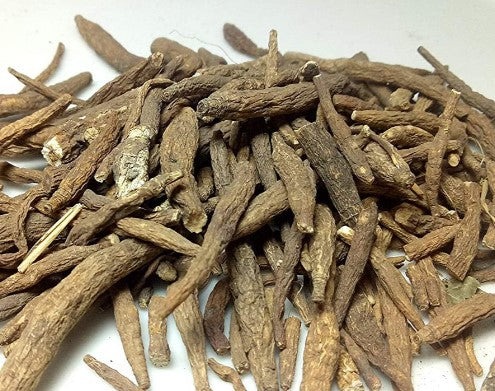
Atis (Ativisha)
Aconitum heterophyllum Wall. ex Royle
Documented-origin Atis (Ativisha) tuber, Aconitum heterophyllum, for Ayurvedic manufacturers, supplied with source and identity paperwork due to its conservation status.
- Botanical nameAconitum heterophyllum Wall. ex Royle
- Part usedDried tuberous root
- FamilyRanunculaceae
- Also known asAtivisha, Atis, Atees, Patish, Banwa, Visha
- Certificate of Analysis
- Samples available
- Export documents handled
Atis, also called Ativisha, is the dried tuberous root of Aconitum heterophyllum, a high-altitude Himalayan herb used in classical Ayurvedic formulations for digestive and febrile conditions. It is one of the smaller-volume, higher-scrutiny items in the herbal trade because of its conservation status.
Botanical identity and part used
Aconitum heterophyllum belongs to the Ranunculaceae family, the buttercup family that also contains the genus's toxic aconite species. The plant produces paired biennial tubers each season: an old, exhausted mother tuber and a new daughter tuber that stores the plant's reserves.
Only the new tuber is collected as crude drug; conventional sustainable-harvest practice leaves the old mother tuber in the ground or replants it to allow the population to regenerate. The dried tuber, ash-grey to yellowish-brown, ovoid to conical and 2 to 8 cm long, is the officinal Ativisha of Ayurvedic pharmacopoeial description.
Conservation status and legal-origin documentation
Aconitum heterophyllum is assessed as Endangered by the IUCN, and in parts of its range it is considered critically threatened due to indiscriminate wild collection driven by high market value. It has been proposed for listing in the CITES appendices, and several Himalayan source states regulate its wild collection under state forest rules.
Because of this, every lot AV Biotech supplies is sold with source documentation: a forest department transit permit for wild-collected stock, or a cultivation and purchase record for material from registered grower programmes. Buyers building products for regulated markets should request this documentation before finalising a purchase order, not after.
Where it grows in India
The species grows between roughly 2,500 and 4,000 metres in alpine and subalpine meadows of Jammu and Kashmir, Himachal Pradesh and Uttarakhand, with smaller populations in Sikkim and Arunachal Pradesh. It favours moist, humus-rich, well-drained slopes and rocky alpine turf near the treeline.
Harvest and processing
Tubers are lifted in autumn, typically September to October, once the aerial parts have died back and before the first heavy snowfall closes the collection window. Lifted tubers are cleaned of soil, sorted by size, and sun or shade dried to a hard, stable state before grading.
Forms that trade
AV Biotech supplies Atis as whole dried tuber and, on request, as coarse-cut and milled powder for classical churna use. Given the volumes involved, this item moves against confirmed purchase orders and documented origin rather than as continuous open stock.
Industry applications of Atis
Atis is a low-volume, formulation-specific herb used almost entirely within classical and licensed Ayurvedic manufacturing, unlike high-volume commodity herbs sold across many industries.
Ayurvedic and pharmaceutical manufacturing
Licensed Ayurvedic manufacturers buy whole tuber and coarse powder for named classical formulations, including Ativisharishta and various churna and vati preparations used in traditional digestive-support and fever-management protocols. Buyers in this segment are typically GMP-licensed units able to produce the purchase documentation that legal-origin material requires.
Because Atis is upavisha, a semi-toxic class of dravya in classical Ayurvedic pharmacology, formulators generally process it through defined purification and dosing protocols set out in their own standard operating procedures rather than using it as a bulk excipient.
Extract and standardisation buyers
A small number of extract houses buy tuber as feedstock for alkaloid-type-standardised extracts used in proprietary formulations. These buyers specify alkaloid-type screening rather than a single percentage assay, since no industry-wide marker-compound standard exists for this root.
Export and bulk trade
Export demand comes mainly from Ayurvedic and Unani manufacturers outside India who require documented, correctly identified Aconitum heterophyllum rather than material from the wider Aconitum genus. Given the price and scrutiny involved, most transactions are contract-based rather than spot-market.
Segments this herb does not serve
Atis is not used in mainstream nutraceutical, food, beverage or cosmetic formulation. Its restricted supply, upavisha classification and the seriousness of species misidentification keep it out of consumer-facing categories where formulators cannot maintain the same documentation and process control as a licensed pharmaceutical unit.
Common product formats
- Ativisharishta and related classical Ayurvedic liquids
- Digestive-support churna and vati formulations
- Feedstock for alkaloid-type-standardised proprietary extracts
Traditional use and current research
Ayurveda classifies Ativisha as Deepana and Pachana, meaning digestive-stimulant and digestion-supporting, and it is traditionally included in formulations for Jvara, meaning febrile conditions, and Atisara, meaning diarrhoeal disorders. It is also grouped as Upavisha, a semi-toxic category of classical dravya requiring defined dose and processing.
The following notes describe traditional positioning and early pharmacological findings, not established medical outcomes.
Digestive use
Classical texts describe Ativisha as a mild bitter tonic used in weak digestion and in recovery from febrile illness, often combined with other bitters in compound formulations rather than used alone. This traditional use long predates any modern clinical evaluation.
Fever and paediatric use
Ativisha has a long traditional history of use in paediatric formulations for fever and digestive upset, reflecting its classification as a milder, non-toxic Aconitum species compared to its genus relatives. This traditional positioning has not been established through controlled clinical trials.
The critical safety distinction within the genus
The principal alkaloid of Aconitum heterophyllum is atisine, a diterpenoid alkaloid of a chemically distinct type from the aconitine-type alkaloids responsible for the severe cardiotoxicity of other Aconitum species. This is the basis for its classical use as a comparatively safer member of the genus.
Toxic species such as Aconitum ferox, known as Vatsanabha, contain aconitine and the even more potent pseudaconitine, and are documented adulterants and substitutes for Atis in parts of the herbal bazaar trade due to superficial tuber similarity. Buyers must not treat these as interchangeable: correct species identification, ideally supported by alkaloid-type HPTLC or HPLC screening rather than visual inspection alone, is a safety requirement, not a quality preference.
What buyers should note on claims and handling
Given the upavisha classification and the documented risk of genus-level substitution, any finished-product claim built on Ativisha should be tied to confirmed Aconitum heterophyllum identity and to the manufacturer's own licensed processing protocol, not to general literature on the wider Aconitum genus.
This information is provided for educational and B2B product-sourcing purposes only. It is not medical advice and these statements have not been evaluated by any regulatory authority. Finished-product claims are the responsibility of the manufacturer.
| Botanical name | Aconitum heterophyllum Wall. ex Royle, Fam. Ranunculaceae |
|---|---|
| Part used | Dried tuberous root, new-season tuber only |
| Appearance | Ovoid to conical tubers, ash-grey to yellowish-brown externally, whitish and starchy in fracture, 2 to 8 cm long |
| Odour and taste | Odourless to faintly earthy; taste bitter |
| Active constituents | Atisine-type diterpenoid alkaloids (atisine, heteratisine, hetidine and related bases). No single industry-wide percentage assay is standard in trade; identity and purity are confirmed by alkaloid-type HPTLC or HPLC screening rather than a total-alkaloid figure |
| Critical distinction | Must be confirmed free of aconitine-type and pseudaconitine-type alkaloids characteristic of toxic Aconitum species such as A. ferox and A. kashmiricum, known adulterants of this root |
| Moisture | Not more than 10 per cent (typical trade limit) |
| Total ash | Not more than 6 per cent (typical trade limit) |
| Acid-insoluble ash | Not more than 1.5 per cent (typical trade limit) |
| Foreign matter | Not more than 1 per cent (typical trade limit) |
| Particle size | Whole tuber and coarse-cut standard; fine powder to 60 mesh on request for classical churna |
| Testing | Alkaloid-type screening (HPTLC/HPLC) for species confirmation; heavy metals and microbiology tested per AYUSH limits on request |
| Documentation | Forest department transit permit (wild-collected) or cultivation and purchase record (farm-grown) supplied with every lot, given the species' conservation status |
| Packing | Sealed 5 kg or 25 kg HDPE bags with inner liner; smaller research and sample quantities available |
| Shelf life | 24 months for whole dried tuber in sealed original packing |
| Note | All values are typical or indicative. Actual lot values vary with origin and season, and are confirmed on the batch Certificate of Analysis |
Values are typical and indicative. A lot-specific Certificate of Analysis is shared before dispatch.
What is your minimum order quantity for Atis?
5 kg for whole tuber, released only against a confirmed purchase order and completed documentation review, given the species' endangered status. Larger volumes are subject to seasonal collection or cultivation availability and are best discussed in advance.
How do you confirm this is genuine Aconitum heterophyllum and not a toxic substitute?
We supply alkaloid-type HPTLC or HPLC screening confirming atisine-type alkaloids and the absence of aconitine-type or pseudaconitine-type alkaloids found in toxic species such as Aconitum ferox. Visual inspection of dried tubers alone is not a reliable identification method.
What legal-origin documentation is provided with a shipment?
Every lot carries either a state forest department transit permit for wild-collected material or a cultivation and purchase record for farm-grown material, in addition to the standard phytosanitary certificate, Certificate of Origin and Certificate of Analysis.
Can you supply cultivated Atis instead of wild-collected material?
Yes, where available. We prioritise registered-grower cultivated stock and will confirm current availability against your order, since cultivated volumes are still limited relative to wild-collected supply from Himalayan source states.
What is the typical lead time?
2 to 4 weeks once documentation is confirmed, longer outside the autumn collection window of September to October. This is not a stock item held in continuous open inventory, so early booking is recommended.
Enquire about Atis (Ativisha)
No payment is taken here — this reaches our sourcing team directly.
Related products