Fig (Anjeer)
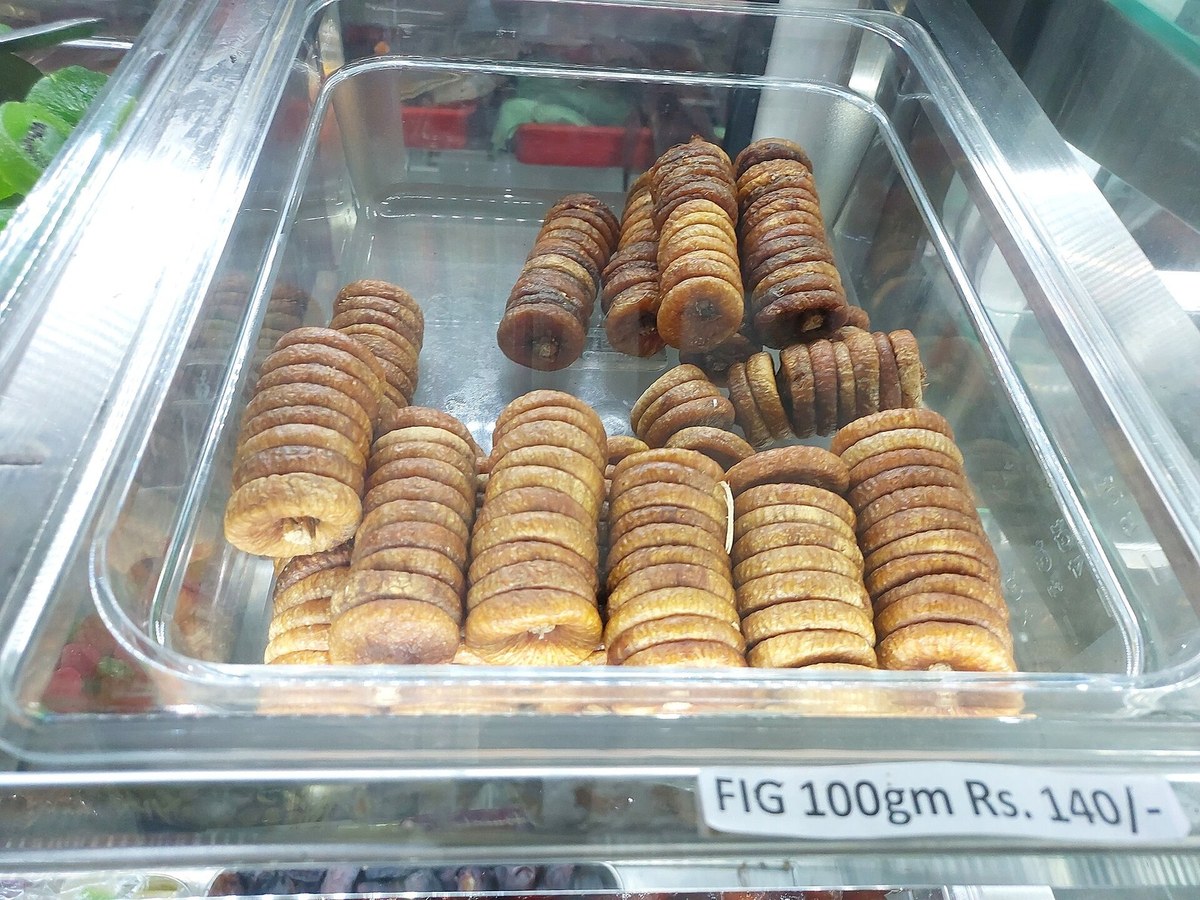
Fig (Anjeer)
Ficus carica L.
Bulk dried fig (Ficus carica) supplied whole by count grade, plus diced and powder formats, for confectionery, bakery, Ayurvedic and snack manufacturers.
- Botanical nameFicus carica L.
- Part usedDried fruit (syconium); leaf traded separately in small volume
- FamilyMoraceae
- Also known asAnjeer, Anjir, Anjura, Simaiyatti, Manjimedi, Teen, Athipazham
- Certificate of Analysis
- Samples available
- Export documents handled
Fig is the dried fruit of Ficus carica L., traded in India as Anjeer. It moves as a dry-fruit commodity rather than a pharmacopoeial botanical, and buyers are bakery, confectionery, snack, breakfast-cereal and Ayurvedic units.
Botanical identity and part used
Fig belongs to the Moraceae family. What the trade calls the fruit is botanically a syconium, a hollow fleshy receptacle lined with many tiny true fruits. That structure is why dried figs carry a gritty seed texture.
The commercial article is the whole dried fruit. Fig leaf is a separate, much smaller trade line used in extracts and is never interchangeable with fruit in a specification.
Origin and growing regions
India grows figs commercially around Pune and Daund in Maharashtra, with smaller areas in Karnataka, Gujarat and Uttar Pradesh. The Poona fig is the main Indian cultivar and moves largely as fresh fruit.
The bulk of dried fig traded through India is imported, mainly from Afghanistan and Turkey, and re-graded and re-packed locally. Afghan fruit is typically smaller, softer and sweeter. Turkish fruit is usually larger and drier, with the flattened disc shape that retail packs prefer.
State the origin you need in your enquiry. Origin changes size, colour, sugar profile and price basis more than any other single variable in this commodity.
Grading and how buyers specify it
Whole dried figs are graded by count, meaning the number of fruits per kilogram or per carton. A lower count means larger fruit and a higher grade. UNECE standard DDP-14 sets Extra Class at not more than 65 figs per kilogram and Class I at not more than 120.
Buyers who do not need whole fruit take broken, split or off-size grades at a lower basis, then dice or mill them. Diced and paste formats are specified by moisture and dice size instead of count.
Moisture and quality pitfalls
Moisture is the parameter that decides both eating quality and risk. UNECE allows up to 26 per cent in untreated dried figs, and premium plump retail fruit usually sits at the upper end of that band.
The trade-offs are direct. High moisture gives soft fruit but raises mould and fermentation risk in transit. Low moisture keeps well but eats hard. Aflatoxin and ochratoxin A are the recognised contaminant concerns in dried figs, and EU consignments are routinely checked under UV for fluorescent fruit.
Forms that trade
AV Biotech supplies whole dried figs in count grades, broken and off-size fruit, diced fig in sugar-dusted or oil-coated form, and milled fig powder for beverage and bar applications.
Industry applications of dried fig
Dried fig serves food manufacturing first and herbal manufacturing second. The grade you need follows directly from whether the fruit stays visible in the finished product.
Bakery and confectionery
Bakers use diced fig and fig paste in fruit breads, cookies, fig rolls, energy bars and filled biscuits. Dice size and coating matter here, because uncoated dice clumps in a dough hopper.
Confectioners use whole fruit in premium assorted boxes and chocolate-coated lines. These buyers want uniform count, clean skin colour and no splits.
Snack, dry-fruit and retail packing
Retail packers buy the largest counts they can get, since visible size drives shelf appeal. Broken and off-size fruit goes into value packs and mixed dry-fruit blends at a lower basis.
Breakfast cereal and dairy
Cereal and muesli plants use small dice and fig pieces. Dairy units use fig paste and puree in ice cream, yoghurt and flavoured milk. Both segments care about water activity, since it affects how the piece behaves next to a wetter matrix.
Ayurvedic and nutraceutical manufacturing
Ayurvedic units use fig in murabba, avaleha and chyawanprash-style preparations, and in fibre-positioned syrups and laxative blends. Anjeer is also used in classical Unani preparations.
Supplement brands use fig powder in fibre blends, gummies and iron-and-calcium positioned products. These buyers work to mesh and microbiology rather than count.
Beverage and extract
Fig is used in fruit concentrates, fig coffee substitutes and syrup bases. Extract houses take broken fruit, which carries the same solids at a lower cost than graded whole fruit.
Common product formats
- Whole dried figs in retail and gifting packs
- Diced fig for cookies, bars, muesli and fruit bread
- Fig paste and puree for fillings, dairy and beverage
- Chocolate-coated and stuffed fig confectionery
- Anjeer murabba, avaleha and classical Ayurvedic liquids
- Fibre and digestive-support supplement blends
- Fig powder for bars, gummies and beverage premixes
Traditional use and current understanding
Fig has a long record in Ayurvedic, Unani and Mediterranean food traditions. It is treated as a food-first ingredient, and most manufacturer interest sits in its fibre and mineral profile rather than in any isolated marker compound.
Traditional positioning
Traditionally used in Ayurveda and Unani practice as a mild, nourishing fruit taken to support regular bowel movement and to build strength during convalescence. Soaked figs are a common household preparation in India.
Classical use pairs fig with milk, honey or other dry fruits. Modern formulations often keep the same pairing in avaleha and syrup formats.
Dietary fibre and digestive comfort
Dried fig is a recognised source of dietary fibre, carrying both soluble and insoluble fractions. Brands commonly formulate it into products targeting digestive comfort and everyday regularity.
Fibre content supports a nutrition claim in several markets, subject to the applicable threshold and to your own analysis of the actual lot.
Minerals and everyday nutrition
Dried figs contribute calcium, potassium, magnesium and iron in meaningful amounts for a fruit. This is why they appear in bone-health and iron-positioned formats.
Any nutrition or health claim must be built on your own finished-product analysis, not on generic composition tables.
Polyphenols and research direction
Studies suggest dried fig carries phenolic acids, flavonoids and anthocyanins in the darker skins. Published work has examined antioxidant capacity in laboratory models, and the evidence base remains preliminary for human outcomes.
Points buyers should note
Dried fig is high in natural sugars, so nutrition panels and any sugar-related claim need careful handling. Fig is not a common allergen, but latex-fruit cross-reactivity has been reported and some brands choose to carry an advisory.
Aflatoxin and ochratoxin A limits apply in the EU and in several other markets. Build your incoming specification around those limits rather than around a generic dry-fruit standard.
This information is provided for educational and B2B product-sourcing purposes only. It is not medical advice and these statements have not been evaluated by any regulatory authority. Finished-product claims are the responsibility of the manufacturer.
| Botanical name | Ficus carica L., Fam. Moraceae |
|---|---|
| Part used | Dried fruit (syconium), whole, diced or milled |
| Appearance | Light golden to amber-brown flattened or globular fruit; natural sugar bloom on the surface is normal. Powder light brown, free flowing when anti-caking agent is used |
| Active constituents with typical assay | No single pharmacopoeial marker. Traded on composition: total sugars typically 45 to 60 per cent, dietary fibre typically 9 to 13 per cent, protein around 3 per cent. Values are indicative and vary with origin and season |
| Moisture | Typically 16 to 24 per cent for untreated whole fruit; UNECE DDP-14 allows not more than 26 per cent. Diced and coated grades usually specified at 14 to 18 per cent |
| Total ash | Not more than 3 per cent (typical) |
| Acid-insoluble ash | Not more than 0.5 per cent (typical); higher values usually indicate field sand on drying yards |
| Foreign matter | Not more than 1 per cent; stalk, leaf fragments and mineral matter specified separately by grade |
| Grade / size | Whole fruit graded by count per kilogram. UNECE Extra Class not more than 65 per kg, Class I not more than 120 per kg. Broken, split and off-size grades quoted separately. Dice 6 mm, 8 mm and 10 mm; powder 40 to 60 mesh |
| Particle size | Dice 6 to 10 mm as specified; milled fig powder 40 to 60 mesh, coarser than most botanical powders because of the sugar load |
| Pesticide / heavy-metal / microbial testing | Pesticide residues tested against EU MRL or a buyer-nominated panel. Heavy metals: lead, cadmium, arsenic and mercury to agreed limits. Microbiology: total plate count, yeast and mould, E. coli and Salmonella to agreed limits. Aflatoxin B1 and total aflatoxin plus ochratoxin A tested to EU limits for dried figs, with UV sorting available |
| Packing | 10 kg and 12.5 kg corrugated cartons with food-grade liner for whole fruit; 20 kg or 25 kg cartons and bags for dice and powder; vacuum or nitrogen-flushed packs on request |
| Shelf life | 12 months for whole dried fruit, 9 to 12 months for dice and powder, in sealed original packing under cool dry storage |
Values are typical and indicative. A lot-specific Certificate of Analysis is shared before dispatch.
What is your minimum order quantity for dried figs?
100 kg for diced fig and fig powder, and 500 kg for whole graded fruit. We supply 500 g to 1 kg samples so you can check count, colour and texture before committing. Part-container and full-container consolidation are both possible from Jaipur.
How should I specify the grade, and what does count mean?
Whole dried figs are graded by count, which is the number of fruits per kilogram. A lower count means larger fruit. UNECE Extra Class runs at not more than 65 per kg and Class I at not more than 120 per kg. Tell us your target count and origin, and we will quote against that rather than a generic grade name.
Do you test for aflatoxin and ochratoxin A?
Yes. Dried figs are a recognised risk commodity for both, and every export lot carries aflatoxin B1, total aflatoxin and ochratoxin A results on the Certificate of Analysis. UV sorting of the lot is available where your market applies EU limits.
Can you customise dice size, coating or packing?
Yes. We supply dice at 6, 8 and 10 mm, with rice-flour dusting or oil coating to stop clumping in dough and cereal lines. Packing can be changed to 10, 12.5, 20 or 25 kg cartons, and vacuum or nitrogen-flushed packs are available for longer transit.
What is the typical lead time and how long does the material keep?
7 to 12 working days for stock grades from Jaipur, and 3 to 4 weeks for custom dicing, organic lots or specific count grades. Whole dried fruit holds 12 months and dice or powder 9 to 12 months in sealed packing. Store cool and dry, as high-moisture retail grades soften and darken in warm warehouses.
Enquire about Fig (Anjeer)
No payment is taken here — this reaches our sourcing team directly.
Related products