Flaxseed (Alsi)
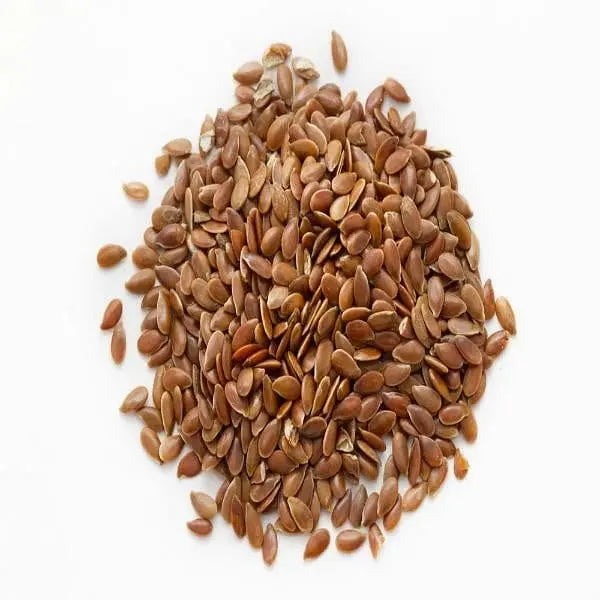
Flaxseed (Alsi)
Linum usitatissimum L.
Bulk flaxseed (Linum usitatissimum) in brown and golden types, whole, roasted, milled and defatted, for food, nutraceutical, oil and feed manufacturers.
- Botanical nameLinum usitatissimum L.
- Part usedSeed (whole, roasted, milled); cold-pressed oil and defatted meal
- FamilyLinaceae
- Also known asAlsi, Jawas, Aksebija, Tisi, Agasi, Avise Ginjalu, Cheruchana Vithu, Bittu
- Certificate of Analysis
- Samples available
- Export documents handled
Flaxseed is the seed of Linum usitatissimum L., traded in India as Alsi and in the oil trade as linseed. It is bought by food processors, omega-3 and lignan supplement brands, oil mills, bakery units and feed manufacturers.
Botanical identity and seed types
Flax belongs to the Linaceae family. It is a blue-flowered annual grown either for seed or for fibre, and the seed crop is the one that reaches the food and nutraceutical trade.
Two seed colours trade. Brown flax is the dominant Indian type and carries the stronger, nuttier flavour. Golden or yellow flax is milder and paler, and bakery and retail buyers often prefer it for appearance. Their fatty acid profiles are broadly similar, so colour is mainly a sensory and cosmetic choice.
Indian growing regions
Flax is a rabi crop sown after the monsoon and harvested from February to April. The main Indian belts are Madhya Pradesh, Uttar Pradesh, Bihar, Chhattisgarh, Maharashtra and Rajasthan.
Madhya Pradesh and Uttar Pradesh together account for the largest share of Indian acreage. Rajasthan production feeds both the oil trade and the food-grade seed trade, and Jaipur sits within reach of that flow.
What the trade is actually buying
Flaxseed is specified on composition rather than on a pharmacopoeial marker. Three numbers matter to most buyers.
Oil content typically runs 32 to 45 per cent of the seed. Within that oil, alpha-linolenic acid, the plant omega-3, is the dominant fatty acid and published ranges sit around 47 to 55 per cent of total fatty acids. Secoisolariciresinol diglucoside, usually written SDG, is the main lignan and reported genotype ranges run roughly 4.7 to 7.7 mg per gram of seed.
These figures move with variety, soil and season. Ask for the lot analysis rather than assuming a fixed value.
Quality pitfalls buyers should check
Flax oil oxidises quickly once the seed coat is broken. Milled flax has a much shorter usable life than whole seed, so peroxide value and free fatty acid on milled lots are worth specifying.
Flaxseed naturally contains cyanogenic glycosides and a small amount of cadmium uptake is common. Several markets set advisory limits on both, and heat processing reduces the cyanogenic fraction. Dodder seed and wild mustard are the usual admixture problems in uncleaned lots.
Forms that trade
AV Biotech supplies cleaned whole brown and golden flaxseed, roasted seed, cold-milled flax meal, defatted and low-fat flax powder, and cold-pressed flaxseed oil against contract.
Industry applications of flaxseed
Flaxseed reaches five distinct buyer groups. Each specifies a different form, and the split between whole seed and milled material drives most of the commercial conversation.
Nutraceutical and supplement manufacturing
Supplement brands use milled and defatted flax in omega-3, fibre and lignan-positioned products. Cold-pressed oil goes into softgels and liquid formats.
Lignan-focused buyers usually want defatted flax hull material, because SDG concentrates in the hull once the oil is removed. Ask for the SDG figure and the method, since reported values vary widely between assay approaches.
Bakery, snack and breakfast foods
Bakeries use whole and cracked seed as a topping on multigrain breads, crackers and bars. Milled flax goes into dough as a fibre and omega-3 carrier and as an egg-replacement gel in vegan lines.
Golden flax is the usual retail choice here on appearance. Roasted seed is used where a nuttier aroma is wanted.
Oil milling and industrial use
Oil mills crush flaxseed for edible cold-pressed oil and, at the industrial end, for linseed oil used in paints, varnishes, putty and linoleum. Industrial-grade seed is bought on oil content alone and is not food specified.
Traditional Indian food and Ayurvedic units
Alsi is used in chutney powders, laddoo, thepla and roasted seed snacks across Maharashtra, Madhya Pradesh and Rajasthan. Ayurvedic manufacturers use seed and oil in poultice, taila and digestive preparations.
Animal feed and pet nutrition
Flax meal and cake after oil extraction goes into cattle, poultry and equine feed. Omega-3 enriched egg and dairy programmes buy specifically for the ALA content.
Common product formats
- Whole and roasted flaxseed retail packs
- Milled flax meal for bakery, cereal and smoothie blends
- Defatted flax hull powder for SDG lignan supplements
- Cold-pressed flaxseed oil in bottles and softgels
- Fibre and omega-3 capsule and sachet formats
- Multigrain bread, crackers, bars and vegan egg replacers
- Industrial linseed oil for paints, putty and linoleum
- Cattle, poultry and pet feed premixes
Traditional use and current research
Flaxseed is one of the better-studied food seeds, largely because of its alpha-linolenic acid and lignan content. It also has a long record in Indian household and Ayurvedic practice.
Traditional positioning
Traditionally used in Ayurveda as Atasi, applied externally as a poultice and taken internally in small quantities in digestive preparations. Roasted seed is a routine household food across central and western India.
Omega-3 fatty acid intake
Flaxseed is among the richest plant sources of alpha-linolenic acid, an essential omega-3 fatty acid. Brands commonly formulate it into products targeting omega-3 intake for people who do not eat fish.
The body converts ALA to EPA and DHA only to a limited extent, and this is well documented. Position plant omega-3 products honestly on that point rather than equating flax with marine oil.
Dietary fibre and digestive comfort
Flaxseed carries both soluble mucilage and insoluble fibre. Studies suggest effects on stool bulk and transit, and it is widely formulated into fibre and regularity products.
Whole seed passes through largely intact for many people, which is why milled flax is the usual choice in fibre formats.
Lignans and ongoing research
SDG is the principal flax lignan and is converted by gut bacteria into enterolignans. Published research has examined lignans in relation to hormonal balance and cardiovascular markers, and reviews describe the human evidence as still developing.
Cardiometabolic research direction
Clinical studies have looked at flaxseed in relation to blood lipid and blood pressure measures. Results are mixed and dose dependent, and brands normally position finished products around general heart and metabolic wellness rather than any disease outcome.
Points buyers should note
Flaxseed contains cyanogenic glycosides at low levels, and several authorities advise against very high daily intakes of raw seed. Cadmium accumulation from soil is a recognised issue, so include it in your incoming metal panel.
Milled flax oxidises fast. Rancid material fails sensory checks long before it fails a nutrition panel, so build peroxide value into your specification.
This information is provided for educational and B2B product-sourcing purposes only. It is not medical advice and these statements have not been evaluated by any regulatory authority. Finished-product claims are the responsibility of the manufacturer.
| Botanical name | Linum usitatissimum L., Fam. Linaceae |
|---|---|
| Part used | Dried mature seed; cold-pressed oil and defatted meal quoted separately |
| Appearance | Flat, oval, pointed seed with a glossy coat. Brown type reddish-brown to dark brown; golden type pale yellow to light tan. Milled flax a coarse light-brown meal |
| Active constituents with typical assay | Oil content typically 32 to 45 per cent of seed. Alpha-linolenic acid typically 47 to 55 per cent of total fatty acids (GC). Linoleic acid around 15 per cent. SDG lignan reported in the range of about 4.7 to 7.7 mg per gram of seed, genotype and location dependent. Values are indicative and confirmed per lot |
| Moisture | Not more than 8 per cent for whole seed (typical); 6 to 7 per cent preferred for milling and storage |
| Total ash | Not more than 5 per cent (typical) |
| Acid-insoluble ash | Not more than 1 per cent (typical); higher values indicate field soil or grit from threshing yards |
| Foreign matter | Not more than 1 per cent after machine cleaning; admixture, damaged and shrivelled seed specified separately. Dodder and wild mustard seed checked at intake |
| Purity and sorting | 99 per cent purity standard on food-grade seed; gravity separation, destoning and colour sorting applied. Sortex-clean grade available |
| Particle size | Whole seed as harvested; cracked and kibbled grades; milled flax meal typically 20 to 40 mesh; fine defatted flax powder 60 to 80 mesh |
| Oxidation markers (milled and oil) | Peroxide value and free fatty acid specified on milled and pressed material; whole seed is stable and normally not tested for these |
| Pesticide / heavy-metal / microbial testing | Pesticide residues tested against EU MRL or a buyer-nominated panel. Heavy metals: lead, arsenic, mercury and cadmium, with cadmium specifically monitored because flax takes it up from soil. Microbiology: total plate count, yeast and mould, E. coli and Salmonella to agreed limits. Aflatoxin screening on request |
| Packing | 25 kg and 50 kg PP laminated bags with food-grade LDPE liner for whole seed; 20 to 25 kg laminated bags or fibre drums for milled and defatted material; 1 MT jumbo bags for bulk seed; nitrogen-flushed packs for milled flax |
| Shelf life | 18 to 24 months for whole seed; 4 to 6 months for cold-milled flax in ordinary packing, extended in nitrogen-flushed or vacuum packs |
Values are typical and indicative. A lot-specific Certificate of Analysis is shared before dispatch.
What is your minimum order quantity for flaxseed?
500 kg for whole cleaned seed, 100 kg for cold-milled and defatted grades, and 50 kg for flax hull lignan material. We supply 500 g to 1 kg samples so your lab can confirm oil content and fatty-acid profile. Full-container loads of 18 to 25 MT are available for repeat programmes.
Can you supply to a guaranteed ALA or SDG lignan figure?
We select lots against an agreed range and share the pre-shipment analysis before dispatch. ALA typically runs 47 to 55 per cent of total fatty acids by GC and SDG values vary widely with variety and assay method. If your specification names a method, tell us which one, because SDG results are not comparable across methods.
What is the difference between brown and golden flaxseed?
Brown flax is the dominant Indian type, darker and nuttier in flavour. Golden flax is paler and milder, and bakery and retail packers usually prefer it for appearance. Fatty acid profiles are broadly similar, so the choice is mainly sensory and cosmetic rather than nutritional.
Which quality problems should I check for in a flaxseed lot?
Check three things. Cadmium, because flax takes it up from soil and several markets apply limits. Admixture from dodder and wild mustard seed in uncleaned lots. And, on milled material, peroxide value and free fatty acid, since broken seed oxidises far faster than whole seed.
What is the lead time, and can you mill or pack to our requirement?
7 to 12 working days for stock grades from Jaipur, and 3 to 4 weeks for organic lots, custom milling or defatted material. We mill to 20, 40, 60 and 80 mesh, roast to a specified colour, and pack in 25 kg or 50 kg bags, jumbo bags or nitrogen-flushed laminates for milled flax.
Enquire about Flaxseed (Alsi)
No payment is taken here — this reaches our sourcing team directly.
Related products