Gotu Kola (Mandukparni)
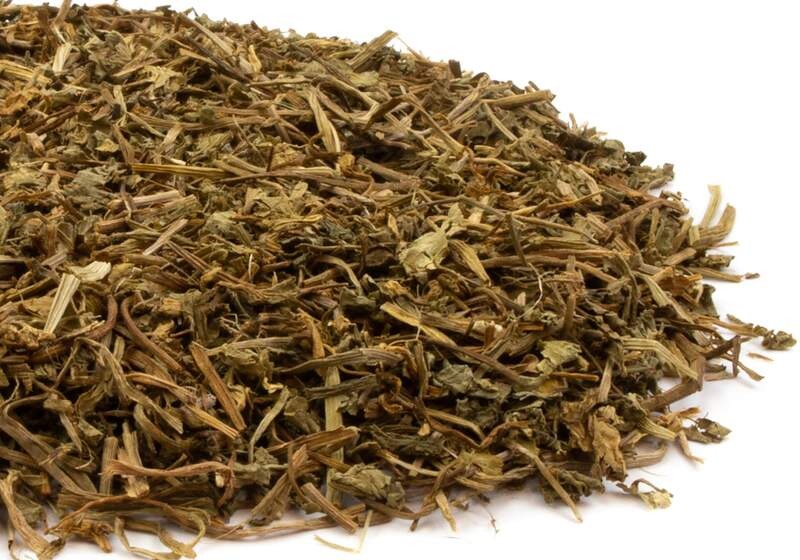
Gotu Kola (Mandukparni)
Centella asiatica (L.) Urb.
Bulk Gotu Kola (Centella asiatica) whole herb and leaf powder for cosmetic, nutraceutical and Ayurvedic manufacturers, with triterpene assay on request.
- Botanical nameCentella asiatica (L.) Urb.
- Part usedWhole plant (aerial parts with stolons); leaf-only grade traded separately
- FamilyApiaceae (Umbelliferae)
- Also known asMandukaparni, Manduki, Brahmi Booti, Thankuni, Vallarai, Saraswathi Aaku, Ondelaga, Karivana, Khulakhudi, Centella
- Certificate of Analysis
- Samples available
- Export documents handled
Gotu Kola is the dried whole plant of Centella asiatica (L.) Urb., an Apiaceae creeper known in Ayurveda as Mandukaparni. It is one of the few Indian botanicals with equally strong demand from cosmetic and nutraceutical buyers.
Botanical identity and the Brahmi confusion
The plant is a slender stoloniferous creeper with kidney-shaped to fan-shaped leaves on long petioles. Leaf margins are crenate and the venation is palmate, which is the quickest field identification check.
Trade names cause genuine confusion. In north India Bacopa monnieri is sold as Brahmi, while in the south Centella asiatica carries that name. The two plants are unrelated and their markers differ completely. Always contract on the botanical name, not on Brahmi.
Where it grows and when it is cut
Centella grows wild along irrigation channels, paddy bunds and shaded damp ground. Commercial supply comes from Kerala, Tamil Nadu, Karnataka, Andhra Pradesh, West Bengal, Assam and the Terai belt, with organised cultivation increasing in Kerala and Karnataka.
Cultivated plots are cut several times a year, generally 90 to 120 days after planting and then at intervals. Wild-collected material is gathered after the monsoon, when leaf mass and triterpene content are both higher.
Processing and quality pitfalls
Harvested herb is washed thoroughly, because the creeper grows flat on wet soil and carries a heavy silt load. Poor washing shows up directly as high acid-insoluble ash, and this is the single most common rejection reason on Centella lots.
Drying is done in shade or in low-temperature driers. Sun drying bleaches the leaf and drops the green to a dull khaki, which cosmetic buyers reject on appearance alone. Material is then cut, sifted and milled.
What buyers are actually buying
The commercial markers are the pentacyclic triterpenes: asiaticoside, madecassoside, asiatic acid and madecassic acid. Reported asiaticoside levels in dried herb vary widely with genotype and season, commonly under one per cent, and published surveys record a very wide accession range.
Extract buyers therefore work to a declared total triterpene figure rather than to raw-herb assay. Cosmetic grades are commonly standardised at 10 per cent total triterpenes, with higher purity fractions made for skin actives.
Forms that trade
AV Biotech supplies Gotu Kola as dried whole herb, cut and sifted herb, sorted leaf-only grade and milled powder. Extract-grade feedstock is selected on leaf-to-stem ratio, since the triterpenes concentrate in the leaf.
Industry applications of Gotu Kola
Centella is unusual in that cosmetics, not Ayurveda, is the largest value stream. Each segment specifies a different grade, so state the end use before sampling.
Cosmetic and personal care
This is the biggest global outlet. Madecassoside and asiaticoside are core actives in the wide family of cica products, barrier-repair creams, post-procedure gels, soothing serums and sheet masks.
Formulators buy either a 10 per cent total triterpene extract or a fine leaf powder at 100 to 120 mesh for masks and cleansing powders. Colour consistency and low microbial load decide acceptance here more than assay.
Nutraceutical and supplement brands
Supplement makers use 80 mesh powder for capsules and standardised extracts for cognitive, venous-comfort and skin-from-within formats. Vegan collagen-support blends are a fast-growing format using Centella extract alongside vitamin C.
Ayurvedic and classical manufacturing
Classical units buy cut herb and coarse powder for Mandukaparni swarasa, Brahmi ghrita style preparations, medhya churnas and herbal ghees. These buyers usually specify whole-plant material and Ayurvedic Pharmacopoeia of India style testing.
Extraction houses
Extractors buy cut and sifted herb with a high leaf fraction. Stem-heavy material dilutes triterpene yield and raises solvent load per kilo of output, so leaf-to-stem ratio is negotiated openly.
Herbal tea and functional beverage
Cut leaf is used in calming infusions and blended wellness teas, mostly in Sri Lanka, Thailand and export markets. Sensory quality matters, since over-dried material tastes flat and hay-like.
Common product formats
- Cica creams, barrier-repair serums and soothing gels
- Sheet masks, ubtan and clay-based face packs
- Scalp serums and anti-hairfall oils
- Capsules and tablets for cognitive and skin-support positioning
- Standardised extracts at 10 per cent total triterpenes
- Classical Ayurvedic ghritas, churnas and swarasa preparations
- Herbal infusions and functional beverage blends
Traditional use and research context
Mandukaparni is classed in Ayurveda as a Medhya Rasayana, a group of herbs traditionally associated with intellect and rejuvenation. It appears in the classical Medhya Rasayana set alongside Yashtimadhu, Guduchi and Shankhpushpi.
Skin repair and cosmetic positioning
Centella is the most widely studied botanical in modern barrier-care cosmetics. Studies suggest that asiaticoside and madecassoside influence collagen expression and skin-barrier markers in laboratory and clinical models.
Brands commonly formulate it into products targeting sensitive, reactive and post-procedure skin. Cosmetic claim wording should follow the destination market's cosmetic regulation.
Cognitive and calm positioning
Traditionally used in Ayurveda to support memory, focus and mental calm. Published trials have examined attention, mood and cognitive performance measures in adults, though study sizes are generally small.
Venous comfort and circulation research
Titrated extract of Centella has been studied in Europe for several decades in relation to venous tone and lower-limb comfort. Supplement brands position such products around leg comfort rather than any disease outcome.
Wound and tissue-support traditions
Traditional systems across India and Southeast Asia applied the fresh herb externally on minor wounds. Research suggests effects on fibroblast activity and granulation in preclinical models.
General tonic and antioxidant framing
The herb carries flavonoids and phenolics alongside the triterpenes, and studies suggest antioxidant activity in laboratory assays. Multi-herb wellness blends usually position it around general vitality.
Notes buyers should carry into claims
Clinical references usually cite a titrated triterpene extract, not raw herb powder. A capsule of plain 80 mesh powder cannot borrow the substantiation of a standardised extract trial.
Centella is also on restricted or notified lists in some markets for internal use. Check the destination country's botanical list before finalising a supplement label.
This information is provided for educational and B2B product-sourcing purposes only. It is not medical advice and these statements have not been evaluated by any regulatory authority. Finished-product claims are the responsibility of the manufacturer.
| Botanical name | Centella asiatica (L.) Urb., Fam. Apiaceae |
|---|---|
| Part used | Dried whole plant with stolons; sorted leaf-only grade quoted separately |
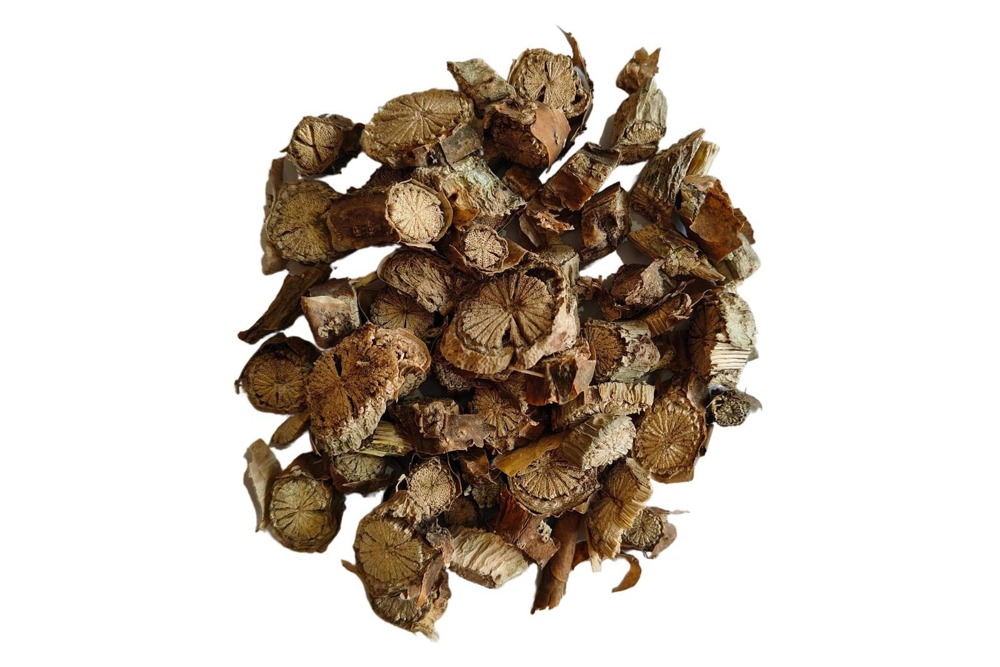
| Appearance | Cut herb: green to olive-green leaf and thin stolon pieces. Powder: green to dull green, free-flowing |
| Odour and taste | Faint characteristic odour; taste slightly bitter |
| Active constituents (typical assay) | Pentacyclic triterpenes - asiaticoside, madecassoside, asiatic acid, madecassic acid. Dried herb typically assays below 1 per cent asiaticoside and varies widely with genotype and season. Extracts commonly standardised to 10 per cent total triterpenes by HPLC; higher fractions on contract |
| Moisture / loss on drying | Not more than 10 per cent (typical 6 to 9 per cent) |
| Total ash | Not more than 18 per cent (indicative trade limit for whole-plant material) |
| Acid-insoluble ash | Not more than 4 per cent; well-washed lots run lower. High values indicate poor washing and adhering soil |
| Foreign matter | Not more than 2 per cent |
| Particle size | Cut and sifted 2 to 8 mm; powder at 60, 80, 100 or 120 mesh BSS. Cosmetic grades usually 100 to 120 mesh |
| Heavy metals | Lead NMT 10 ppm, Arsenic NMT 3 ppm, Cadmium NMT 0.3 ppm, Mercury NMT 1 ppm (AYUSH basis, by ICP-MS) |
| Pesticide residues | Multi-residue screen against EU MRL (Reg. 396/2005) on request; organic lots screened as standard |
| Microbiology | Total plate count NMT 10^5 cfu/g; yeast and mould NMT 10^3 cfu/g; E. coli, Salmonella, S. aureus and P. aeruginosa absent |
| Aflatoxins | B1 not more than 5 ppb, total not more than 10 ppb (EU herbal-material basis) |
| Identity note | Commonly confused with Bacopa monnieri sold as Brahmi. Macroscopic and HPTLC identity confirmation available on request |
| Packing | 20 to 25 kg HDPE or paper-laminated bags with food-grade LDPE liner; fibre drums for low-density cut herb |
| Shelf life | 24 months for powder, 24 months for cut and sifted herb, in sealed original packing |
Values are typical and indicative. A lot-specific Certificate of Analysis is shared before dispatch.
What is your minimum order quantity for Gotu Kola?
100 kg per grade for powder and cut & sifted herb, and 25 kg for standardised extracts. For formulation trials we supply 250 g to 1 kg evaluation samples so your QC team can check mesh, colour and assay before committing to a bulk lot.
Can you supply leaf-only material rather than whole plant?
Yes. Sorted leaf-only grade is offered separately and carries a higher triterpene fraction, since the markers concentrate in the leaf rather than the stolon. It costs more per kilo but gives extraction plants better yield per batch. Tell us your target leaf-to-stem ratio at enquiry stage.
How do you confirm it is Centella asiatica and not Bacopa monnieri?
Both are sold locally as Brahmi, so we contract only on the botanical name. Identity is confirmed by macroscopic and microscopic examination, and HPTLC fingerprinting is available on request. The kidney-shaped crenate leaf with palmate venation is the first visual check on any lot.
Can you match a specific asiaticoside or total triterpene figure?
Within the natural range of the crop for raw herb, and to a declared specification for extracts. Raw-herb triterpene content varies widely with genotype, season and origin, so we select lots against your target rather than promise a fixed number. Standardised extract at 10 per cent total triterpenes is the usual route when a firm assay is required.
What is the typical lead time and best buying season?
Seven to twelve working days for stock grades from Jaipur, and three to four weeks for organic-certified lots, custom mesh or buyer-specific assay. Post-monsoon material generally carries better leaf mass and colour, so colour-critical cosmetic grades are best booked from October onward.
Enquire about Gotu Kola (Mandukparni)
No payment is taken here — this reaches our sourcing team directly.
Related products