Mulethi (Licorice)
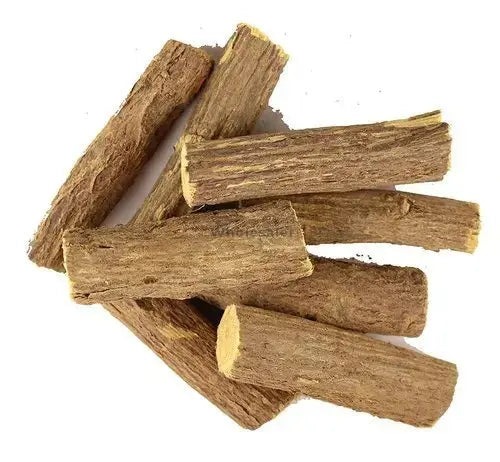
Mulethi (Licorice)
Glycyrrhiza glabra L.
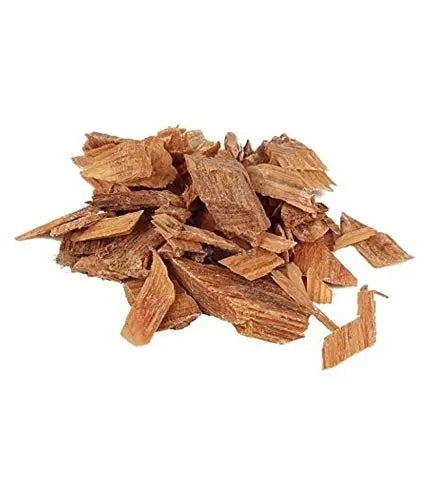
Dried licorice root (Glycyrrhiza glabra), the sweet glycyrrhizin-bearing root bought in bulk by Ayurvedic, confectionery, beverage and cosmetic manufacturers.
- Botanical nameGlycyrrhiza glabra L.
- Part usedDried unpeeled root and stolon
- FamilyFabaceae (Leguminosae)
- Also known asYashtimadhu, Jethimadh, Mulhati, Athimadhuram, Atimadhuramu, Irattimadhuram, Jeshtamadhu, Asl-us-sus, Liquorice
- Certificate of Analysis
- Samples available
- Export documents handled
Mulethi is the dried root and stolon of Glycyrrhiza glabra L., a perennial herb of the Fabaceae family. Its sweetness comes from glycyrrhizin, a saponin many times sweeter than sugar. AV Biotech supplies it as whole root, cut and sifted, powder and extract.
Botanical identity and the pith test
The Ayurvedic Pharmacopoeia of India defines Yashti as the dried, unpeeled stolon and root of Glycyrrhiza glabra. Both parts look similar in a sack but differ in one visible detail. A cut stolon shows a small central pith, while a true root has none.
Cut surfaces also show a cambium ring about one third of the radius in from the outer edge. The bark fractures coarsely and fibrously, and the wood splinters. Taste is distinctly sweet, and odour is faint.
Note that the pharmacopoeial drug is unpeeled. Peeled licorice, sold pale and clean for tea and confectionery use, has had the outer cork removed. If your specification cites the Ayurvedic Pharmacopoeia of India, order unpeeled.
Where the world's licorice comes from
Domestic Indian cultivation of Glycyrrhiza glabra is limited. Most licorice moving through the Indian trade is wild-collected or cultivated in Afghanistan, Uzbekistan, Turkmenistan and Iran, then cleaned, graded and processed in India. Small-scale Indian cultivation exists in parts of Gujarat, Rajasthan, Punjab and the western Himalaya.
Buyers should treat origin as a specification line, not an assumption. Central Asian material tends to run heavier in glycyrrhizin, while pricing and availability shift with import routes.
Constituents and the two markers that matter
Glycyrrhizin, also reported as glycyrrhizic or glycyrrhizinic acid, is the primary marker. Raw root typically assays between 2 and 8 per cent, with standard export grades commonly quoted at 2 to 5 per cent. Extracts are standardised anywhere from 4 to 25 per cent and higher.
The second marker is glabridin, an isoflavan concentrated in the outer root. Cosmetic buyers specify glabridin, not glycyrrhizin, and typically buy extracts at 10, 20 or 40 per cent. Because glabridin sits near the surface, heavily peeled root is a poor starting material for that application.
Other reported constituents include liquiritin, liquiritigenin, isoliquiritin, asparagine, sugars, starch and resin.
Forms in trade
Regular trade forms are whole root sticks, cut and sifted root, chips, powder at 40 to 100 mesh, block or paste extract, spray-dried extract, monoammonium glycyrrhizinate, deglycyrrhizinated licorice and glabridin-standardised extract.
Industrial applications of Mulethi
Licorice has an unusually wide buyer base. The same root feeds a churna plant, a candy factory and a skin-brightening serum, but each wants a different specification.
Ayurvedic and pharmaceutical manufacturing
Yashtimadhu is a high-volume classical raw material. It goes into churna, kwath, avaleha, ghrita, taila and syrup lines. Cut and sifted root suits decoction and oil-infusion processes, while 60 to 80 mesh powder suits tablets and churna.
Cough syrup and throat-lozenge manufacturers are steady buyers of both powder and aqueous extract.
Food, beverage and confectionery
Glycyrrhizin is a natural sweetener and flavour enhancer. Licorice block extract and spray-dried extract are used in confectionery, herbal teas, digestive drinks and flavour systems. Monoammonium glycyrrhizinate is the usual form where a clean, standardised sweetener is needed.
Food buyers should note that several markets, including the EU, apply labelling requirements above defined glycyrrhizinic acid thresholds. Build that into your specification early.
Cosmetic and personal care
This segment buys on glabridin. Licorice extract is widely used in skin-brightening serums, after-sun products, anti-blemish creams and sensitive-skin formulations. Water-soluble extracts are also used in oral care and shampoo bases.
Nutraceutical and supplement brands
Deglycyrrhizinated licorice, usually called DGL, is a large export category for digestive-comfort supplements. Standard glycyrrhizin-bearing extracts go into throat, respiratory and adaptogenic blends. Chewable tablet lines take fine powder at 100 mesh.
Tobacco, veterinary and other
Licorice extract has long been used as a casing and flavour agent in the tobacco industry. Coarse root and spent material also move into feed and industrial applications.
Common product formats we supply into
- Yashtimadhu churna, tablets and capsules
- Cough syrups, throat lozenges and gargles
- Herbal tea and kadha blends
- Confectionery, candy and natural sweetener systems
- Digestive-comfort DGL supplements
- Skin-brightening serums and creams standardised on glabridin
- Toothpaste, mouthwash and oral-care bases
- Hair oils, shampoos and scalp preparations
- Avaleha, ghrita and medicated oil preparations
- Flavour and beverage extract systems
Traditional uses and research context
Licorice is one of the most widely used botanicals in the world, appearing in Ayurvedic, Unani, Chinese and European traditions. The Ayurvedic Pharmacopoeia of India lists glycyrrhizin, glycyrrhizic acid and glycyrrhetinic acid among its constituents.
Throat and respiratory traditions
Mulethi is traditionally used in Ayurveda in preparations for cough, hoarseness and throat comfort. Chewing the raw stick for the throat is one of the oldest continuous folk uses in India. Manufacturers commonly formulate it into lozenges, syrups and gargles positioned around throat comfort.
Digestive comfort formulations
Licorice is traditionally used in preparations for stomach comfort. Deglycyrrhizinated licorice was developed specifically so that this traditional use could be formulated without the glycyrrhizin load. Studies suggest DGL preparations are associated with gastric mucosal support, though evidence quality varies.
Skin brightening and cosmetic research
Glabridin has been studied for its effect on tyrosinase, the enzyme central to melanin formation. Research suggests topical licorice extracts may help even skin tone, which is why glabridin-standardised extracts command a premium. Cosmetic claims are governed by cosmetic regulation in each market, not by food or drug rules.
Antioxidant and anti-inflammatory research
Studies suggest that glycyrrhizin, glycyrrhetinic acid and the flavonoid fraction show antioxidant and anti-inflammatory activity in laboratory models. Supplement brands typically formulate licorice into general wellness and adaptogenic blends on this basis.
A safety note formulators must plan for
Sustained high intake of glycyrrhizin is associated with raised blood pressure and potassium loss, an effect described in the literature as pseudoaldosteronism. Several regulators, including in the EU, advise limiting daily glycyrrhizinic acid intake and require a liquorice declaration on foods above defined thresholds.
This is a formulation and labelling issue rather than a raw-material defect. Where a low-glycyrrhizin profile is needed, DGL is the appropriate grade. Confirm the destination market rules before finalising dosage and labels.
This information is provided for educational and B2B product-sourcing purposes only. It is not medical advice and these statements have not been evaluated by any regulatory authority. Finished-product claims are the responsibility of the manufacturer.
| Botanical name | Glycyrrhiza glabra L. (Fabaceae) |
|---|---|
| Part used | Dried unpeeled root and stolon; peeled grade supplied on request |
| Appearance | Root sticks and cut pieces, yellowish-brown to dark brown outside, pale yellow and fibrous inside. Powder: pale yellow to buff |
| Odour and taste | Faint characteristic odour; markedly sweet taste |
| Identity check | Stolon shows a small central pith, root shows none; cambium ring about one third of the radius from the outer surface; bark fracture fibrous, wood splintery |
| Active constituents (typical assay) | Glycyrrhizin 2-8% in raw root, with standard export grades commonly 2-5%. Glabridin typically below 1% in root. Extracts standardised to 4-25% glycyrrhizin, or 10-40% glabridin for cosmetic use. DGL grades supplied with glycyrrhizin below the agreed ceiling |
| Moisture / loss on drying | Not more than 10% (typical 7-10%) |
| Total ash | Not more than 10% (API limit for Yashti) |
| Acid-insoluble ash | Not more than 2.5% (API limit) |
| Foreign matter | Not more than 2% (trade standard; hand-sorted lots run lower) |
| Alcohol-soluble extractive | Not less than 10% (API limit) |
| Water-soluble extractive | Not less than 20% (API limit) |
| Particle size | Powder 40, 60, 80 or 100 mesh BSS to order; cut and sifted 2-10 mm; root sticks and chips to length specification |
| Heavy metals | Lead NMT 10 ppm, Arsenic NMT 3 ppm, Cadmium NMT 0.3 ppm, Mercury NMT 1 ppm (API / WHO basis, by ICP-MS) |
| Pesticide residues | Tested to API appendix; EU MRL screen (Reg. 396/2005) available on request |
| Aflatoxins | B1 not more than 5 ppb, total not more than 10 ppb (EU herbal-material basis) |
| Microbiology | Total plate count NMT 10^5 cfu/g; yeast and mould NMT 10^3 cfu/g; E. coli, Salmonella, S. aureus and P. aeruginosa absent |
| Packing | 25 kg paper-laminated or HDPE bags with food-grade LDPE liner; 20-25 kg fibre drums for powder and extract; 300-500 kg bales for root sticks |
| Shelf life | 36 months for root and cut; 24 months for powder and spray-dried extract, in original sealed packing |
Values are typical and indicative. A lot-specific Certificate of Analysis is shared before dispatch.
Should I order peeled or unpeeled licorice root?
Unpeeled if your specification cites the Ayurvedic Pharmacopoeia of India, because the official drug is the unpeeled root and stolon. Peeled root is preferred where appearance matters, such as tea cuts and confectionery. If you are buying for a glabridin-standardised cosmetic extract, avoid heavily peeled root because glabridin is concentrated in the outer layer.
What glycyrrhizin content can you guarantee?
Raw root typically assays between 2 and 8 per cent, and standard export grades usually fall in the 2 to 5 per cent band. We test each lot by HPLC and can select material against a stated minimum, but a natural root cannot be guaranteed to a narrow window. If you need a tight figure, a standardised extract is the reliable route.
Where does your licorice originate?
Most commercial licorice worldwide comes from Afghanistan, Uzbekistan, Turkmenistan and Iran, and that is the main origin we work with, alongside limited Indian cultivation. Origin is stated on the certificate of analysis and on export documents. We can source to a specific origin where your customer requires it.
Can you supply DGL and low-glycyrrhizin grades?
Yes. Deglycyrrhizinated licorice is supplied to an agreed glycyrrhizin ceiling, with the assay stated on the certificate of analysis. Tell us the ceiling your market requires, because thresholds differ between the EU, the US and Indian food rules. MOQ for DGL and other extract grades is 25 kg.
How is powder packed and how quickly can you ship?
Powder goes into 25 kg paper-laminated bags with a food-grade LDPE inner liner, or 20 to 25 kg fibre drums where you need extra moisture protection. Standard grades held in stock ship in seven to twelve working days after order confirmation. Custom mesh, DGL and organic-certified lots typically take three to four weeks.
Enquire about Mulethi (Licorice)
No payment is taken here — this reaches our sourcing team directly.
Related products