Calendula (Pot Marigold)
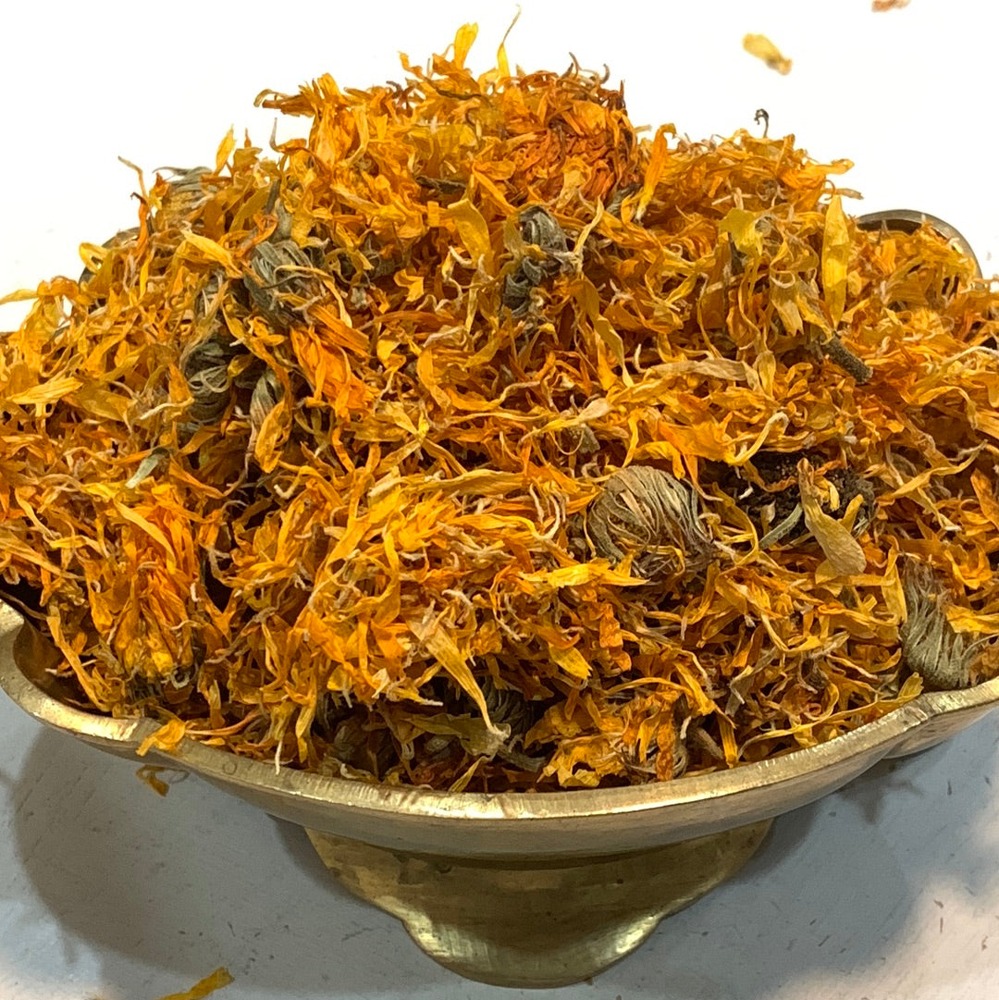
Calendula (Pot Marigold)
Calendula officinalis L.
Dried Calendula officinalis flower and petal in whole and powder grades, sourced from India for cosmetic, pharmaceutical and extract manufacturers.
- Botanical nameCalendula officinalis L.
- Part usedFlower (florets and whole flower head)
- FamilyAsteraceae
- Also known asZergul, English Marigold, Garden Marigold, Ganda (regional usage, not to be confused with Tagetes)
- Certificate of Analysis
- Samples available
- Export documents handled
Calendula, or Pot Marigold, is the dried flower of Calendula officinalis, an annual of the Asteraceae family grown widely for both ornamental and commercial botanical use. It is one of the most established flower-drug raw materials in the cosmetic and topical pharmaceutical trade, valued for its consistent supply and well-documented phytochemistry.
Botanical identity and part used
The plant bears bright orange to yellow daisy-like flower heads composed of ray florets around a central disc. Trade material is the dried flower head or, in a higher-value grade, the separated ray florets (petals) alone, since petal-only material carries a higher concentration of the pigmented flavonoid and carotenoid compounds buyers are usually sourcing for.
Calendula officinalis is a distinct species from Tagetes species (also called marigold in common English usage in India); the two are not interchangeable in a specification, and buyers should confirm botanical name, not just the common name, when placing an order.
Where it grows in India
Calendula is cultivated as a winter-season crop across Assam, Uttar Pradesh, Punjab, Karnataka and parts of Maharashtra and Tamil Nadu, sown from October to November for a flowering window running through the cooler months into early spring. It tolerates a range of soils and is often grown as a commercial cut-flower and botanical-drug dual-purpose crop.
Harvest and processing
Flowers are hand-picked at full bloom, once resin and pigment content peak, generally in the warmer part of the day after morning dew has evaporated. Picking is repeated across the flowering season, since the plant produces flushes of new blooms over several weeks rather than a single harvest.
Harvested flower heads are shade or low-temperature dried to preserve colour and the flavonoid and carotenoid content, then either kept whole or the florets are separated from the receptacle for the higher-grade petal-only product.
Why buyers source it
Calendula's commercial value sits in its flavonoid content (commonly referenced against a hyperoside-equivalent limit), triterpene alcohols including faradiol esters, and triterpenoid saponins known as calendulosides. These compound groups underpin its long-standing use in topical skin-care and wound-care formulation.
Forms that trade
AV Biotech supplies whole dried flower heads, separated petal/floret grade, and milled powder, with organic-certified lots available against contract for cosmetic and pharmaceutical buyers requiring traceable, chemical-free cultivation.
Industry applications of Calendula
Calendula moves primarily into cosmetic and topical pharmaceutical manufacturing, with a smaller but steady flow into Ayurvedic, homeopathic and food-grade colour use.
Cosmetic and personal-care formulation
This is the largest buyer segment. Formulators use flower extract, infused oil and petal powder in moisturising creams, soothing lotions, after-sun and pre-sun products, baby-care ranges, lip balms and calming face masks. Petal-only grade is generally preferred here for its higher pigment concentration and cleaner visual appearance in finished products.
Topical pharmaceutical and wound-care manufacturing
Calendula extract and tincture are established ingredients in topical preparations positioned for minor skin irritation, cuts and general skin-soothing use. Pharmaceutical buyers typically specify flavonoid content (hyperoside-equivalent) and want a defined extraction solvent and ratio confirmed on the Certificate of Analysis.
Homeopathic manufacturing
Calendula mother tincture is a long-established homeopathic preparation, and homeopathic manufacturers are a stable, specification-driven buyer group requiring fresh or defined-drying-method flower with documented identity.
Ayurvedic and Unani formulation
Calendula is used in Ayurvedic, Unani and traditional topical preparations for skin and mucosal applications, generally as an extract or infused oil component within compound formulations rather than as a classical single-herb Ayurvedic drug.
Food and beverage colour use
Dried petals are used as a natural yellow-orange garnish and colourant in teas, rice dishes and confectionery in some markets, trading on the same pigment content that drives cosmetic demand.
Common product formats
- Calendula-infused oil for cosmetic and massage-oil bases
- Standardised flower extract for creams, lotions and topical gels
- Whole dried flower and loose-leaf herbal tea blends
- Homeopathic mother tincture
- Petal powder for face masks and natural colourant use
- Soap, balm and salve formulations
Traditional use and current research
Calendula has a long history of topical use across European herbal medicine, homeopathy, and Ayurvedic and Unani practice in India, primarily associated with skin and mucosal comfort. The following notes describe traditional positioning and published research directions, not established medical outcomes.
Skin-soothing and topical use
Calendula extract and infused oil are traditionally applied to minor skin irritation, dryness and general topical discomfort. Studies suggest calendula preparations may support the skin's appearance and comfort in topical-use research, and this traditional positioning is the basis for most cosmetic formulation using the ingredient.
Oral mucosa and general topical care
Traditional and some published research has looked at calendula-based rinses and topical preparations for oral and pharyngeal mucosal comfort. This reflects an established traditional-use pattern rather than a verified clinical outcome for any specific product.
Antioxidant research interest
Published phytochemical reviews report antioxidant activity associated with calendula's flavonoid and carotenoid content in laboratory studies. These are compound-level findings from extract research, not demonstrated outcomes for a finished consumer product.
Traditional gynaecological and digestive use
Ayurvedic and Unani traditional literature also references calendula in formulations for gynaecological and digestive discomfort, generally as part of compound preparations rather than single-herb standard use.
What buyers should note on claims
Most calendula research is conducted on defined extracts at a stated concentration, and flavonoid and triterpene content vary by harvest timing and processing. A claim referencing published calendula research should specify the extraction method and active-compound level of the material actually used.
This information is provided for educational and B2B product-sourcing purposes only. It is not medical advice and these statements have not been evaluated by any regulatory authority. Finished-product claims are the responsibility of the manufacturer.
| Botanical name | Calendula officinalis L., Fam. Asteraceae |
|---|---|
| Part used | Dried flower head, or separated ray florets/petals (higher-value grade) |
| Appearance | Bright orange to golden-yellow dried florets; whole-flower grade retains the disc and receptacle |
| Active constituents | Flavonoids (commonly specified not less than 0.4 per cent, calculated as hyperoside), triterpene alcohols and faradiol esters, triterpenoid saponins (calendulosides A to F, 2 to 10 per cent range reported depending on harvest and chemotype), carotenoids |
| Moisture | Not more than 10 to 12 per cent (typical trade limit for dried flower) |
| Total ash | Not more than 10 per cent (indicative) |
| Acid-insoluble ash | Not more than 2 per cent (indicative) |
| Foreign matter | Not more than 2 per cent; stem and receptacle content specified separately for petal-only grade |
| Particle size | Whole flower and cut-petal standard; powder milled to 60 to 80 mesh on request |
| Pesticide/heavy-metal/microbial testing | Pesticide residues against EU MRL panel, heavy metals against AYUSH/Codex limits, microbiology (total plate count, yeast and mould, Salmonella, E. coli) available per lot on request |
| Packing | Multi-layer food-grade pouches or HDPE bags, light-protected packing recommended; 5 kg to 25 kg standard |
| Shelf life | 18 to 24 months from date of packing, stored dry, dark and cool to preserve colour and flavonoid content |
| Note | All values are typical or indicative. Actual lot values vary with harvest timing, drying method and season, and are confirmed on the batch Certificate of Analysis |
Values are typical and indicative. A lot-specific Certificate of Analysis is shared before dispatch.
What is your minimum order quantity for Calendula flower?
10 kg for whole dried flower heads and 5 kg for petal-only grade or milled powder. Extract and infused-oil orders are quoted separately once the standardisation you need is confirmed. Paid samples of 100 g to 250 g are available for trial formulation.
What is the difference between whole-flower and petal-only grade, and which should I order?
Whole-flower grade retains the disc and receptacle along with the florets, while petal-only grade is the separated ray florets alone. Cosmetic formulators generally choose petal-only for its higher pigment concentration and cleaner appearance in finished products; whole flower is common for tea and general botanical use.
Is this genuine Calendula officinalis, or could it be a Tagetes marigold?
We supply confirmed Calendula officinalis, botanically distinct from Tagetes species that are also called marigold in common usage. Botanical identity is stated on the Certificate of Analysis, and we recommend buyers confirm the Latin name, not just the common name, on any specification sheet.
What documentation comes with an export shipment?
Every lot ships with a batch Certificate of Analysis covering moisture, ash values and available flavonoid data. Export consignments also carry a phytosanitary certificate, Certificate of Origin, packing list and commercial invoice.
What is the typical lead time, and is organic-certified stock available?
7 to 14 working days for stock grades ex-Jaipur. Organic-certified lots and petal-only premium grade take 3 to 4 weeks and are best booked ahead of the winter harvest season running November through early spring.
Enquire about Calendula (Pot Marigold)
No payment is taken here — this reaches our sourcing team directly.
Related products